
Industrial Safety Market Analysis: Innovations Enhancing Worker Protection Across Industries
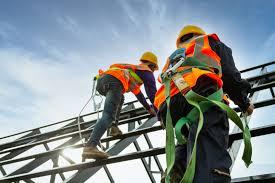
The global industrial safety market is undergoing a major transformation, largely propelled by stringent international and national workplace regulations. Governments and regulatory bodies such as OSHA and the European Union Machinery Directive are imposing rigorous compliance rules to protect workers from hazardous working conditions. This regulatory environment compels enterprises across oil and gas, pharmaceuticals, chemical processing, and heavy manufacturing to deploy advanced emergency shutdown systems, safety interlocks, and real-time gas detection systems. As non-compliance leads to hefty fines and reputation damage, companies are proactively investing in modern safety equipment to maintain operational integrity.
For group discussion, it is important to analyze how these mandates act as a primary catalyst for capital expenditure in industrial equipment. Organizations are moving from reactive safety compliance to proactive risk reduction strategies. The integration of modern technologies into daily operations ensures continuous worker protection while streamlining audit processes. Decision-makers must evaluate how compliance investments yield long-term ROI by preventing costly machinery downtime and workplace accidents. In-depth research on this topic is available through the Industrial Safety Market analysis.
What are the primary drivers of compliance investments in manufacturing?
Government regulations, stringent labor union demands, and the desire to prevent costly operational downtime drive heavy manufacturing investments in safety infrastructure.
How do emergency shutdown systems minimize hazardous operational failures?
Emergency shutdown systems instantly isolate power, stop critical operations, and vent toxic gases during an unexpected event, preventing catastrophic industrial accidents.
Navigating the Comprehensive Long-Term Industry Trajectory for Modern Machinery Safeguards and Automated Control Technologies
Looking toward the coming decade, industrial automation and human-machine interaction will continue to reshape industrial safety. As factories incorporate collaborative robots (cobots), high-speed assembly lines, and interconnected control platforms, traditional physical barriers are being replaced by smart presence-sensing equipment. Safety controllers, light curtains, and programmable safety relays are expanding rapidly to prevent injuries without halting continuous assembly lines. This continuous growth reflects a shift toward intelligent, self-diagnosing safety infrastructures that can anticipate mechanical failures before they occur.
During group discussions, participants should explore how automation challenges traditional safety protocols. When machines and human operators share workspaces, static safety guards are no longer sufficient. Dynamic hazard-detection systems must operate with zero latency to instantly stop high-speed equipment upon detecting unauthorized human presence. Understanding these trends is critical for plant managers and technology providers evaluating safety system lifecycles. Detailed projections are covered in the Industrial Safety Market forecast.
How do programmable safety systems differ from traditional mechanical safety switches?
Programmable safety systems allow flexible, software-based risk management across multiple zones, whereas traditional mechanical switches rely on rigid, physical disconnects.
Why is human-robot interaction driving new developments in safety sensors?
As cobots share workspaces with humans, advanced presence-sensing sensors are needed to dynamically adjust speed or halt motion instantly upon human proximity.
➤➤➤Explore MRFR’s Related Ongoing Coverage In Semiconductor Industry:
Endpoint Detection And Response Market
Property Casualty Insurance Market

 Arabic
 French
 Spanish
 Portuguese
 Deutsch
 Turkish
 Dutch
Dutch
 Italiano
 Russian
 Romaian
 Portuguese (Brazil)
 Greek
Greek
