
Gold Asset Management: Building Trust Across the Physical Gold Value Chain
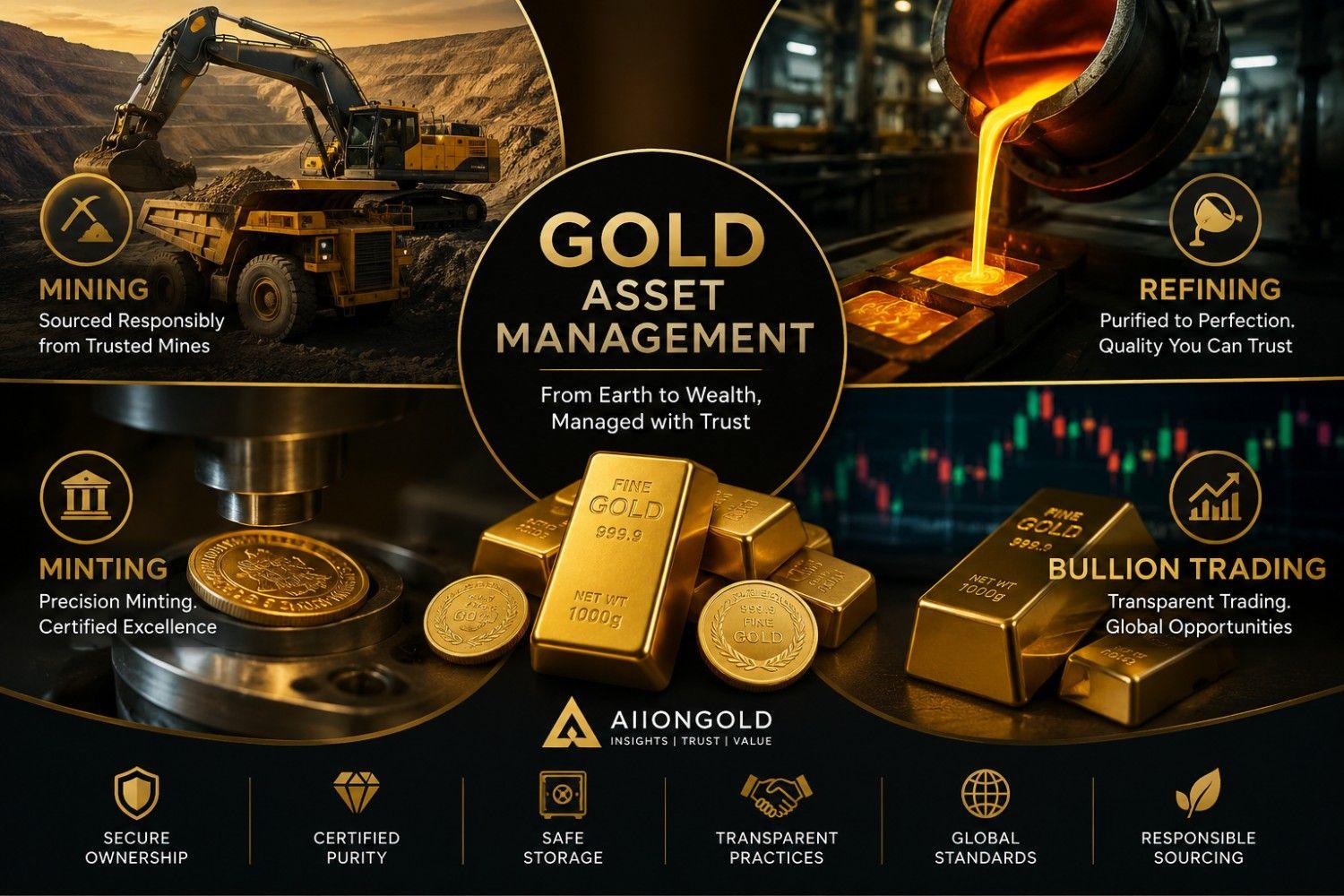
Gold has always represented stability, craftsmanship, and lasting value. However, the true value of physical gold depends not only on the metal itself but also on how it is sourced, refined, verified, stored, and managed. This is where Gold Asset Management becomes essential.
Modern Gold Asset Management is the discipline of maintaining the quality, security, authenticity, and traceability of physical gold throughout its lifecycle. It connects responsible mining, professional refining, precision minting, secure storage, inventory control, and transparent bullion trading into one integrated framework.
As governments, refiners, bullion dealers, manufacturers, and businesses demand greater transparency, effective gold asset management has become one of the most important foundations of the global precious metals industry.
What Is Gold Asset Management?
Gold Asset Management is the systematic process of controlling and protecting physical gold assets from extraction to final distribution.
It focuses on maintaining:
-
Physical integrity
-
Certified purity
-
Secure ownership
-
Complete traceability
-
Operational transparency
-
Responsible sourcing
-
Regulatory compliance
-
Efficient inventory management
Instead of simply storing gold, modern asset management ensures every ounce can be verified, documented, and responsibly managed throughout its journey.
Why Gold Asset Management Matters Today
The global gold industry involves multiple participants including miners, refiners, logistics providers, mints, bullion traders, manufacturers, and vault operators.
Without standardized management practices, risks increase significantly.
Gold Asset Management helps organizations:
-
Improve operational transparency
-
Reduce inventory discrepancies
-
Strengthen quality assurance
-
Protect physical assets
-
Improve supply chain visibility
-
Support responsible sourcing initiatives
-
Increase confidence among stakeholders
This structured approach creates consistency throughout the gold ecosystem.
Understanding the Gold Journey
1. Responsible Gold Mining
Every gold asset begins with exploration and mining.
Responsible mining includes:
-
Environmental stewardship
-
Worker safety
-
Resource efficiency
-
Ethical extraction practices
-
Regulatory compliance
Proper documentation during mining establishes the first layer of traceability.
2. Professional Gold Refining
After extraction, raw material undergoes refining to remove impurities.
Modern refining produces high-purity gold suitable for:
-
Bullion bars
-
Coins
-
Industrial manufacturing
-
Luxury products
Refining laboratories use internationally recognized testing methods to verify quality before gold enters commercial markets.
3. Precision Minting
Minting transforms refined gold into standardized products.
Each bullion product typically includes:
-
Exact weight
-
Purity marking
-
Identification number
-
Quality inspection
-
Manufacturing standards
These processes simplify future verification and inventory management.
4. Bullion Distribution
Bullion trading moves certified gold through authorized channels.
Professional bullion markets emphasize:
-
Authenticity verification
-
Transparent pricing
-
Secure logistics
-
Regulatory standards
-
Accurate documentation
Efficient distribution strengthens confidence across domestic and international markets.
Core Principles of Gold Asset Management
Authenticity
Every physical gold asset should be verified before entering storage or circulation.
Professional authentication protects against counterfeit products while preserving market confidence.
Traceability
Complete records allow organizations to monitor gold throughout its lifecycle.
Traceability supports:
-
Supply chain visibility
-
Compliance
-
Ownership verification
-
Inventory reconciliation
-
Audit readiness
Security
Gold requires layered protection including:
-
Controlled access
-
Secure transportation
-
Professional vaulting
-
Digital inventory systems
-
Continuous monitoring
Security reduces operational and financial risks.
Documentation
Reliable documentation creates transparency.
Typical records include:
-
Refinery certificates
-
Weight records
-
Purity reports
-
Storage history
-
Transfer documentation
Accurate records simplify audits and asset verification.
Quality Assurance
Quality management ensures every asset meets established standards before entering commercial circulation.
Routine inspections maintain consistency across operations.
Best Practices for Gold Asset Management
Organizations can improve physical gold management by adopting practical operational standards.
Verify Every Asset
Use recognized testing procedures before accepting or transferring physical gold.
Maintain Accurate Inventory
Real-time inventory tracking reduces operational errors.
Store Gold Professionally
Choose facilities designed specifically for precious metals.
Perform Regular Audits
Scheduled audits improve accountability and inventory accuracy.
Strengthen Supply Chain Visibility
Monitor gold movement from mining through refining, storage, and distribution.
Prioritize Responsible Sourcing
Ethical sourcing supports sustainability while strengthening public trust.
Common Questions About Gold Asset Management
Is Gold Asset Management only for large organizations?
No.
Mining companies, refiners, bullion dealers, storage providers, manufacturers, and institutions all benefit from structured gold management practices.
Why is traceability important?
Traceability confirms the history of physical gold, improves transparency, and supports responsible sourcing initiatives.
Does Gold Asset Management improve operational efficiency?
Yes.
Accurate documentation, secure storage, standardized verification, and inventory management reduce errors and improve operational performance.
What industries depend on Gold Asset Management?
Gold asset management supports:
-
Mining
-
Refining
-
Minting
-
Bullion trading
-
Manufacturing
-
Precious metals logistics
-
Secure storage facilities
The Future of Gold Asset Management
Technology continues improving physical gold management through:
-
Digital inventory systems
-
RFID asset tracking
-
Automated reporting
-
Secure documentation
-
Advanced purity testing
-
Supply chain analytics
While innovation improves operational efficiency, the core principles remain unchanged:
-
Transparency
-
Authenticity
-
Security
-
Quality
-
Responsible sourcing
These principles will continue shaping the future of the physical gold industry.
Final Thoughts
Gold Asset Management is far more than protecting valuable metal. It is a comprehensive framework that safeguards authenticity, strengthens operational transparency, supports responsible sourcing, and preserves confidence throughout the physical gold value chain.
From responsible mining and advanced refining to precision minting and transparent bullion trading, every stage contributes to maintaining the integrity of physical gold. Organizations that prioritize structured gold asset management are better positioned to maintain quality standards, improve accountability, and build lasting trust across the global precious metals ecosystem.
For readers seeking reliable educational insights into mining, refining, minting, bullion markets, gold purity, and responsible physical gold management, AIIONGOLD continues to explore the evolving world of the gold industry through knowledge-driven content.

 English
 Arabic
 French
 Spanish
 Portuguese
 Deutsch
 Turkish
 Dutch
Dutch
 Italiano
 Romaian
 Portuguese (Brazil)
 Greek
Greek
