
MBBS in Russia: Complete Guide to Top Medical Universities, Admission, Fees & Career Opportunities
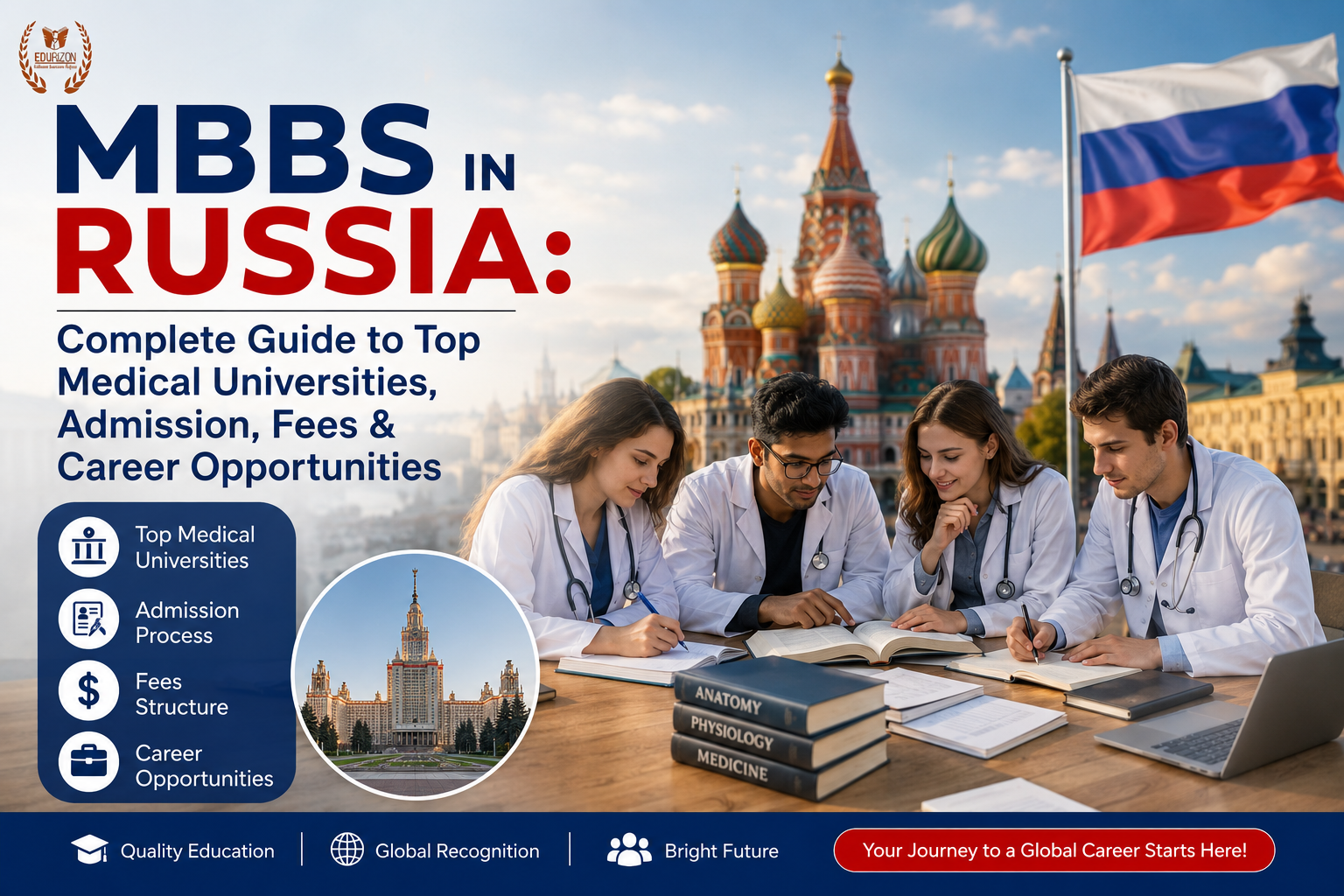
MBBS in Russia: A Complete Guide to Top Medical Universities, Admission Process, Fees & Career Opportunities
Pursuing an MBBS degree abroad has become an attractive option for students seeking high-quality medical education at an affordable cost. Among the various international destinations available today, MBBS in Russia has consistently remained one of the most preferred choices due to its globally recognized universities, modern infrastructure, experienced faculty, and extensive clinical exposure.
Russian medical universities have built a strong reputation over decades by providing world-class education that combines theoretical knowledge with practical training. Students benefit from advanced laboratories, well-equipped hospitals, research opportunities, and internationally accepted medical curricula designed to prepare future healthcare professionals for global careers.
Whether your goal is to become a practicing physician, pursue postgraduate specialization, or participate in international medical research, Russia offers a supportive academic environment that helps students achieve their ambitions.
This comprehensive guide explains everything you need to know about studying MBBS in Russia, including eligibility, admission process, tuition fees, top universities, student life, career prospects, and factors to consider before making your decision.
Why Choose MBBS in Russia?
Russia has emerged as one of the leading destinations for medical education because it successfully combines academic excellence with affordability. Medical universities across the country maintain high educational standards while continuously updating their teaching methods according to modern healthcare requirements.
Some of the major advantages include:
- Internationally recognized medical universities
- Affordable tuition fees compared to many countries
- Modern laboratories and simulation centers
- Experienced professors and medical researchers
- Strong clinical training in affiliated hospitals
- Opportunities for scientific research
- Advanced medical technology
- Diverse student community
- Well-developed campus facilities
- Excellent academic environment
Students receive a balanced education that focuses on developing strong clinical knowledge, practical skills, ethical values, and professional competence.
Quality of Medical Education in Russia
Medical education in Russia follows rigorous academic standards established by government educational authorities. Universities emphasize both classroom learning and practical hospital training to ensure graduates possess the necessary skills required in modern healthcare.
The curriculum generally covers:
- Human Anatomy
- Physiology
- Biochemistry
- Pharmacology
- Pathology
- Microbiology
- Surgery
- Internal Medicine
- Pediatrics
- Obstetrics and Gynecology
- Community Medicine
- Emergency Medicine
Clinical exposure begins gradually and increases throughout the course, allowing students to gain hands-on experience under expert supervision.
Admission Process for MBBS in Russia
The admission process is generally straightforward and student-friendly. Most universities follow transparent procedures and provide clear documentation requirements.
The admission process usually includes:
Application Submission
Students submit their academic records, identification documents, and application forms.
Document Verification
Universities verify educational qualifications before issuing an admission confirmation.
Admission Letter
Once eligibility is confirmed, students receive an official admission letter from the university.
Visa Documentation
After admission, students complete the required visa-related formalities.
Travel and Enrollment
Students arrive on campus, complete registration, and begin orientation before classes start.
Working with experienced educational consultants like Edurizon can simplify documentation, university selection, admission guidance, and pre-departure assistance, making the overall process smoother.
Eligibility Criteria
Although eligibility requirements may differ slightly among universities, applicants are generally expected to fulfill certain academic standards before admission.
Common requirements include:
- Completion of higher secondary education
- Strong academic performance in science subjects
- Required educational documentation
- Valid passport
- Medical fitness documentation
- Language requirements as specified by the university
Students should always verify the latest admission criteria directly through the institution or authorized educational guidance providers before applying.
Top Medical Universities in Russia
Russia is home to several prestigious medical universities known for academic excellence and advanced research facilities.
Kazan Federal University
One of the oldest and most respected universities in Russia, kazan federal university russia has earned international recognition for its strong academic heritage and cutting-edge research programs.
The university offers:
- Modern medical laboratories
- Advanced research centers
- International collaborations
- Experienced faculty members
- Comprehensive clinical training
- Excellent campus infrastructure
Its emphasis on innovation and practical medical education makes it a popular destination for aspiring healthcare professionals.
North-Western State Medical University
Another highly respected institution is North-Western State Medical University, recognized for its excellent medical education and clinical exposure.
Many prospective students often research North western state medical university fees while comparing universities. The institution provides quality education supported by modern hospitals, research facilities, and experienced faculty, making it an excellent option for students seeking affordable yet comprehensive medical training.
Apart from tuition costs, students should also consider accommodation, living expenses, health insurance, and other educational costs while planning their budget.
Tambov State University
Tambov state university has steadily gained recognition among international medical aspirants for providing quality education supported by experienced faculty and well-equipped teaching hospitals.
The university focuses on:
- Clinical excellence
- Medical research
- Practical learning
- Modern teaching methodologies
- Student-centered education
- Professional development
Its balanced academic approach prepares graduates for various career opportunities in healthcare.
Duration of MBBS in Russia
The MBBS program generally spans several years, allowing students to build strong foundations in medical sciences before progressing to advanced clinical practice.
The course structure typically includes:
- Pre-clinical education
- Basic medical sciences
- Clinical subjects
- Hospital rotations
- Internship or practical training
- Final assessments
Throughout the program, students gain exposure to real-world medical situations under the supervision of qualified healthcare professionals.
Medium of Instruction
Many universities offer English-medium MBBS programs to accommodate international students. Some institutions also encourage learning the local language alongside medical education to improve communication during clinical practice and patient interaction.
Developing language skills often enhances practical learning and enriches the overall educational experience.
Campus Life
Life at Russian medical universities extends beyond academics. Students participate in numerous extracurricular activities that contribute to their personal growth and overall development.
Campus life often includes:
- Cultural festivals
- Academic seminars
- Medical workshops
- Sports competitions
- Student clubs
- Research conferences
- Volunteer programs
- Community health initiatives
These experiences help students develop communication skills, leadership abilities, teamwork, and professional confidence.
Clinical Training
One of the strongest aspects of medical education in Russia is extensive clinical exposure.
Students receive opportunities to observe and participate in hospital-based learning under experienced medical professionals. Clinical training includes:
- Patient interaction
- Diagnosis techniques
- Clinical examinations
- Medical case discussions
- Laboratory interpretation
- Surgical observation
- Emergency care exposure
Such practical experience bridges the gap between classroom learning and real-world healthcare practice.
Research Opportunities
Russian universities place considerable emphasis on scientific research and innovation.
Students interested in research can participate in:
- Medical conferences
- Scientific publications
- Laboratory research
- Clinical research projects
- International collaborations
- Healthcare innovation programs
Research participation enhances analytical thinking and strengthens future academic and professional opportunities.
Student Accommodation
Most universities provide comfortable hostel facilities designed to support student life.
Accommodation generally includes:
- Furnished rooms
- Study areas
- Internet connectivity
- Dining facilities
- Laundry services
- Recreational spaces
- Security systems
Hostels create a multicultural environment where students from different countries live, learn, and grow together.
Cost of Living
Apart from tuition fees, students should also budget for daily living expenses.
Common expenditures include:
- Accommodation
- Food
- Transportation
- Books
- Medical insurance
- Internet
- Personal expenses
Russia is often considered an economical study destination compared to many other countries offering international medical education.
Career Opportunities After MBBS in Russia
Graduates from recognized Russian medical universities have access to a wide range of career opportunities.
Possible career paths include:
Clinical Practice
Graduates may pursue medical practice after fulfilling the licensing requirements applicable in their chosen country.
Postgraduate Medical Education
Many students continue with specialization programs in disciplines such as:
- Cardiology
- Neurology
- Orthopedics
- Pediatrics
- Radiology
- General Surgery
- Dermatology
- Psychiatry
Medical Research
Research institutions offer opportunities in:
- Clinical research
- Biomedical sciences
- Public health
- Medical technology
- Pharmaceutical research
Healthcare Administration
Graduates interested in leadership roles may enter healthcare management, hospital administration, or healthcare consulting.
Academic Careers
Teaching positions in medical institutions provide opportunities to contribute to future generations of healthcare professionals.
Skills Developed During MBBS
Medical education in Russia helps students develop numerous professional competencies.
These include:
- Critical thinking
- Clinical reasoning
- Patient communication
- Medical ethics
- Diagnostic skills
- Decision-making
- Leadership
- Team collaboration
- Research methodology
- Problem-solving abilities
These skills remain valuable throughout a medical career regardless of specialization.
How to Choose the Right Medical University
Selecting the right university requires careful evaluation of multiple factors.
Students should consider:
- University accreditation
- Academic reputation
- Faculty qualifications
- Clinical training facilities
- Research opportunities
- Hostel infrastructure
- Student support services
- Campus environment
- Tuition fees
- Graduate outcomes
Comparing these aspects helps students make informed decisions that align with their career goals.
Why Educational Guidance Matters
Applying to an international medical university involves documentation, university selection, admission procedures, and planning. Professional educational consultants can provide valuable guidance throughout this process.
Edurizon assists students by helping them understand university options, admission requirements, documentation procedures, and overall application planning. Proper guidance reduces confusion and enables students to focus on selecting the institution that best matches their academic aspirations.
Conclusion
Choosing MBBS in Russia offers access to internationally respected universities, comprehensive medical education, modern clinical training, advanced research opportunities, and affordable study options. The country's medical institutions continue to attract students seeking academic excellence and professional growth in the healthcare sector.
Whether considering kazan federal university russia, exploring North western state medical university fees, or learning more about Tambov state university, careful research is essential before making a final decision. Evaluating academic quality, clinical exposure, campus facilities, career opportunities, and overall educational environment can help students choose the university that best supports their long-term goals.
With proper planning, informed decision-making, and guidance from experienced education consultants such as Edurizon, students can confidently begin their medical education journey and build a successful future in the ever-evolving field of healthcare.

 English
 Arabic
 French
 Spanish
 Portuguese
 Deutsch
 Turkish
 Dutch
Dutch
 Italiano
 Romaian
 Portuguese (Brazil)
 Greek
Greek
