
Vertical Cavity Surface Emitter Laser Market to Reach USD 9,983.74 Million by 2034 as Optical Communication and Infrared Sensing Applications Expand
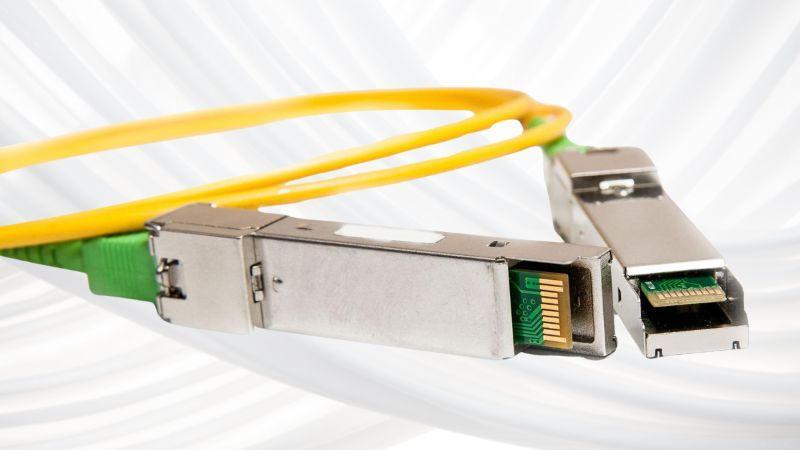
The growing demand for compact optical components is increasing the importance of vertical cavity surface emitter lasers across data communication, infrared illumination and industrial applications. VCSEL technology enables light emission perpendicular to the semiconductor wafer surface, supporting compact devices and two-dimensional emitter arrays. These characteristics make the technology relevant to optical interconnects, sensing systems and selected industrial light-source applications.
According to Semiconductor Insight, the global Vertical Cavity Surface Emitter Laser Market was valued at USD 2,951.51 million in 2025 and is projected to reach USD 9,983.74 million by 2034, growing at a CAGR of 14.5% during the 2026–2034 forecast period. Asia-Pacific accounts for an estimated 44% of market activity. Demand is supported by growing short-reach optical channel density, infrared depth sensing and industrial light-source integration, while thermal management and semiconductor fabrication yield remain important considerations.
Explore the complete Vertical Cavity Surface Emitter Laser Market analysis:
https://semiconductorinsight.com/report/vertical-cavity-surface-emitter-laser-market/
Why Are Vertical Cavity Surface Emitter Lasers Becoming Important in Optical Technologies?
Vertical Cavity Surface Emitter Lasers, commonly known as VCSELs, are semiconductor lasers that emit light perpendicular to the wafer surface rather than through a cleaved chip edge. Their optical resonators use reflective layers positioned above and below an active region, allowing compact emitter structures and the development of two-dimensional arrays.
This architecture supports wafer-level optical testing and enables manufacturers to develop products for applications that require multiple optical channels or controlled illumination. VCSEL devices are used in short-reach data communication, infrared sensing and selected industrial systems.
Different VCSEL designs serve different operating requirements. High-speed multimode devices used in optical communication differ from emitters designed for structured-light projection, where pulse power, radiation patterns and eye-safety controls can influence product selection.
Market Growth Is Closely Linked to Optical Data Communication
Data communication represents an estimated 47% of application demand, making it the leading application category in the VCSEL market. Compact surface-emitting lasers can support short-reach optical links through multimode fiber, where multiple channels may be used to achieve higher aggregate bandwidth.
Semiconductor Insight identifies growing optical channel density as an important factor supporting market development. Coherent's 2025 demonstration of a two-dimensional architecture using 32 channels at 50 Gb/s NRZ and 850 nm VCSEL and photodiode arrays illustrates the direction of development in parallel optical communication.
The demonstration represents a product-development milestone rather than proof of mass shipment. Complete optical-link performance also depends on electrical drivers, receiver arrays, connectors, alignment and system-level integration.
Receive your Free Sample Report today:
https://semiconductorinsight.com/download-sample-report/?product_id=82188
Multimode VCSELs Lead the Emitter Architecture Segment
Multimode VCSELs account for an estimated 62% of Type revenue, while Single Mode VCSEL products represent approximately 38%. Multimode devices can support optical communication and sensing applications that require broader active apertures or substantial optical output.
Single-mode VCSELs are relevant where beam characteristics and spectral behavior require tighter control. Their design involves trade-offs involving aperture dimensions, threshold current, heat spreading and output stability.
The selection of an emitter architecture depends on the intended optical application. Data communication, structured illumination and specialized sensing systems may require different device characteristics, making product qualification important for manufacturers and system integrators.
Infrared Illumination Is Expanding the Application Landscape
Infrared Illumination accounts for an estimated 30% of application value, making it another important area of demand. VCSEL arrays operating at wavelengths such as 940 nm can support depth sensing and presence detection, while compact optical structures provide opportunities for integration into electronic devices.
The market also includes Industrial Heating, which represents approximately 15% of application demand, and Others at around 8%. These applications have different optical-output, thermal and operating requirements from conventional communication devices.
The development of addressable microVCSEL technology also points toward opportunities in parallel optical interconnects. In September 2026, ams OSRAM described an 850 nm thin-film microVCSEL platform with 25-micrometer emitter spacing and demonstrated 32 Gb/s operation under the stated conditions. Successful system deployment still requires optical alignment, drivers, receiver arrays and thermal qualification.
Thermal Management and Manufacturing Yield Remain Important Challenges
VCSEL manufacturing depends on compound-semiconductor materials, precise epitaxial structures, aperture fabrication and reliable optical testing. Variations in material quality, reflector thickness, die processing and package assembly can influence production yield and device consistency.
Thermal management is another important consideration, particularly as emitter arrays become denser or operate at higher output levels. Manufacturers must evaluate heat dissipation, optical reliability and performance over the intended operating cycle.
Laser safety and qualification also become important in infrared illumination and sensing applications. Bare emitters, arrays and packaged illumination systems represent different procurement formats and require application-specific testing.
Where Are the Biggest Opportunities Emerging?
Optical interconnects, short-reach data communication and infrared depth sensing provide important opportunities for VCSEL manufacturers. Growing demand for higher optical channel density may support the use of parallel emitter arrays in data infrastructure and other connected systems.
Industrial illumination and heating applications provide another area of opportunity. However, high-speed communication arrays and high-power industrial light sources require different device architectures, qualification processes and thermal-management approaches.
Companies that can provide reliable emitters, matched arrays, optical packages and consistent manufacturing quality may be better positioned to address these different application requirements.
Vertical Cavity Surface Emitter Laser Market Segmentation
The report evaluates the market by type, application and region, providing an overview of the main emitter architectures and commercial uses.
By type, the market is divided into:
-
Single Mode VCSEL
-
Multimode VCSEL
By application, the market covers:
-
Data Communication
-
Infrared Illumination
-
Industrial Heating
-
Others
The segmentation reflects the different optical and operating requirements of communication systems, sensing products and industrial light-source applications. Product selection depends on wavelength, output characteristics, beam behavior, channel requirements and thermal performance.
View the complete Vertical Cavity Surface Emitter Laser Market segmentation and forecast:
https://semiconductorinsight.com/report/vertical-cavity-surface-emitter-laser-market/
Regional Vertical Cavity Surface Emitter Laser Market Outlook
Asia-Pacific accounts for an estimated 44% of 2025 VCSEL demand, making it the leading regional market. China, Japan and South Korea are included in the regional assessment, reflecting the importance of semiconductor manufacturing and consumer-electronics activity.
North America represents approximately 26% of demand, with the United States, Canada and Mexico included. The region benefits from optical communication development, data infrastructure investment and advanced semiconductor activity.
Europe accounts for an estimated 20%, with Germany, Austria and the United Kingdom included in the country-level analysis. South and Central America represent approximately 6%, while the Middle East and Africa account for around 4%.
Regional demand is influenced by semiconductor manufacturing clusters, optical component procurement, consumer electronics, data infrastructure and automotive photonics. The report also covers Brazil, Argentina, Chile, the United Arab Emirates, Saudi Arabia and South Africa.
Competitive Landscape and Key Companies
The Vertical Cavity Surface Emitter Laser Market includes integrated emitter manufacturers, optical component suppliers, industrial specialists and upstream compound-semiconductor material companies.
Semiconductor Insight identifies Coherent, Lumentum, ams OSRAM, TRUMPF Photonic Components, Broadcom, IQE, Panasonic and Hamamatsu Photonics among the key companies profiled.
Competition is influenced by emitter performance, array design, wavelength availability, optical reliability, thermal characteristics and manufacturing yield. Companies serving high-speed communication applications may have different product capabilities from suppliers focused on infrared illumination or industrial light sources.
Upstream suppliers also play an important role in the value chain through compound-semiconductor materials and epitaxial wafer supply. Their contribution should be distinguished from the sale of finished VCSEL emitters and packaged products.
What Does the Vertical Cavity Surface Emitter Laser Market Report Cover?
The Semiconductor Insight study provides analysis of market size, sales, revenue, competitive positioning, industry dynamics, segmentation and regional performance.
The report evaluates the market by type and application, covering Single Mode VCSEL, Multimode VCSEL, Data Communication, Infrared Illumination, Industrial Heating and Other applications.
It also examines manufacturing capacity, compound-semiconductor materials, optical performance, thermal management, market drivers, restraints and opportunities. Regional coverage includes North America, Europe, Asia-Pacific, South and Central America, and the Middle East and Africa, with country-level analysis across key markets.
The study further assesses the competitive landscape, supplier positioning, emitter architectures, product developments and the factors influencing commercial qualification across optical communication and illumination applications.
Key Questions Answered by the Study
The report helps industry participants evaluate questions including:
-
What is the current Vertical Cavity Surface Emitter Laser Market size?
-
How large will the market become by 2034?
-
What is the expected CAGR during the 2026–2034 forecast period?
-
How are Single Mode and Multimode VCSEL products developing?
-
Which applications account for the largest share of market demand?
-
How is optical data communication influencing market growth?
-
What role does infrared illumination play in VCSEL adoption?
-
What are the principal challenges involving thermal management and manufacturing yield?
-
Which regions represent the most important markets?
-
Who are the leading Vertical Cavity Surface Emitter Laser manufacturers?
-
How are advances in emitter arrays influencing optical interconnect development?
-
What technological and commercial developments are shaping competition?
Explore the full Vertical Cavity Surface Emitter Laser Market forecast and competitive analysis:
https://semiconductorinsight.com/report/vertical-cavity-surface-emitter-laser-market/
Get a Sample Report copy for free:
https://semiconductorinsight.com/download-sample-report/?product_id=82188
About Semiconductor Insight
Semiconductor Insight provides market intelligence and industry research covering semiconductor technologies, electronic components, advanced manufacturing systems and related technology markets. Its research focuses on market sizing, forecasting, competitive landscapes, technology trends, segmentation and regional analysis to support strategic decision-making across the semiconductor ecosystem.
Contact Semiconductor Insight
Website: www.semiconductorinsight.com

 English
 Arabic
 French
 Spanish
 Portuguese
 Deutsch
 Turkish
 Dutch
 Italiano
 Romaian
 Portuguese (Brazil)
 Greek
