
Biologics Market Size Outlook, Competitive Insights, and Growth Opportunities
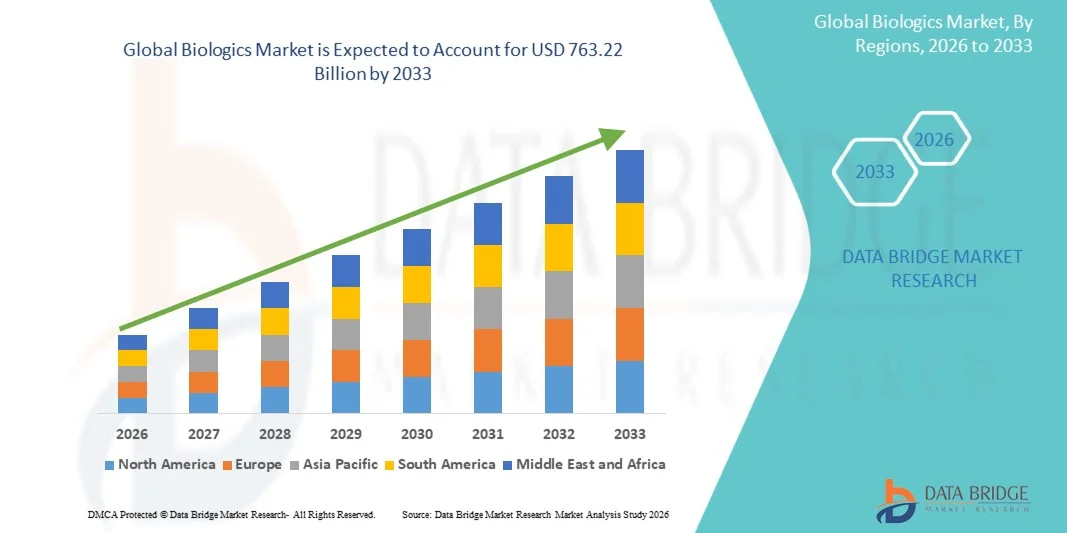
According to the latest report published by Data Bridge Market Research, the Biologics Market
As per Data Bridge Market Research analysis the Biologics Market was valued at USD 376.08 billion in 2025 and is projected to reach USD 763.22 billion by 2033, growing at a CAGR of 9.25% from 2026 to 2033.
With the clear understanding of customer requirement, one method or combination of many have been used to construct the most excellent Biologics Market research report. The report endows with complete market analysis and forecasting, market definition, market drivers and market restraints, market share, market segmentation and analysis of key players in the market. While preparing report, markets on the local, regional and global level have been explored. Market shares of the key players in the major areas of the globe such as Europe, North America, Asia Pacific, South America, Middle East and Africa is also studied in Biologics Market analysis report.
Stay informed with our latest keyword market research covering strategies, innovations, and forecasts. Download full report: https://www.databridgemarketresearch.com/reports/global-biologics-market
Biologics Market Segmentation and Market Companies
Segments
- On the basis of product type, the biologics market can be segmented into monoclonal antibodies, vaccines, recombinant hormones, stem cell therapies, gene therapies, blood factors, and others. Monoclonal antibodies are widely used in the treatment of various diseases such as cancer, autoimmune disorders, and infectious diseases. Vaccines play a crucial role in preventing infectious diseases and are essential for public health. Recombinant hormones are used in the treatment of hormonal imbalances and deficiencies. Stem cell therapies and gene therapies are cutting-edge treatments that hold great promise for the future of medicine. Blood factors are essential for the treatment of blood disorders like hemophilia.
- Based on application, the biologics market can be categorized into oncology, autoimmune diseases, infectious diseases, metabolic diseases, cardiovascular diseases, neurological disorders, and others. Oncology represents a significant portion of the biologics market, with monoclonal antibodies playing a key role in cancer treatment. Autoimmune diseases such as rheumatoid arthritis and lupus also drive demand for biologics. The ongoing COVID-19 pandemic has highlighted the importance of biologics in combating infectious diseases. Biologics are also used in the treatment of metabolic diseases like diabetes and cardiovascular diseases like heart failure.
- In terms of end-users, the biologics market includes hospitals, clinics, research institutions, and others. Hospitals are the primary end-users of biologics, as they are the main facilities for administering these complex therapies. Clinics also play a crucial role in providing biologics-based treatments to patients. Research institutions are involved in the development of new biologics and conducting clinical trials to assess their safety and efficacy.
Market Players
- Some of the key players in the global biologics market include Amgen Inc., F. Hoffmann-La Roche Ltd, AbbVie Inc., Johnson & Johnson, Bristol-Myers Squibb Company, Novo Nordisk A/S, Pfizer Inc., Sanofi, Merck & Co. Inc., and Gilead Sciences Inc. These companies are at the forefront of research and development in the field of biologics and have a strong portfolio of products catering to various therapeutic areas. They invest heavily in innovation and strategic partnerships to maintain their competitive edge in the market.
For more detailed insights on the global biologics market, visit: The global biologics market continues to witness significant growth driven by advancements in biotechnology, increasing prevalence of chronic diseases, and the rising demand for personalized medicine. One of the emerging trends in the biologics market is the development of biosimilars, which are biologic products that are highly similar to already approved biologics. Biosimilars offer cost-effective alternatives to expensive biologic therapies, thereby expanding patient access and driving market growth. Another key trend is the increasing focus on precision medicine, where biologics are tailored to individual patients based on genetic, environmental, and lifestyle factors. This approach emphasizes the importance of targeted therapies that can provide enhanced efficacy and minimal side effects.
Moreover, the market is witnessing a surge in collaborations and partnerships between pharmaceutical companies, biotech firms, and research institutions to accelerate the development and commercialization of novel biologics. These collaborations facilitate the pooling of resources, expertise, and technology, leading to the swift introduction of innovative therapies into the market. Additionally, regulatory agencies across the globe are streamlining approval processes for biologics, thereby reducing time-to-market for new products and fostering growth in the market.
Furthermore, the increasing investments in research and development activities are driving the discovery of novel biologics targeting a wide range of diseases. Companies are focusing on expanding their product portfolios through the development of advanced biologics with enhanced efficacy and safety profiles. This relentless pursuit of innovation is expected to fuel market growth and create lucrative opportunities for market players in the coming years.
Another factor shaping the biologics market is the growing emphasis on sustainability and eco-friendly practices in biologics manufacturing. Companies are adopting green biotechnology approaches to reduce the environmental impact of biologic production processes, such as minimizing waste generation, optimizing energy consumption, and utilizing eco-friendly packaging materials. These sustainable practices resonate with environmentally conscious consumers and contribute to the positive reputation of biologics manufacturers in the market.
In conclusion, the global biologics market is poised for robust growth driven by technological advancements, strategic collaborations, regulatory facilitation, innovative R&D efforts, and a focus on sustainability. Market players need to stay agile, invest in innovation, and capitalize on emerging opportunities to maintain a competitive edge in this dynamic and evolving market landscape.The global biologics market is currently characterized by a dynamic landscape driven by various factors that are shaping its growth trajectory. One of the key drivers contributing to the expansion of the biologics market is the continuous advancements in biotechnology. These technological innovations are enabling the development of novel biologics with enhanced therapeutic efficacy and safety profiles, thereby broadening the scope of treatment options available to patients across different therapeutic areas. The ongoing evolution of biotechnology is expected to fuel further growth and innovation within the market as companies strive to meet the evolving needs of healthcare providers and patients.
Another significant factor influencing the biologics market is the increasing prevalence of chronic diseases worldwide. The rising burden of chronic conditions such as cancer, autoimmune disorders, and metabolic diseases has created a robust demand for biologics as these advanced therapies offer targeted treatment approaches that can effectively manage and treat these complex conditions. The shift towards precision medicine and personalized therapies is also a notable trend that is driving the adoption of biologics, as they are well-suited for tailored treatment regimens based on individual patient characteristics.
Furthermore, the growing emphasis on sustainability and eco-friendly practices in biologics manufacturing is shaping the market landscape. Companies are increasingly incorporating green biotechnology approaches to reduce the environmental footprint of biologic production processes, aligning with the broader global trend towards sustainable business practices. This commitment to sustainability not only resonates with environmentally conscious consumers but also enhances the reputational standing of biologics manufacturers in the market, fostering a positive brand image and differentiation in a competitive marketplace.
Additionally, the market dynamics are being influenced by a surge in collaborations and partnerships between pharmaceutical companies, biotech firms, and research institutions. These strategic alliances enable the pooling of resources, expertise, and technology to accelerate the development and commercialization of innovative biologics. By leveraging complementary strengths and capabilities, industry players are fostering a culture of innovation and driving momentum in bringing new biologic therapies to market expeditiously. This collaborative approach underscores the importance of synergy and knowledge-sharing in propelling advancements in biologics research and development.
In conclusion, the global biologics market presents a fertile ground for growth and innovation, driven by factors such as technological advancements, the rising burden of chronic diseases, the shift towards personalized medicine, sustainability initiatives, and collaborative partnerships. As the market continues to evolve, companies operating in the biologics sector must prioritize agility, innovation, and strategic collaborations to capitalize on emerging opportunities, address unmet medical needs, and stay competitive in this rapidly changing landscape.
Frequently Asked Questions About This Report
How is the Biologics Market valuation impacted by Open Source technologies?
How much revenue did the ground/minced products segment generate in 2025?
Which untapped markets offer the best potential for Biologics Market expansion?
How can players leverage Trend in the Biologics Market?
What growth opportunities exist in the Biologics Market supply chain for AI?
How are market leaders addressing the shortage of raw materials?
How is Regulatory Risk impacting Biologics Market valuation?
What is the impact of 5G on the Biologics Market valuation?
What is the projected valuation for the in the Biologics Market by 2033?
How will the Colonization of Mars impact the Biologics Market?
How are customized/personalized Biologics Market offerings performing?
Browse More Reports:
Global Algae-based Food Additive Market
Global Attitude and Heading Reference Systems (AHRS) Market
Global Automotive Progressive Wound Spring Market
Global Cardiovascular Disease Drug Market
Global Ceramic Inks Market
Global Ceric Ammonium Nitrate Market
Global Chemotherapy Induced Anemia Market
Global Chronic Eye Diseases Market
Global Cloud Mobile BaaS Market
Global Collapsible Tube Packaging Market
Global Crimean-Congo Haemorrhagic Fever Market
Global Cutaneous Mastocytosis Treatment Market
Global Drowning Treatment Market
Global Feed Flavors and Sweeteners Market
Global Food Disinfection Equipments Market
Contact Us:
Data Bridge Market Research
Email:- corporatesales@databridgemarketresearch.com

 English
 Arabic
 French
 Spanish
 Portuguese
 Deutsch
 Turkish
 Dutch
 Russian
 Romaian
 Portuguese (Brazil)
 Greek
