
Asia Pacific Corporate Travel Market Research Report: Market Size, CAGR and Forecast
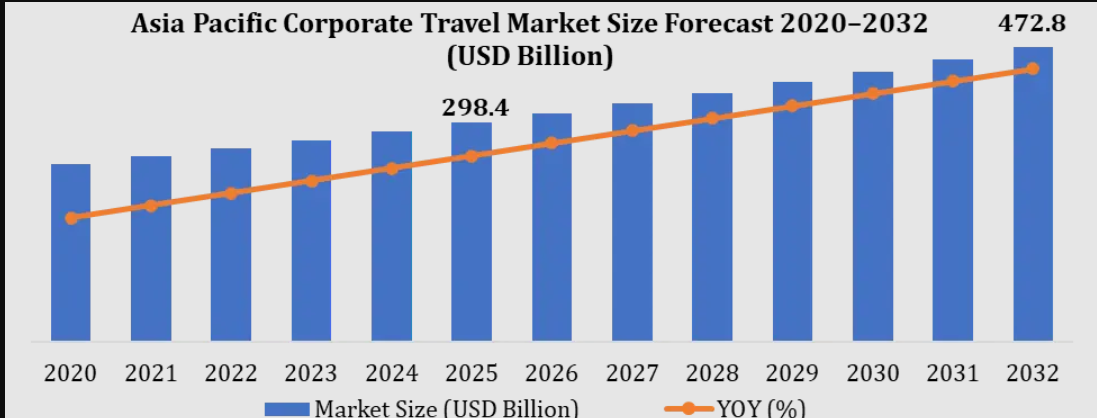
Asia-Pacific Corporate Travel Market Projected to Reach USD 472.8 Billion by 2032, Propelled by Managed Mobility Platforms and Digital Travel Workflows
An elite global business intelligence and corporate strategy consulting enterprise, has released its highly specialized industry intelligence study, titled "Asia-Pacific Corporate Travel Market: Industry Structure Evaluation by Digital Travel Management, Bleisure Travel Adoption, AI-based Mobility Solutions, and Corporate Booking Platforms [2026–2032]". The 291-page analytical report reveals that the regional corporate mobility landscape is experiencing structural transformation. Valued at USD 298.4 Billion in 2025, the Asia-Pacific (APAC) corporate travel market is forecasted to scale to USD 472.8 Billion by 2032, demonstrating a steady and resilient Compound Annual Growth Rate (CAGR) of 6.8% over the forecast period.
The deep-dive study reveals that business travel across Asia-Pacific has permanently shifted away from a routine administrative logistics line-item. Instead, modern enterprises treat mobility as a high-value, revenue-generation infrastructure. The market's upward trajectory is driven by a strong combination of expanding multi-country operations by regional multinationals, a resurgence in high-yield MICE (Meetings, Incentives, Conferences, and Exhibitions) events, and an aggressive deployment of AI-enabled travel management software designed to secure policy compliance, improve worker productivity, and control corporate spend leaks.
𝐃𝐨𝐰𝐧𝐥𝐨𝐚𝐝 𝐅𝐫𝐞𝐞 𝐏𝐃𝐅 𝐁𝐫𝐨𝐜𝐡𝐮𝐫𝐞 @https://www.maximizemarketresearch.com/request-sample/305708/
The Strategic Realignment: How Enterprise Mobility Drives Regional Deal Velocity
Across the highly dynamic economic corridors of Asia-Pacific, corporate leaders are recognizing that virtual engagement models, while highly efficient for routine updates, are structurally insufficient for complex commercial deal closures, localized regulatory negotiations, and high-value joint-venture formations. Real-world business practices reveal that face-to-face executive presence remains a vital driver of regional contract velocity and long-term client retention.
However, the post-pandemic recovery phase has transitioned into an era of strict structural cost optimization and data discipline. Modern finance and procurement departments are implementing meticulous trip-ROI metrics. Rather than scaling back travel volumes indiscriminately, progressive organizations are re-engineering their travel frameworks to support high-impact, relationship-critical journeys. This deliberate intentionality has shifted volume pools away from unmanaged, fragmented bookings toward highly integrated, centralized ecosystems where every flight reservation, hotel booking, and ground transportation expense is fully visible, auditable, and aligned with company policy.
Core Market Catalysts: Digital Workflows, AI Personalization, and Bleisure Integration
The ongoing expansion of the Asia-Pacific corporate travel ecosystem is supported by several major technological and behavioral catalysts:
-
Rapid Adoption of AI-Enabled Travel Management Solutions: Enterprises are aggressively phasing out legacy booking procedures in favor of cloud-based digital platforms. Modern travel systems leverage advanced machine learning models to analyze thousands of routing alternatives in seconds, serving personalized, policy-compliant travel itineraries directly to employees while optimizing corporate discount matrices.
-
Automated Expense Management and Micro-Friction Reduction: Managing regional travel involves navigating diverse currency standards and highly localized payment infrastructures. The integration of unified B2B payment platforms, digital corporate e-wallets, and optical character recognition (OCR) automated receipts has minimized administrative friction, enabling real-time expense reporting and eliminating tedious reimbursement pipelines.
-
The Structural Rise of "Bleisure" and Employee-Centric Flexibility: The blurring of professional boundaries has made "bleisure travel"—the conscious blending of mandatory business travel with extended leisure periods—a permanent talent retention mechanism. Over 30% of corporate journeys across the APAC territory now integrate leisure extensions, forcing human resource departments and travel managers to update duty-of-care guardrails and structural travel insurance architectures
Managed Business Travel Establishes Domain Dominance
The managed business travel segment commands the lion’s share of regional spend, proving that enterprises heavily favor structured travel parameters over open-market bookings. Unmanaged travel inherently creates significant policy blind spots, particularly within local ground transportation and long-tail accommodation options where off-platform bookings lead to unvetted budget leaks. By relying on sophisticated travel management companies and enterprise online booking tools (OBTs), corporations can seamlessly orchestrate multi-city travel programs while maintaining real-time compliance tracking and consolidated expense data.
Mobile Booking Applications and Online Platforms Accelerate
Convenience and digitalization have become non-negotiable procurement mandates for modern corporate travelers. Mobile corporate booking applications are registering the fastest adoption rates within the channel segment. This growth is propelled by the expectations of a digitally native workforce that demands instantaneous trip disruption management, real-time gate change alerts, and immediate conversational concierge support via secure mobile interfaces.
Key Regional Growth Corridors: China Leads, India Emerges as the Velocity Engine
China: High-Volume Supply Chain Mobility
China retains its position as the largest single market for corporate travel expenditures within the region. Supported by expansive domestic industrial operations, state-backed infrastructure programs, and a massive manufacturing supply chain network, the Chinese market generates consistent, high-volume domestic and regional travel demands. Large-scale domestic corporations across China are increasingly investing in enterprise-grade travel management systems like Trip.com Group's corporate travel management solutions to bring structural visibility to vast internal employee mobility requirements.
India: The Fastest-Growing Corporate Travel Destination
India has officially emerged as the fastest-growing corporate travel market in the Asia-Pacific region. Fueled by rapid industrialization, a thriving small-to-medium enterprise (SME) sector, and an influx of multinational capability centers (GCCs), India's corporate travel volume is expanding rapidly. Industry data indicates exceptionally high market confidence among local procurement professionals, with India expected to lead both outbound corporate travel expansion and regional inbound business travel over the coming years. This surge has sparked intense competition among international tech-first TMCs looking to establish deep operational footprints across India's tier-1 and tier-2 commercial hubs.
Mature APAC Markets: Singapore, Japan, and Australia
The mature economies of Singapore, Japan, and Australia exhibit unique, premium travel characteristics. Singapore functions as an essential, low-friction regional hub for high-yield international MICE tourism and executive regional command centers. Meanwhile, corporate travel programs in Australia and Japan display a deep, structural commitment to environmental sustainability metrics, with corporate buyers prioritizing airlines utilizing sustainable aviation fuel (SAF) and hotel groups that provide documented carbon-offsetting data.
𝐃𝐨𝐰𝐧𝐥𝐨𝐚𝐝 𝐅𝐫𝐞𝐞 𝐏𝐃𝐅 𝐁𝐫𝐨𝐜𝐡𝐮𝐫𝐞 @https://www.maximizemarketresearch.com/request-sample/305708/
Strategic Operational Challenges Impeding Cross-Border Scalability
While the macroeconomic data indicates clear upward momentum, regional travel managers and software providers must actively mitigate several critical structural bottlenecks:
-
Fragmented Payment Systems and Lack of Localization: The APAC region features a highly fragmented payments landscape, with distinct local digital wallets and security clearance protocols dominating individual countries. Travel providers that fail to deliver extensive, localized billing options and flexible payment infrastructures face significant user friction.
-
Legacy Infrastructure and System Integration Barriers: A substantial portion of the regional travel ecosystem remains constrained by rigid legacy IT architectures. Integrating modern, AI-powered booking tools with old, fragmented enterprise resource planning (ERP) systems creates software integration delays that slow down automated expense reconciliation.
-
Geopolitical Adjustments and Travel Cost Inflation: Ongoing global cost inflation across the aviation and hospitality sectors has elevated average per-trip expenses. Coupled with localized travel security risks and variable cross-border visa policies, corporate travel planners must continuously reassess their contingency frameworks to guarantee traveler safety without exceeding annual budget boundaries.
Intense Competitive Dynamics and Strategic Corporate Movements
The Asia-Pacific Corporate Travel Market is characterized by intense technological competition. Established global travel management conglomerates are actively acquiring or partnering with regional, tech-first software developers to capture market share across emerging economies.
Prominent enterprise operators analyzed within this extensive market intelligence study include:
-
American Express Global Business Travel (GBT)
-
BCD Travel
-
CWT (Carlson Wagonlit Travel)
-
SAP Concur
-
Booking Holdings Inc.
-
Expedia Group Inc.
-
MakeMyTrip Corporate
-
Trip.com Group
- akuten Travel
Strategic movements across these market leaders are focused heavily on integrating generative AI to create predictive concierge platforms, incorporating robust ESG tracking tools that calculate the precise carbon footprint of every proposed route, and entering tactical partnerships with financial institutions to offer embedded corporate payment models.
For full access to the comprehensive strategic report, visit:https://www.maximizemarketresearch.com/market-report/apac-corporate-travel-market/305708/
Definitive Strategic Recommendations for Corporate Procurement Leaders
To achieve maximum asset optimization and navigate the complexities of the APAC corporate travel ecosystem, enterprise procurement executives should focus on three foundational principles:
-
Consolidate Spend Through Unified, Tech-Native TMCs: Eliminate fragmented booking habits by mandating the use of centralized, policy-integrated online booking platforms. Consolidating travel spend allows procurement teams to negotiate superior corporate rates with airline alliances and hospitality chains while ensuring comprehensive data capture.
-
Embed Duty-of-Care and Real-Time Telematics: As regional travel environments face shifting regulatory and atmospheric changes, organizations must invest in real-time traveler tracking tools. Ensuring that corporate travel systems feature instant mobile alerts, geo-tracking, and reliable emergency extraction options is essential for robust corporate compliance.
-
Optimize for the Autonomy Economy and Localized Payments: To drive high internal adoption rates among mobile workforces, enterprise travel programs must offer seamless mobile experiences that match consumer-grade applications. Travel systems should integrate localized payment methods—such as regional e-wallets, flexible corporate cards, and simplified corporate billing paths—to streamline workflows and minimize long-tail expense friction.
About Maximize Market Research
Maximize Market Research is a multifaceted market research and consulting company with professionals from several industries. Some of the industries we cover include medical devices, pharmaceutical manufacturers, science and engineering, electronic components, industrial equipment, technology and communication, cars and automobiles, chemical products and substances, general merchandise, beverages, personal care, and automated systems. To mention a few, we provide market-verified industry estimations, technical trend analysis, crucial market research, strategic advice, competition analysis, production and demand analysis, and client impact studies.
Contact Maximize Market Research:
3rd Floor, Navale IT Park, Phase 2
Pune Bangalore Highway, Narhe,
Pune, Maharashtra 411041, India
sales@maximizemarketresearch.com
+91 96071 95908, +91 9607365656

 English
 Arabic
 French
 Spanish
 Portuguese
 Deutsch
 Turkish
 Dutch
Dutch
 Italiano
 Romaian
 Portuguese (Brazil)
 Greek
Greek
