
Silicon Photonic Chips Market to Reach USD 137.1 Million by 2034 as Optical Connectivity Expands Across Data Centers
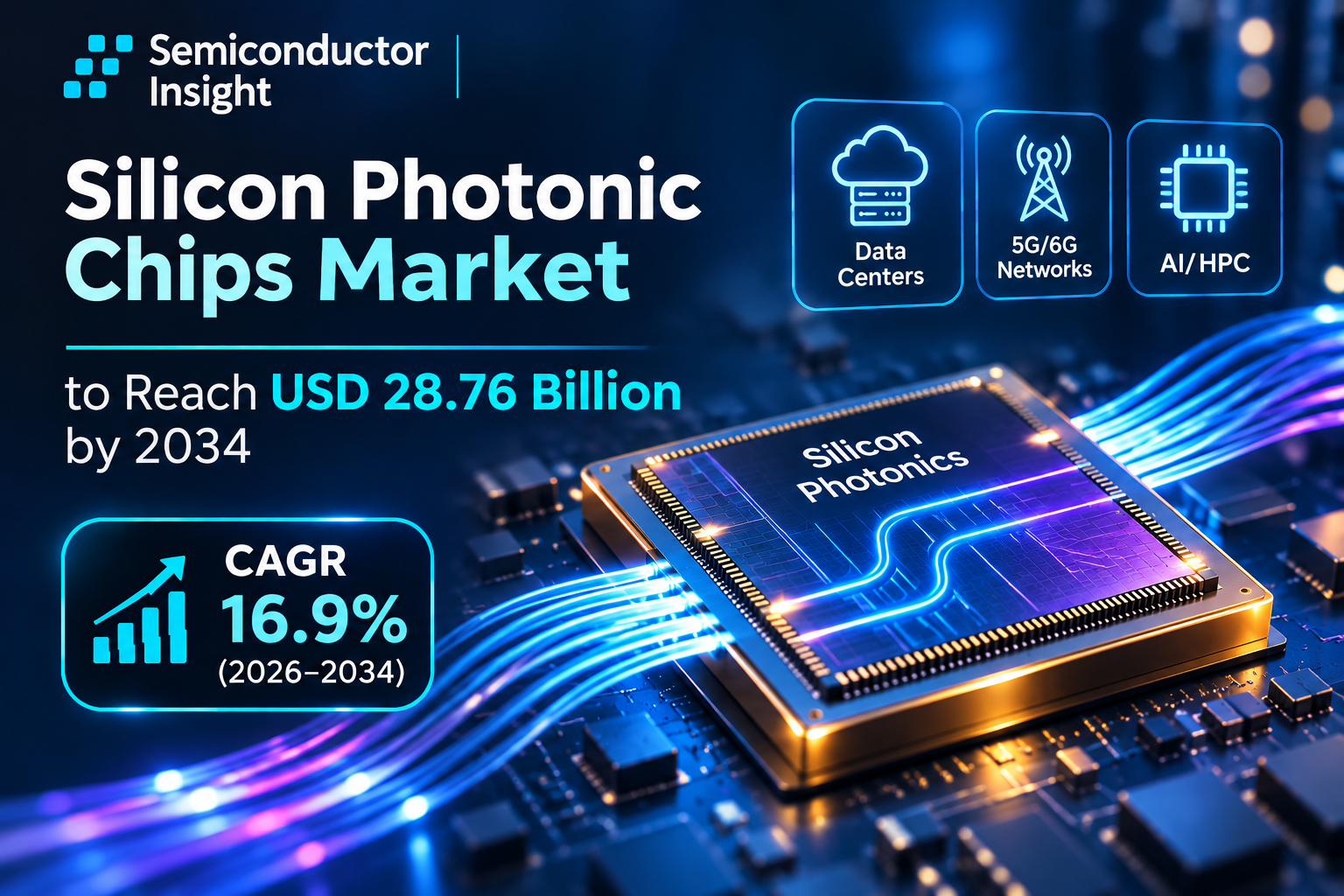
The semiconductor and communications industries are placing greater emphasis on high-speed data transmission, energy-efficient connectivity and closer integration between optical and electronic technologies. Against this backdrop, silicon photonic chips are gaining relevance across data centers, telecommunications networks and other applications that require high-bandwidth optical connections.
According to SemiconductorInsight, Global Silicon Photonic Chips Market was valued at USD 85.2 million in 2025 and is forecast to reach USD 137.1 million by 2034, growing at a CAGR of 5.4% over the 2026–2034 forecast period. Silicon photonic chips combine optical waveguides, modulators and photodetectors on semiconductor substrates to move information as light, supporting high-bandwidth connectivity and reducing electrical interconnect distances.
Explore the complete Silicon Photonic Chips Market analysis: https://semiconductorinsight.com/report/silicon-photonic-chips-market/
Why Is Silicon Photonic Chips Market Becoming Important in Advanced Photonics?
Conventional electronic interconnects face increasing demands as data volumes and communication speeds rise. Silicon photonic chips use light to transmit information, offering a route to high-bandwidth connectivity in selected networking and computing applications.
These chips combine optical waveguides, modulators and photodetectors on semiconductor substrates. Their integration with established semiconductor processes can support compact optical devices and closer connections between photonic and electronic functions.
Data centers are a major application area because hyperscale networks require higher optical bandwidth per rack and lower interconnect energy. The technology is also relevant to telecommunications infrastructure and specialized optical systems.
The market covers the value of silicon photonic chips rather than the full revenue of optical transceivers, networking systems or complete modules. This distinction is important when assessing the commercial scale of the underlying photonic component market.
Market Growth Is Closely Linked to Data Center Expansion
One of the major trends influencing the Silicon Photonic Chips Market is the expansion of data centers and AI computing infrastructure. These systems require high-capacity optical connectivity as data moves between processors, switches and network equipment.
Semiconductor Insight estimates that data-center applications account for approximately 65% of 2025 chip revenue. The expansion of cloud infrastructure and demand for higher optical bandwidth support the development of silicon photonic components.
Non-data-center applications account for the remaining 35% and include telecommunications infrastructure, sensing, industrial instrumentation and emerging medical devices. These uses broaden the market beyond hyperscale networking.
The transition toward 800G and 1.6T networking and the integration of optical I/O with computing devices are also shaping product development. Manufacturing yield, light-source integration and packaging reliability remain important to commercial adoption.
Receive your Free Sample Report today: https://semiconductorinsight.com/download-sample-report/?product_id=88018
Silicon Oxide and Silicon Nitride Are Expanding the Material Landscape
Silicon oxide material represents the largest product category, accounting for an estimated 57% of 2025 market value. Its compatibility with established semiconductor wafer processing supports integration with electronic and photonic components.
Silicon nitride accounts for an estimated 43% of the market and is used in lower-loss waveguide designs, specialized sensors and integrated photonic devices operating across diverse optical wavelengths.
Material selection depends on optical loss, wavelength requirements, fabrication compatibility and the intended application. These two material categories therefore support different design priorities within the silicon photonics ecosystem.
Telecommunications and Non-Data-Center Applications Create Additional Demand
The Silicon Photonic Chips Market extends beyond data-center applications. Telecommunications infrastructure requires optical components that can support high-capacity data transmission across network equipment.
Sensing and industrial instrumentation represent further application areas. Photonic chips can support compact optical measurement functions where integration, wavelength handling and stable optical paths are important.
Medical technologies are another emerging area covered within non-data-center applications. Their adoption depends on application-specific optical performance, reliability and integration into complete instruments.
These uses broaden the addressable market for silicon photonic chips. Suppliers must address different system requirements while maintaining manufacturing quality and compatibility with optical packaging processes.
Photonics-Electronics Integration Is Becoming Part of Chip Development
The integration of photonic functions with semiconductor electronics is a major development in the market. Combining waveguides, modulators and detectors with electronic drivers can support compact optical engines and advanced connectivity architectures.
Established wafer processing and foundry-compatible manufacturing provide a route to repeatable production. However, wafer fabrication alone does not resolve the precision required for optical packaging and coupling.
Laser attachment and fiber alignment remain important because silicon does not generate light efficiently on its own. Hybrid integration and external light sources are used to complete the optical link.
These developments make manufacturing process maturity, optical testing and packaging reliability important considerations for companies developing silicon photonic products.
Cost Flexibility Is an Important Market Driver
Silicon photonic chips can support high-bandwidth optical connectivity in data centers and communication systems. Their value comes from integrating optical functions on semiconductor substrates and reducing the distance over which data must travel electrically.
Foundry-compatible processing can support repeatable production and provide access to established semiconductor manufacturing infrastructure. This can help designers develop photonic circuits for networking and computing applications.
However, cost advantages need to be considered alongside laser attachment, fiber alignment and optical packaging. Testing and qualification also influence the delivered cost of a chip or optical engine.
This distinction is central to understanding the market: silicon photonic chips compete through integrated optical connectivity and bandwidth performance, while commercial success depends on reliable packaging and system-level integration.
Access the Full Report for In-Depth Insights: https://semiconductorinsight.com/report/silicon-photonic-chips-market/
Throughput and Process Integration Remain Key Challenges
Despite their advantages, silicon photonic chips face several technical and commercial constraints.
Optical packaging and alignment costs can affect production economics. Fiber coupling requires precision and can influence the yield of finished optical components.
Laser integration and thermal reliability create additional engineering challenges because silicon does not generate light efficiently on its own. External or hybrid light sources must be integrated into the optical system.
Qualification and manufacturing yield can influence the pace of adoption. Customers require repeatable performance and reliable supply before moving from evaluation to commercial deployment.
The report identifies packaging cost, laser integration, thermal reliability, manufacturing yield and competition from alternative interconnect designs as important restraints.
Where Are the Biggest Opportunities Emerging?
Data centers represent the largest opportunity as hyperscale networks require higher optical bandwidth per rack and lower interconnect energy. Silicon photonic chips can support optical engines and connections used in these environments.
Telecommunications networks provide another demand area as operators expand high-capacity infrastructure. Optical components are required to support data transmission across network equipment and communication systems.
Sensing applications create opportunities for specialized photonic devices. Silicon nitride-based designs can be relevant where lower optical loss and flexible wavelength operation are important.
Industrial instrumentation and medical technologies add further potential applications. These markets require components that can be integrated into compact instruments and qualified for specific operating conditions.
Market development will depend on design wins, reliable light-source attachment, optical packaging cost and the ability to scale qualified chip production.
Silicon Photonic Chips Market Segmentation
The report evaluates the market by material type and application, providing a detailed view of where silicon photonic chips are being deployed.
By type, the market is divided into:
• Silicon Oxide Material
• Silicon Nitride Material
By application, the market covers:
• Data Center
• Non-Data Center
This segmentation is relevant for chip manufacturers because material properties and application requirements influence waveguide design, optical loss, integration with electronics and the packaging approach used in finished systems.
View the complete Silicon Photonic Chips Market segmentation and forecast: https://semiconductorinsight.com/report/silicon-photonic-chips-market/
Regional Silicon Photonic Chips Market Outlook
Asia-Pacific leads the Silicon Photonic Chips Market with an estimated 40% share of 2025 revenue. Taiwan, China, Japan and South Korea contribute through semiconductor fabrication, photonic packaging and optical module assembly.
North America accounts for approximately 28% of the market, supported by cloud and processor companies that influence optical system design and demand for advanced connectivity.
Europe represents an estimated 23% share through research platforms, specialized foundries and advanced photonics development. The region contributes to process innovation and the development of integrated optical technologies.
Middle East and Africa account for an estimated 5%, while South and Central America represent approximately 4% of the market. Demand in these regions is associated with developing digital infrastructure and adoption of optical networking equipment.
Competitive Landscape and Key Companies
Silicon Photonic Chips Market includes specialized component manufacturers, photonics developers and companies serving advanced optical systems.
Semiconductor Insight identifies Intel, Marvell Technology, Coherent, Lightmatter, imec, United Microelectronics Corporation (UMC) and New Origin among the key companies profiled in the Silicon Photonic Chips Market. Competition is influenced by material performance, foundry-compatible processing, photonic integration, packaging capability and access to data-center and telecommunications customers.
Chip developers and manufacturing platforms compete through optical performance, wafer-level yield and the ability to integrate photonic devices with electronic components. Foundry and research ecosystems also contribute process development and manufacturing access for specialized photonic designs. The report examines company positioning, product offerings, manufacturer sales and revenue, pricing, capacity and competitive developments. These factors help assess the role of semiconductor manufacturers, photonic technology developers and optical system participants.
What Does the Silicon Photonic Chips Market Report Cover?
The Semiconductor Insight study provides analysis of market size, sales, revenue, competitive positioning, industry dynamics, segmentation and regional performance.
The report examines material categories, application demand, manufacturing processes, optical packaging, downstream customers and the factors influencing adoption. It also evaluates market drivers, restraints, technology developments and competitive activity.
The study provides detailed segmentation by material type and application and examines market performance across North America, Europe, Asia-Pacific, South and Central America, and the Middle East and Africa, with country-level coverage of key semiconductor and photonics markets.
Key Questions Answered by the Study
The report helps industry participants evaluate questions including:
• What is the current Silicon Photonic Chips Market size?
• How large will the market become by 2034?
• What is the expected CAGR over the 2026–2034 forecast period?
• How are silicon oxide and silicon nitride materials developing?
• Which applications offer the strongest opportunities?
• How is data-center expansion influencing demand?
• What role does photonics-electronics integration play?
• How do silicon photonic chips support high-speed data transmission?
• What packaging and laser integration challenges could restrict adoption?
• Which regions represent important markets?
• Who are the leading silicon photonic chip companies?
• What technological and commercial developments are shaping competition?
Explore the full Silicon Photonic Chips Market forecast and competitive analysis: https://semiconductorinsight.com/report/silicon-photonic-chips-market/
Get a Sample Report copy for free: https://semiconductorinsight.com/download-sample-report/?product_id=88018
About Semiconductor Insight
Semiconductor Insight provides market intelligence and industry research covering semiconductor technologies, electronic components, advanced manufacturing systems and related technology markets. Its research focuses on market sizing, forecasting, competitive landscapes, technology trends, segmentation and regional analysis to support strategic decision-making across the semiconductor ecosystem.
Contact Semiconductor Insight
Website: www.semiconductorinsight.com

 English
 Arabic
 French
 Spanish
 Portuguese
 Turkish
 Dutch
 Italiano
 Russian
 Romaian
 Portuguese (Brazil)
 Greek
