
EVA Foam Shoe Sole: Benefits, Limitations and Who Should Choose It
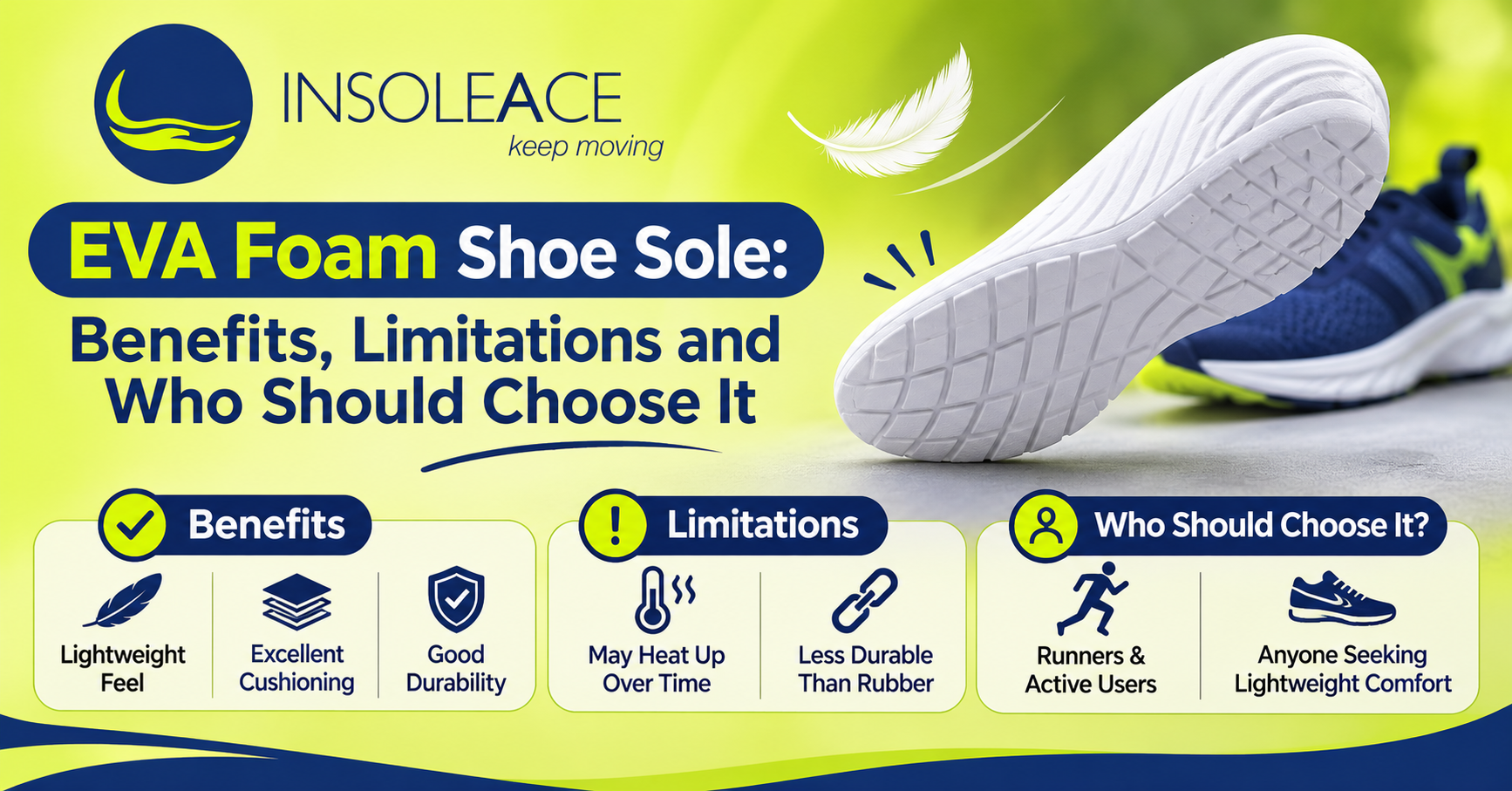
Walk through any shoe shop and you will find EVA almost everywhere, from running shoes to slippers. So it is no surprise that many people look for an EVA foam shoe sole when they want a comfortable, lightweight insole.
But EVA is not perfect for everyone. This guide explains what EVA is, what it does well, where it falls short and how to decide whether it is the right material for your feet.
What Is EVA Foam?
EVA stands for ethylene vinyl acetate. It is a lightweight, flexible foam that is widely used in footwear. It can be cut, shaped and moulded easily, and it comes in many thicknesses, colours and textures. In insoles, an EVA layer is often used for its cushioning and shock absorption.
The Benefits of EVA, According to InsoleAce
InsoleAce makes its EVA Upper-Corrective Orthotic Insole by hand. On the product page, the company lists these advantages of EVA sheet-based footbeds:
• High shock absorption for reduced foot pressure while walking or running
• Soft yet supportive cushioning that keeps its shape over time
• Lightweight material that makes footwear more comfortable
• Good compression resistance for long-lasting performance
• Tear and crack resistance for durability
• A water-resistant surface that keeps the footbed hygienic
• Easy to clean without damage
• Temperature insulation for year-round comfort
• Easy to mould and cut for a custom fit
• Non-toxic and odour-free for skin-friendly use
Where EVA Works Best
• Sport and running: InsoleAce's comparison chart rates EVA as excellent for sports and running because of its shock absorption.
• Sweaty or moist feet: the chart rates EVA as the best option, thanks to its waterproof, quick-drying surface.
• Custom cutting: EVA is very easy to cut and shape.
• Tight shoes: EVA is lighter and thinner, so it suits shoes with limited space.
• Everyday walking: a good all-round option for office and casual footwear.
Where EVA Is Not the Best Choice
Honest buying advice means knowing the limits too. According to the same chart, EVA is a less stable choice for heavier body weights, and it is rated lower than MCR for several pressure-related needs:
• Sensitive or diabetic feet: MCR is recommended, because it is softer and spreads pressure more gently.
• Corns and calluses: the chart rates MCR as better.
• Metatarsal pain: the chart rates MCR as better.
• Arthritis or joint pain: the chart suggests MCR for its pressure relief.
If one of these describes you, read about the MCR insole before you decide, and speak to a doctor if you have a medical condition.
EVA vs MCR at a Glance
• EVA: lightweight, waterproof, quick-drying, easy to trim, best for sport, sweaty feet and tighter shoes.
• MCR: softer, breathable, rubber-based, best for pressure relief, sensitive feet and heavier body weights, but not ideal for sport.
Many people choose EVA for everyday and sports shoes and MCR for work shoes if they stand on hard floors all day.
How to Fit an EVA Insole
InsoleAce explains the fitting process:
• Remove the old insole from your shoe.
• Place the old insole on top of the new one.
• Mark any excess at the front and cut it.
• Smooth the cut edge with the smoothing tool.
• Place the new insole in your shoe.
The company also suggests pairing its insoles with broad, lace-up sport shoes, and recommends EVA if there is limited space inside the shoe.
Price and Policies
At the time of writing, the InsoleAce EVA insole is listed at ₹1,999, reduced from ₹2,300, inclusive of taxes and shipping. It comes in unisex UK sizes 3 to 12, with free shipping across India and a 7-day size exchange for an incorrect size or a manufacturing defect, subject to conditions.
Prices, shipping and exchange terms are as listed on the InsoleAce website in November 2026 and may change. Please check the product page for current details.
How to Care for an EVA Insole
• Air the insole overnight after wearing it.
• Wipe it with a damp cloth and mild soap.
• Do not put it in a washing machine or tumble dryer.
• Let it dry fully before placing it back in the shoe.
• Replace it when the surface flattens or the cushioning stops rebounding.
A Short History of Why EVA Is Everywhere
EVA became popular in footwear because manufacturers wanted a material that is light, flexible and inexpensive to produce in many shapes and colours. That is why you will see it in sports shoes, school shoes, sandals and slippers. It is also a practical material for handmade insoles, because it can be cut, shaped and layered without special equipment, which lets a maker adjust the design for different needs.
Questions to Ask Before You Choose EVA
• Will I use this insole mainly for sport, work or everyday walking?
• Do my shoes have enough room for the thickness I need?
• Do my feet sweat a lot?
• Do I have a heavier body weight, or a condition that calls for a softer material?
• Have I checked the size, the price and the exchange policy?
If most of your answers point toward lightweight, easy-to-trim and water-resistant, EVA is likely a good fit. If they point toward pressure relief and softness, look at MCR.
A Note on Comfort and Fit
Even the best material will not help if the insole does not sit properly in your shoe. After trimming, check that the edges lie flat, the heel sits securely and your toes are not crowded. Walk around indoors for a few minutes before wearing the shoes outside, and adjust if anything feels off.
Frequently Asked Questions
Is EVA good for flat feet?
It can offer support, but InsoleAce's chart rates MCR as the better choice for flat feet. Read the page on flat feet or ask the team.
Can I wear EVA without socks?
InsoleAce says EVA suits sockless wear in loafers and sandals because the surface is waterproof and wipes clean.
Will EVA flatten quickly?
The company says it keeps its shape over time instead of flattening in weeks, and suggests replacing insoles every six to twelve months depending on use.
Is EVA safe for sensitive skin?
InsoleAce describes EVA as non-toxic and odour-free. If you have sensitive skin or a medical condition, check with your doctor first.
What does "foam" tell me about an insole?
It tells you the cushioning layer is a soft, air-filled material, but not how it behaves. Ask about compression resistance, durability and how the insole handles sweat and weight before you decide.
Can I use an EVA foam insole in work boots?
Often yes, if the boot has a removable insole and enough depth. Trim carefully and check the fit.
Final Thoughts
EVA is a practical, lightweight and easy-to-fit material, and it is a strong choice for sport, everyday walking and sweaty feet. If your feet are sensitive or you carry a heavier body weight, a softer MCR insole may suit you better. To explore the options, see the EVA insole or contact InsoleAce for advice.

 English
 French
 Spanish
 Portuguese
 Deutsch
 Turkish
 Dutch
 Italiano
 Russian
 Romaian
 Portuguese (Brazil)
 Greek
