
How can hospitals maintain consistent air pressure in Gynaec Modular OT With Laminar Airflow?
Introduction
Maintaining consistent air pressure inside an operation theatre is essential for supporting a controlled surgical environment. Hospitals must carefully plan ventilation systems, air distribution, filtration, and pressure monitoring to maintain suitable environmental conditions. In gynaecological operation theatres, proper air pressure management also helps control the movement of airborne particles between the surgical room and surrounding hospital areas.
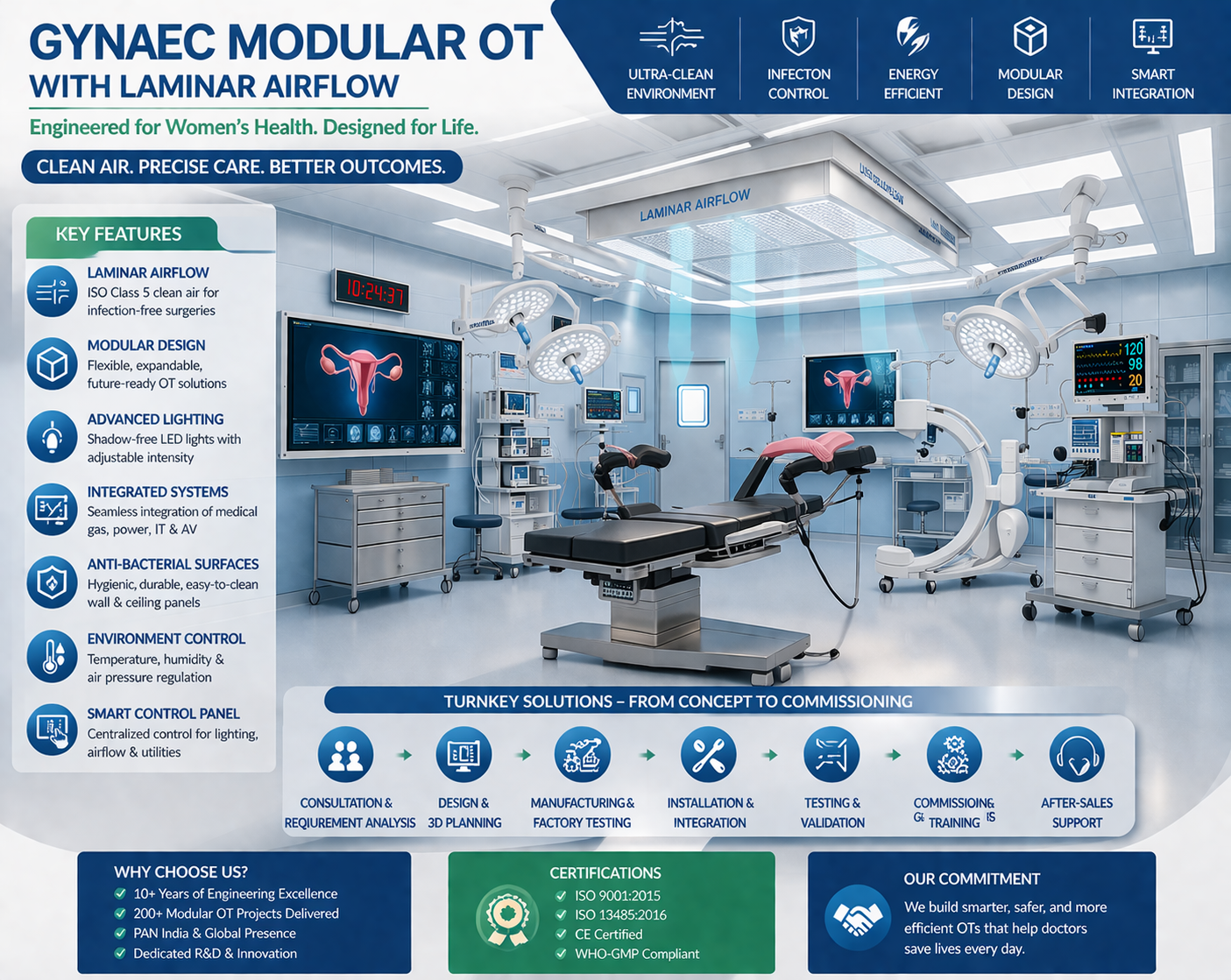
A properly designed Gynaec Modular OT With Laminar Airflow combines modular infrastructure, HEPA filtration, controlled ventilation, and pressure management to support a hygienic surgical environment. However, maintaining consistent pressure requires more than installing an HVAC system. It involves correct air supply and return arrangements, suitable door sealing, regular system maintenance, and continuous performance monitoring.
Hospitals should consider these engineering requirements during the initial design stage to avoid ventilation problems after installation. A well-planned system supports environmental control, improves operational reliability, and helps maintain appropriate conditions for gynaecological surgical procedures.
1. Understand the Importance of Positive Air Pressure
Positive air pressure is an important feature of many operation theatre ventilation designs. It means that the air pressure inside the OT is maintained higher than in designated adjacent spaces.
This pressure relationship helps reduce the entry of less-filtered air when doors are opened. It supports the separation of the surgical environment from surrounding areas.
Hospitals should consider the following factors:
-
Maintain the specified pressure difference between the OT and adjacent areas.
-
Ensure adequate filtered air supply.
-
Design appropriate return and exhaust air arrangements.
-
Minimize unwanted air leakage through doors and wall joints.
-
Monitor pressure conditions during normal OT operations.
The pressure differential should be determined according to applicable healthcare ventilation standards and the overall hospital HVAC design.
2. Design an Efficient HVAC System
The HVAC system is the foundation of consistent air pressure management. It controls air supply, circulation, temperature, humidity, and ventilation within the operation theatre.
An appropriately engineered HVAC system should include suitable air handling units, filtration stages, ductwork, supply air diffusers, and return air grilles.
The design team should calculate the required airflow based on room dimensions, occupancy, equipment requirements, and applicable ventilation guidelines.
An undersized system may struggle to maintain the required pressure conditions, while an improperly balanced system can create uneven airflow distribution.
Hospitals should ensure that HVAC capacity is evaluated before finalizing the modular OT layout.
3. Install High-Efficiency HEPA Filtration
HEPA filtration is essential for removing airborne particles from the air supplied to the operation theatre. It supports the delivery of filtered air and helps maintain the required cleanliness conditions.
Hospitals should consider the following filtration requirements:
-
Select HEPA filters according to the required filtration efficiency.
-
Ensure proper filter housing and airtight installation.
-
Prevent air bypass around filter frames and joints.
-
Provide easy access for filter inspection and replacement.
-
Monitor filter loading and pressure drop.
-
Conduct periodic filter integrity testing.
A properly maintained filtration system helps ensure that the air supplied to the surgical environment meets the intended design specifications.
The Indian Ministry of Health and Family Welfare's infection prevention guidelines also emphasize HEPA-filtered positive-pressure ventilation and regular monitoring of filtration efficiency.
4. Maintain Proper Air Supply and Return Balance
One of the common reasons for unstable room pressure is an imbalance between supplied air and returned or exhausted air.
When the supply airflow is insufficient, the OT may lose its intended positive pressure. Similarly, excessive exhaust airflow can disturb the room's pressure relationship.
To prevent these problems, hospitals should:
-
Calculate the required supply airflow based on room volume.
-
Coordinate supply and return air quantities.
-
Position air diffusers according to the approved ventilation layout.
-
Ensure return air grilles are not obstructed.
-
Evaluate airflow distribution after installation.
-
Rebalance the system whenever significant changes are made.
The air supply and return system should be designed together rather than treated as separate installations.
5. Use Digital Differential Pressure Monitoring
Continuous pressure monitoring helps hospital engineering teams identify ventilation problems before they affect normal OT operations.
Differential pressure monitors measure the pressure difference between the operation theatre and adjacent areas. These devices can provide real-time readings and alert staff when pressure moves outside the approved operating range.
Important monitoring features include:
-
Digital pressure display.
-
Continuous pressure measurement.
-
Configurable alarm limits.
-
Visual and audible alerts.
-
Historical pressure records.
-
Integration with the Building Management System (BMS), where required.
Hospitals should position pressure monitoring devices where authorized staff can easily observe readings. Regular calibration is also important for maintaining measurement accuracy.
The Indian Health Facility Guidelines recommend active pressure monitoring and coordination with building management systems for applicable variable-airflow designs.
6. Ensure Proper Door Sealing and Room Construction
Even a well-designed HVAC system may struggle to maintain stable pressure if the operation theatre has unwanted air leakage.
Doors, wall joints, ceiling connections, service penetrations, and other openings should be properly sealed during construction.
Hospitals should pay attention to:
Hermetic doors: Properly installed automatic doors help minimize uncontrolled air leakage.
Modular wall panels: Panel joints should be sealed to reduce unwanted gaps.
Ceiling connections: Ceiling panels and filtration housings should have suitable airtight connections.
Service penetrations: Electrical conduits, medical gas connections, and duct openings should be properly sealed.
Door operation: Automatic closing mechanisms should function correctly to minimize unnecessary pressure fluctuations.
Regular inspection of these areas helps preserve the intended pressure relationship.
7. Control Door Opening and Staff Movement
Frequent door opening can temporarily affect pressure conditions inside an operation theatre. Unnecessary movement may also introduce particles from adjacent spaces.
Hospitals should establish clear movement procedures for surgeons, nurses, technicians, patients, and support staff.
Practical measures include limiting unnecessary entry, avoiding prolonged door opening, coordinating patient transfers, and ensuring that sterile supplies are delivered through planned routes.
Staff training is equally important. Everyone working in the OT should understand why access control and door discipline are necessary for maintaining environmental conditions.
8. Maintain Temperature and Relative Humidity
Temperature and humidity management are important parts of a properly functioning ventilation system.
Changes in environmental conditions can affect surgical staff comfort, equipment operation, and the overall performance of the OT environment.
The HVAC system should provide appropriate temperature and relative humidity controls based on the hospital's clinical requirements and applicable standards.
Hospitals should install suitable sensors to monitor these parameters and maintain records for operational review.
The monitoring system should allow engineering teams to identify unusual changes and take corrective action.
9. Perform Regular HVAC Maintenance
Preventive maintenance is necessary to maintain consistent pressure and airflow performance over time.
Dust accumulation, blocked filters, worn-out belts, damaged dampers, and malfunctioning fans can affect the performance of an HVAC system.
A structured maintenance programme should include:
-
Cleaning and inspection of pre-filters.
-
HEPA filter integrity checks.
-
Inspection of air handling units.
-
Checking fan and motor performance.
-
Inspecting ductwork and dampers.
-
Verifying pressure sensor accuracy.
-
Checking supply and return airflow.
-
Recording maintenance and repair activities.
Hospitals should follow manufacturer recommendations and their approved maintenance schedules. Any major changes to the HVAC system should be followed by appropriate performance verification.
10. Conduct Air Pressure Testing and System Validation
Testing and validation help confirm whether the installed ventilation system performs according to the approved design.
Before handing over the operation theatre, the engineering team should conduct relevant inspections and performance tests.
Important validation activities include:
Differential pressure testing: Measures the pressure difference between the OT and adjacent areas.
Air velocity testing: Evaluates airflow velocity at designated supply locations.
Airflow visualization: Helps identify the direction and distribution of supplied air.
HEPA filter integrity testing: Checks whether filters and their installation arrangements have leakage.
Air change verification: Confirms whether the ventilation system provides the specified air changes per hour.
Temperature and humidity testing: Verifies environmental conditions inside the OT.
Door sealing inspection: Identifies potential air leakage around access points.
Validation should be documented, and any deficiencies should be corrected before operational handover. Periodic revalidation is also important after major modifications or maintenance interventions.
Healthcare ventilation guidelines highlight the importance of maintaining positive pressure and verifying ventilation performance.
11. Follow Applicable Healthcare Ventilation Standards
Hospitals should not select pressure values or ventilation parameters without considering the applicable standards and clinical requirements.
The Indian National Guidelines for Infection Prevention and Control in Healthcare Facilities describe positive-pressure ventilation, HEPA filtration, and clean-to-less-clean airflow arrangements for operation theatres.
Engineering teams should evaluate relevant requirements for:
-
Pressure differential between adjacent spaces.
-
Total air changes per hour.
-
Fresh air supply.
-
HEPA filtration efficiency.
-
Airflow direction and distribution.
-
Temperature and relative humidity.
-
Monitoring and maintenance frequency.
The exact design parameters should be established by qualified HVAC professionals according to the applicable standards, local regulations, and hospital requirements.
12. Plan the Modular OT Design for Long-Term Performance
Pressure stability should be considered from the beginning of the modular operation theatre project.
Hospitals should coordinate architectural planning, HVAC engineering, electrical infrastructure, medical gas systems, modular panels, and door installations.
The design should also provide sufficient maintenance access to air handling equipment, filters, sensors, and ventilation components.
Future equipment additions and changes in room usage should be evaluated before modifying the original ventilation arrangement. Unplanned modifications can affect airflow balance and pressure performance.
A coordinated engineering approach helps maintain system reliability and reduces the possibility of avoidable operational problems.
Why Choose Altus Airflow for Modular Gynaec OT Solutions?
Choosing an experienced modular OT engineering company is important for maintaining the quality and performance of hospital infrastructure.
Altus Airflow provides modular operation theatre solutions that consider hospital-specific requirements, ventilation arrangements, filtration systems, and specialized surgical environments.
A properly engineered Gynaec Modular OT With Laminar Airflow brings together modular wall panels, HEPA filtration, HVAC systems, controlled air distribution, and pressure monitoring to support the intended surgical environment.
Hospitals should look for an engineering partner that can coordinate design, installation, testing, commissioning, and technical documentation. This integrated approach helps ensure that the completed OT meets its approved project specifications.
Conclusion
Maintaining consistent air pressure inside a modular operation theatre requires proper HVAC engineering, effective filtration, balanced airflow, reliable pressure monitoring, and regular preventive maintenance.
Hospitals should prioritize these specifications during the initial planning and installation stages. They should also ensure that the completed ventilation system undergoes appropriate testing and validation before clinical operations begin.
With customized modular OT infrastructure and coordinated engineering solutions, Altus Airflow supports hospitals in developing hygienic, controlled, and efficient gynaecological operation theatre environments.
Frequently Asked Questions (FAQs)
1. How can hospitals maintain consistent air pressure in Gynaec Modular OT With Laminar Airflow?
Hospitals can maintain consistent air pressure through properly designed HVAC systems, balanced air supply and return arrangements, HEPA filtration, airtight modular construction, and continuous differential pressure monitoring. Regular maintenance, door sealing inspections, and periodic ventilation testing also help maintain the required pressure relationship.
2. Why is positive air pressure important in a gynaec operation theatre?
Positive air pressure helps reduce the entry of less-filtered air from surrounding areas. It supports the intended airflow direction from cleaner spaces towards less-clean adjacent spaces.
3. Which equipment is required for monitoring OT air pressure?
Hospitals can use digital differential pressure monitors, pressure sensors, alarm systems, and BMS-integrated monitoring devices. These systems help engineering teams observe pressure variations and identify ventilation problems.
4. How often should hospital HVAC systems be inspected?
Inspection frequency should follow the equipment manufacturer's recommendations, applicable healthcare guidelines, and the hospital's maintenance programme. Regular inspections should include filters, fans, motors, sensors, ductwork, and pressure monitoring devices.
5. What causes pressure fluctuations inside modular operation theatres?
Common causes include frequent door opening, damaged seals, clogged filters, incorrect airflow balancing, malfunctioning dampers, and changes in HVAC performance.
6. Why is HEPA filtration important for gynaec OT ventilation?
HEPA filtration helps remove airborne particles from supplied air and supports the cleanliness requirements of a controlled surgical environment.
7. Can pressure monitoring systems be integrated with hospital automation?
Yes. Compatible differential pressure monitors can be integrated with Building Management Systems to provide real-time readings, alarms, and historical monitoring records.

 English
 Arabic
 French
 Spanish
 Portuguese
 Deutsch
 Turkish
 Dutch
 Italiano
 Russian
 Romaian
 Greek
