
Handmade vs Mass-Produced Bed Frames: Which Is Better for Your Home?
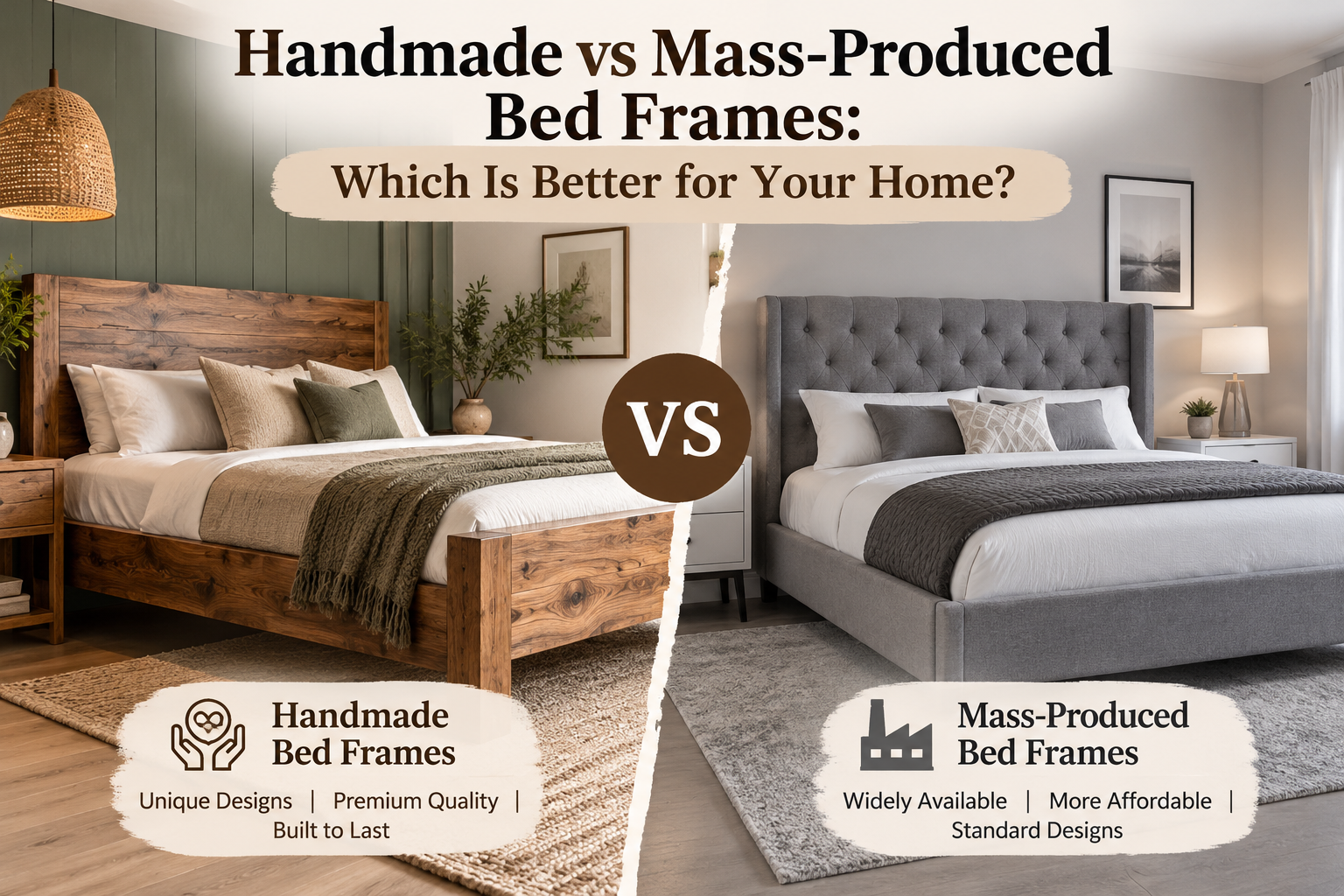
When buying a new bed, the choice between handmade and mass-produced bed frames can affect more than the appearance of your bedroom. Construction quality, material options, design flexibility, delivery times and overall cost can all influence which type of bed is right for your home.
Handmade bed frames are often associated with individual craftsmanship and greater customisation, while mass-produced frames typically offer standardised designs, wider availability and more predictable pricing. However, neither option guarantees better quality or durability. The finished product depends on its materials, construction and how well it suits your needs.
In this guide, we compare handmade vs mass-produced bed frames to help you understand the differences and choose the right option for your bedroom, budget and lifestyle.
What Is the Difference Between Handmade and Mass-Produced Bed Frames?
The main difference is how the bed frames are manufactured and how much flexibility is available when choosing the finished design.
Handmade bed frames are built or finished using skilled craftsmanship, often in smaller production runs or to individual customer specifications. Depending on the manufacturer, buyers may be able to select fabrics, finishes, headboard styles or dimensions.
Mass-produced bed frames are manufactured in larger quantities using standardised designs and production processes. This approach helps manufacturers produce consistent models, maintain stock and offer a wider selection at different price points.
It is important to distinguish manufacturing method from product quality. A carefully manufactured bed frame can perform well regardless of whether it is handmade or mass-produced. The materials, joints, support system and quality control are more useful indicators than the production method alone.
Handmade vs Mass-Produced Bed Frames: Key Differences
|
Feature |
Handmade bed frames |
Mass-produced bed frames |
|
Design |
May offer individual detailing and custom options |
Usually available in established designs |
|
Customisation |
Fabric, finish or dimensions may be adjustable |
Options generally depend on the available range |
|
Materials |
Vary by maker and specification |
Vary by model and price point |
|
Availability |
Made-to-order designs may require longer lead times |
Stocked models may be available sooner |
|
Price |
Can cost more when labour or bespoke work is involved |
Often available across a broad range of budgets |
|
Consistency |
Depends on the maker's craftsmanship and quality control |
Standardised production supports consistency |
|
Repairs |
Depend on the design, components and manufacturer's support |
Depend on parts availability and frame construction |
These differences are general tendencies, not guarantees. Some handmade frames use standard dimensions and limited finishes, while some mass-produced models offer extensive fabric choices and excellent construction.
1. Craftsmanship and Build Quality
One of the main reasons buyers consider handmade bed frames is the attention given to construction and finishing. Smaller-scale manufacturing may allow more time for individual details, such as upholstery seams, decorative headboards, timber finishes and joints.
However, visible craftsmanship is only part of the picture. A bed frame also needs a stable structure, secure connections and suitable mattress support. A beautifully finished frame will not necessarily last longer if its underlying construction is inadequate.
Mass-produced bed frames can also offer reliable build quality. Standardised production processes can help manufacturers maintain consistent dimensions and repeatable assembly methods. The quality varies according to the materials, design and manufacturing standards used for each model.
What should you check? Look at the frame's joints, side rails, slats, centre supports and overall stability. For upholstered beds, examine the fabric finish and ask about the structure beneath the upholstery. These details provide more useful evidence of quality than the label alone.
2. Design Flexibility and Personalisation
If you want your bed to complement a particular interior, the available design options may influence your decision.
Handmade bed frames can offer greater flexibility, depending on the manufacturer. You may be able to choose an upholstered headboard, a particular fabric colour, a timber finish or a design that suits an existing bedroom scheme. Some makers also accept bespoke dimensions, which can help when working with an unusual room layout.
Mass-produced beds generally follow established designs, making it easier to compare similar models. Some ranges include multiple finishes, headboard styles and upholstery options, although changes outside the standard collection may not be available.
For example, a homeowner creating a coordinated bedroom with matching furniture may prefer a specific fabric and headboard height. A handmade or made-to-order frame could accommodate these preferences if the manufacturer offers the required options.
If you are happy with a standard design, a mass-produced bed may provide everything you need without paying for additional customisation.
3. Price and Overall Value
Budget is an important consideration when comparing handmade and mass-produced beds. Handmade designs may carry a higher price when they involve additional labour, specialist upholstery, premium materials or custom measurements. Nevertheless, not every handmade frame is expensive, and not every mass-produced model is inexpensive.
Mass-produced frames benefit from larger production runs and standardised processes. This can make them more accessible to buyers looking for a straightforward bed frame without bespoke features.
Rather than comparing the initial price alone, consider what is included in the purchase. Check the frame material, mattress support system, headboard construction, delivery charges, assembly costs and warranty terms.
It is also worth considering how long you expect to keep the bed. A well-constructed frame that meets your needs may offer good value over time, regardless of how it was manufactured.
Avoid assuming that a higher price automatically means better durability. Compare the specifications and construction of the actual models before making a decision.
4. Materials and Durability
The materials used in a bed frame affect its appearance, maintenance requirements and structural performance.
Handmade and mass-produced beds can both use solid timber, engineered wood, metal, upholstered panels or combinations of these materials. The manufacturing category does not tell you which materials have been used.
Solid wood may appeal to buyers who prefer natural grain patterns and a traditional appearance. Metal frames can suit contemporary interiors, while upholstered bed frames provide a softer finish and a wide choice of fabrics.
Durability depends on more than the material itself. Frame design, joint strength, load distribution, assembly and everyday use all matter. A well-designed frame using suitable engineered materials may perform better than a poorly constructed frame made from solid wood.
Before buying, check the manufacturer's material specifications and recommended weight limits where provided. If you choose an upholstered bed, also consider fabric cleaning instructions and how the material will cope with everyday use.
5. Availability, Delivery and Assembly
The manufacturing process can influence how quickly a bed frame reaches your home.
Mass-produced bed frames may be available from stock, particularly when choosing a standard size and finish. This can be helpful if you need to furnish a bedroom quickly or replace an existing bed without a long wait.
Handmade or made-to-order frames may require additional production time, especially when the order includes a bespoke size, specialist fabric or customised headboard. Lead times vary between manufacturers, so it is important to confirm the expected delivery date before ordering.
Assembly requirements also deserve attention. Some frames arrive in several parts for easier transportation, while others require more extensive assembly. Check whether delivery includes carrying the bed into your bedroom, assembly and removal of packaging.
In UK homes, narrow staircases, tight hallways and restricted access can create difficulties when moving large furniture. Measure the route into the room as well as the space where the bed will sit.
6. Which Option Suits Your Bedroom Style?
Your preferred interior design can help narrow down the choices.
For a Luxury or Personalised Bedroom
A handmade bed frame may appeal if you want a distinctive headboard, a particular upholstery fabric or a finish that complements other bedroom furniture. The availability of these options depends on the maker.
For a Modern, Minimalist Bedroom
A mass-produced frame with clean lines and a neutral finish may suit a contemporary bedroom. Handmade alternatives can also work well if you want a specific dimension or finish.
For a Traditional Bedroom
Both manufacturing types offer traditional designs. Handmade wooden bedsteads or detailed upholstered headboards may appeal to buyers looking for individual finishes, while mass-produced ranges provide familiar styles in standard sizes.
For a Smaller Bedroom
Prioritise the bed's external dimensions, storage requirements and available walking space. A standard frame may be easier to source quickly, but a made-to-order design could be worth exploring if the room has unusual dimensions.
In every case, the most suitable frame is one that balances appearance with practical requirements rather than simply matching a particular manufacturing category.
7. Which Bed Frame Should You Choose?
The right choice depends on which features matter most to you.
Choose a handmade bed frame if you value the potential for personalised finishes, distinctive detailing or bespoke dimensions, and you are comfortable checking production lead times and paying for any additional options.
Consider a mass-produced bed frame if you prefer established designs, straightforward product comparisons, standard dimensions or potentially quicker availability.
If durability is your main concern, compare the actual construction and materials of both options. Look for a stable frame, suitable slat support, secure joints and clear warranty information.
Before purchasing, ask yourself three questions:
-
Does the frame fit my bedroom and mattress correctly?
-
Does the construction meet my expectations for everyday use?
-
Does the price represent good value for the features and quality provided?
Answering these questions will help you make a more informed choice than relying on the handmade or mass-produced label alone.
Frequently Asked Questions
Are handmade bed frames better than mass-produced beds?
Not necessarily. Both can offer good quality, and the better option depends on construction, materials, customisation needs and price.
Do handmade bed frames last longer?
They can last for many years if properly constructed and maintained, but handmade production alone does not guarantee greater durability.
Are mass-produced bed frames cheaper?
They are often available at accessible price points because of standardised, large-scale production. Actual prices vary by materials, design and manufacturer.
Can I customise a mass-produced bed frame?
Some manufacturers offer choices of fabric, colour, size or headboard style. Customisation depends on the product range.
What should I check before buying a bed frame?
Check the external dimensions, materials, joint construction, mattress support, assembly requirements, delivery terms and warranty.
Is a handmade bed frame worth the extra cost?
It may be worthwhile if the additional design choices, craftsmanship or bespoke dimensions provide genuine value for your needs. Compare specifications and total costs before deciding.
Final Thoughts
The choice between handmade and mass-produced bed frames comes down to your priorities. Handmade options may provide greater personalisation and individual detailing, while mass-produced designs can offer standardised specifications, wider availability and a range of prices.
Neither category is automatically superior. Focus on the quality of the construction, the suitability of the materials, the available design options and the practical needs of your bedroom.
By comparing these factors carefully, you can choose a bed frame that fits your space, complements your interior and provides the support you need for comfortable everyday use.

 English
 Arabic
 Spanish
 Portuguese
 Deutsch
 Turkish
 Dutch
 Italiano
 Russian
 Romaian
 Portuguese (Brazil)
 Greek
