
Ecommerce SEO for D2C Brands: Turning Product Searches Into Sales Opportunities
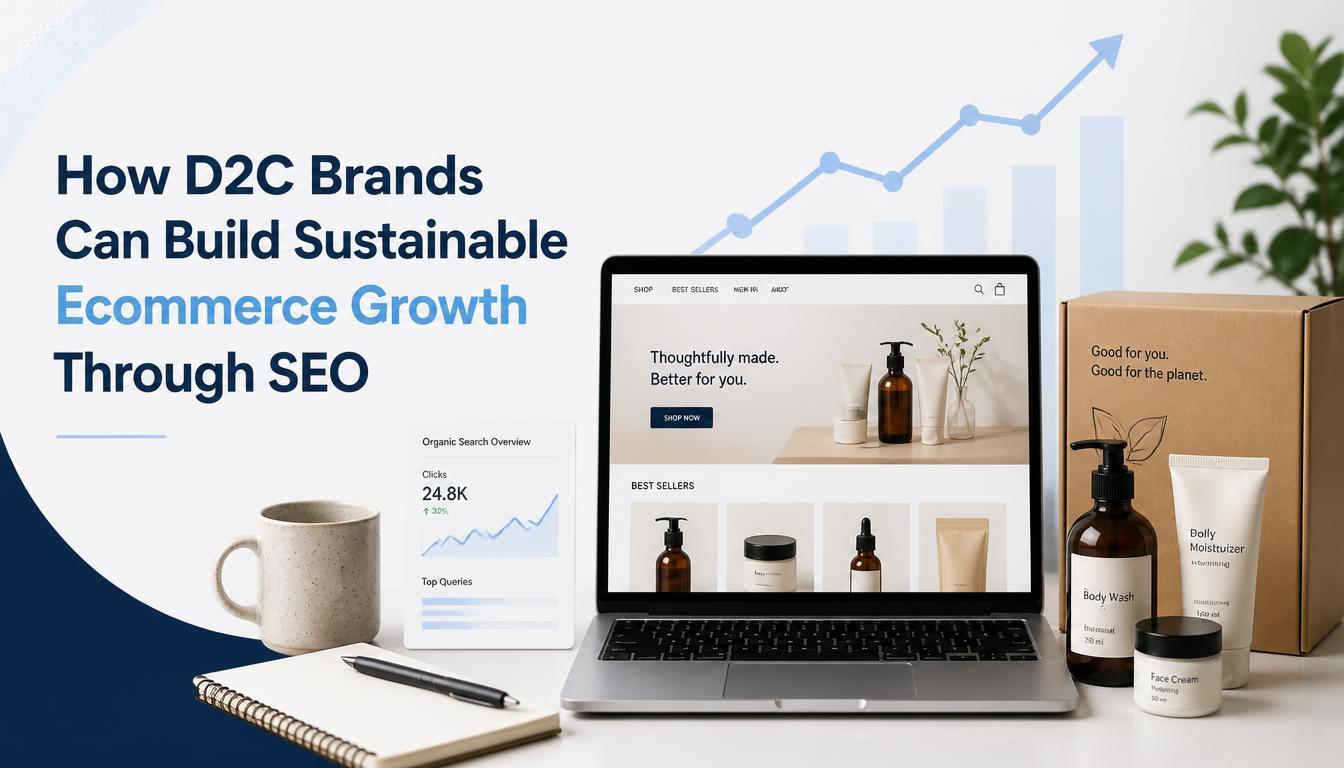
Online shoppers have more options than ever, and a direct-to-consumer brand must compete for attention across search engines, marketplaces, social platforms, and paid advertising channels. Working with a D2C SEO Company in Delhi can help a business identify how customers search for its products and build a website that serves those needs more effectively.
Search engine optimisation is particularly important for brands that own their ecommerce websites. Unlike marketplace sellers, these businesses can shape their own category structure, product information, customer education, and overall shopping experience. That flexibility creates opportunities, but it also introduces technical and content responsibilities.
Understand the Difference Between Traffic and Product Discovery
Not all website traffic has the same commercial value.
A visitor searching for the history of a product category may be interested in general information, while someone searching for a particular product size, material, or specification may have a clearer purchase intention.
A D2C brand needs to understand these differences before assigning keywords to pages.
For example, a company selling reusable water bottles could target several related search needs:
-
Category searches for reusable water bottles
-
Specific searches for insulated steel bottles
-
Questions about bottle capacity and cleaning
-
Comparisons between different materials
-
Searches for replacement parts or accessories
The category page should help shoppers browse the product range. Individual product pages should provide precise specifications, pricing, availability, and delivery information. Educational content should answer questions that are not adequately addressed by the commercial pages.
This approach gives every important page a defined purpose and reduces the risk of several URLs competing for the same query.
Organise the Website Around Products and Categories
A well-structured ecommerce website helps customers navigate the catalogue and helps search engines discover important pages.
A typical structure might look like this:
Home page → Main category → Subcategory → Product page.
For example, an apparel store could organise its catalogue into men's clothing, women's clothing, shirts, trousers, and individual product listings.
Navigation should make important categories accessible through descriptive links. Breadcrumbs can provide additional context by showing the relationship between a product and its parent category.
Internal links also matter. A popular guide can link to a relevant category, while category pages can link to useful buying guides. Related products can be linked where the relationship is meaningful to the shopper.
Google's ecommerce guidance recommends making important products reachable through normal site navigation and linking structures. Brands should avoid leaving valuable product pages accessible only through an internal search box or an isolated sitemap entry.
Create Unique, Informative Product Descriptions
Duplicate product descriptions are a common problem for ecommerce websites. They often occur when stores reuse supplier copy or apply the same generic template to hundreds of products.
A useful product description should answer the questions a customer is likely to have before buying.
Depending on the product, this may include:
-
Materials, ingredients, or construction
-
Size, dimensions, weight, and available variants
-
Instructions for use and maintenance
-
Compatibility with other products
-
Intended use and practical limitations
-
Warranty, delivery, and return information
For example, instead of describing a travel backpack simply as durable and stylish, a stronger product page could explain its capacity, compartment layout, dimensions, material, laptop compatibility, and care instructions.
Claims must be accurate and supported. A product should not be described as waterproof, medically beneficial, or independently certified unless the evidence justifies that statement.
Clear information helps shoppers make informed decisions and gives search engines more meaningful content to interpret.
Use Product Structured Data Correctly
Structured data provides search engines with machine-readable information about a page. For eligible ecommerce product pages, Product and Offer markup can describe details such as a product's name, price, availability, and other supported attributes.
Correct implementation may make a page eligible for certain enhanced search appearances. Eligibility does not guarantee that a particular appearance will be displayed.
Brands should follow a few essential principles:
-
Mark up the product that the page actually describes.
-
Keep structured data consistent with visible product details.
-
Update price and stock information when the offer changes.
-
Use valid identifiers and variant information where applicable.
-
Test the implementation and monitor errors after deployment.
Businesses can also maintain a Google Merchant Center product feed and explore eligibility for free product listings. Product feeds and on-page structured data serve related but distinct purposes, and maintaining consistency between them helps reduce discrepancies.
The official documentation is available in Google's introduction to Product structured data.
Manage Product Variants and Duplicate URLs
A product may have several colours, sizes, capacities, or other variants. Depending on the ecommerce platform, these options can generate separate URLs or change the selected product on a single URL.
Poorly managed variants may create duplicate pages, inconsistent canonical tags, or indexing problems.
Before changing URL settings, a business should understand how its platform handles variants and which URLs provide distinct value to shoppers.
Where variants have separate URLs, the website should make their relationship clear and provide appropriate product information. Where parameters only change sorting or filtering, the site should avoid generating an uncontrolled number of repetitive URLs.
Canonical tags can help signal the preferred version among duplicate or similar pages, but they should not be used as a substitute for a logical site architecture.
Improve Product Images and Mobile Usability
Product imagery can influence whether a shopper understands an item and feels confident enough to purchase it. Images should be sharp, appropriately sized, and representative of the actual product.
Descriptive filenames and useful alternative text can provide additional context, particularly when an image conveys information that is not available elsewhere on the page.
At the same time, large image files can slow down the experience. Appropriate compression, responsive image delivery, and modern image formats can help balance visual quality and loading performance.
Mobile usability deserves equal attention. Buttons should be easy to tap, product options should be straightforward to select, and shipping information should not be hidden behind confusing navigation. The path from product discovery to checkout should be as clear as possible.
Build Content Around Real Customer Questions
Product pages are not the only useful pages on a D2C website. Informational resources can help customers understand products and make better choices.
A skincare brand could publish ingredient explainers and product-use guides. An electronics business might provide compatibility information and troubleshooting resources. A sustainable homeware store could explain materials, care requirements, and product longevity.
These articles should answer specific questions with useful detail rather than repeat keywords in every paragraph.
Where evidence is needed, use reliable sources. For technical specifications, consult product documentation. For regulated or health-related products, ensure that statements are accurate, appropriately qualified, and compliant with relevant requirements.
Content should also be maintained. Outdated prices, discontinued products, incorrect specifications, and obsolete recommendations can undermine customer confidence.
Measure the Entire Shopping Journey
Search performance is only one part of the picture.
Google Search Console can reveal which queries generate impressions and clicks, while analytics can show what visitors do after landing on the website.
Useful measures include:
-
Organic clicks and impressions
-
Product and category landing-page performance
-
Add-to-cart and checkout rates
-
Organic conversion rate and revenue
-
Internal search behaviour
-
Out-of-stock landing pages
-
Returning customer activity
These measures help businesses identify where the shopping journey needs improvement.
For example, a category page may attract considerable organic traffic but generate few product views. The issue could be weak product relevance, confusing filters, insufficient category information, or poor navigation. A product page with strong engagement but few purchases may require a closer look at delivery charges, trust signals, pricing, or checkout friction.
Make SEO Part of the Ecommerce Operating Process
SEO works best when it is included in routine website management rather than treated as a one-time project.
Product launches should include keyword mapping, image optimisation, accurate metadata, internal linking, and structured data checks. Catalogue updates should account for discontinued products and replacement items. Marketing teams should coordinate promotions with permanent category pages instead of creating unnecessary duplicate URLs for every campaign.
Brands seeking professional assistance can review the D2C SEO services offered by Battersea Web Expert and assess whether the service scope fits their website, catalogue, and growth goals.
Conclusion
Ecommerce SEO helps D2C businesses make their products easier to discover and their websites easier to understand. A logical site structure, informative product descriptions, reliable product data, useful content, and a smooth mobile experience provide a stronger foundation than keyword repetition alone.
By combining search data with real customer behaviour, brands can prioritise improvements that support both visibility and the shopping experience. The ultimate objective is to help the right customers find the right products and make confident purchasing decisions.

 Arabic
 French
 Spanish
 Portuguese
 Deutsch
 Turkish
 Dutch
 Italiano
 Russian
 Romaian
 Portuguese (Brazil)
 Greek
