
Sudoku: Master Every Puzzle With Smart Strategies and Logical Thinking
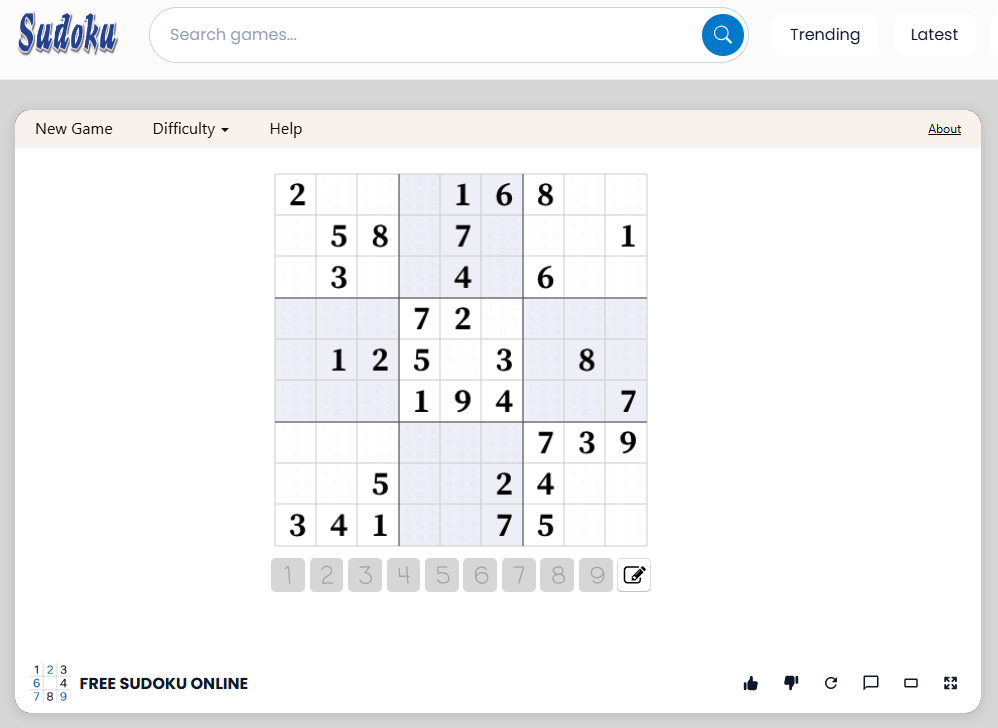
Sudoku is a popular number puzzle that challenges the mind, improves logical thinking, and provides hours of engaging entertainment. With simple rules and countless puzzle combinations, Sudoku attracts players of different ages and skill levels. Whether you are a beginner learning the basics or an experienced player searching for more difficult challenges, this puzzle offers an enjoyable way to develop problem-solving skills while relaxing during a busy day.
Unlike many games that depend on speed or luck, Sudoku rewards patience, observation, and careful reasoning. Every puzzle creates an opportunity to discover patterns, eliminate incorrect possibilities, and find the correct solution through logic.
What Is Sudoku?
Sudoku is a logic-based number puzzle played on a square grid divided into smaller sections. The standard version contains nine rows, nine columns, and nine smaller boxes, with each box measuring three by three cells. Some numbers appear at the beginning, while the remaining cells must be completed by the player.
The main objective is to fill every empty cell with a number from 1 to 9. Each number must appear exactly once in every row, every column, and every three-by-three box. These rules create a structured challenge that requires logical reasoning rather than mathematical calculations.
Understanding the Basic Rules
The rules of Sudoku are easy to learn, making the game accessible to beginners. However, completing a difficult puzzle can require considerable concentration and strategic thinking.
Every row must contain all nine digits without repetition. The same condition applies to every column and every smaller box. A number that already appears in one of these areas cannot be placed in another cell within the same area.
Players begin by examining the existing numbers and identifying which digits are missing. By comparing rows, columns, and boxes, they can gradually determine the correct placement for each number.
Why Sudoku Is Suitable for Different Players
Sudoku offers different difficulty levels, allowing players to progress at a comfortable pace. Easy puzzles provide more starting numbers and straightforward solutions, while advanced puzzles contain fewer clues and require more complex techniques.
This flexibility makes Sudoku suitable for short breaks, daily mental exercises, and longer puzzle-solving sessions. Players can enjoy the game independently without needing special equipment or extensive preparation.
How to Play Sudoku Effectively
Learning a few basic techniques can make Sudoku easier and more enjoyable. Instead of guessing, successful players use the available information to narrow down possible answers.
Start With Rows, Columns, and Boxes
The first step is to inspect the grid for rows, columns, or boxes that already contain many numbers. These areas often have fewer empty cells, making it easier to identify the missing digits.
For example, if a row contains the numbers 1, 2, 3, 4, 6, 7, 8, and 9, the missing number must be 5. This is a straightforward placement because only one digit can complete the row without breaking the rules.
After filling a cell, check the surrounding row, column, and box again. Every confirmed number provides additional information that may help solve nearby cells.
Use the Process of Elimination
The process of elimination is one of the most important Sudoku strategies. When a cell is empty, consider which numbers are already present in the corresponding row, column, and box. Any number that appears in one of these areas cannot be used in that cell.
For instance, if the digits 2, 4, 6, 7, and 9 are already present in the relevant areas, the remaining candidates are 1, 3, 5, and 8. Additional clues may reduce these possibilities until only one valid number remains.
This method prevents unnecessary guessing and helps maintain accuracy throughout the puzzle.
Look for Single Candidates
A single candidate occurs when only one number can legally fit into an empty cell. This is often the easiest type of deduction to recognize.
Players can also search for a number that has only one possible position within a particular row, column, or box. Even when several cells remain empty, one digit may have only one valid location.
Finding these opportunities early can create progress across the entire grid.
Advanced Sudoku Strategies for Better Results
As puzzles become more difficult, basic scanning may not be enough. Advanced techniques help players recognize relationships between possible numbers and solve challenging grids more efficiently.
Apply Naked Pairs
A naked pair appears when two cells in the same row, column, or box contain exactly the same two candidate numbers. For example, two cells may have only the candidates 3 and 8.
Because those two numbers must occupy the pair of cells in some order, they cannot appear in other empty cells within the same unit. Removing these candidates from other cells may reveal new placements.
This technique is especially useful when a puzzle contains many empty cells and several possible numbers for each position.
Identify Hidden Singles
A hidden single occurs when a particular number can fit in only one cell within a row, column, or box, even though that cell contains other candidates.
Recognizing this pattern requires examining the entire unit rather than focusing on one cell alone. Once the only possible location is identified, the number can be placed confidently.
Combining hidden singles with ordinary scanning often produces steady progress without complicated calculations.
Avoid Random Guessing
Guessing may occasionally appear to solve a difficult situation, but it can introduce errors that become harder to detect later. A better approach is to revisit the grid, update candidate numbers, and search for overlooked patterns.
If no clear move is available, take a short break or examine a different section. A fresh perspective can reveal a logical connection that was previously missed.
Benefits of Playing Sudoku Regularly
Sudoku is more than a source of entertainment. It encourages several useful habits that can support everyday thinking and concentration.
Improve Logical Thinking and Attention
Every move requires players to compare information, evaluate possibilities, and make decisions based on evidence. Regular practice provides opportunities to exercise these reasoning skills.
The game also encourages sustained attention because a single overlooked number can affect several parts of the grid. Careful observation helps players maintain accuracy while working through increasingly complex challenges.
Encourage Patience and Problem-Solving
Difficult puzzles rarely offer an immediate solution. Players must examine different possibilities, reconsider earlier assumptions, and continue searching for valid placements.
This process encourages persistence and a methodical approach to problems. Sudoku also provides a clear sense of progress as empty cells gradually become completed rows and boxes.
Enjoy a Relaxing Mental Activity
Many players enjoy Sudoku because it offers a focused activity away from everyday distractions. Concentrating on a puzzle can provide a pleasant break from routine tasks.
However, Sudoku should be viewed as an enjoyable mental exercise rather than a guaranteed method for preventing cognitive decline or improving every aspect of memory.
Tips for Beginners Who Want to Improve
Beginners can develop stronger Sudoku skills by starting with easy puzzles and learning one technique at a time. Solving simpler grids builds familiarity with the rules and makes common patterns easier to recognize.
Use pencil marks or digital notes to record possible candidates when a cell cannot be solved immediately. Update these candidates whenever a new number is placed. Keeping notes accurate reduces confusion and helps reveal useful combinations.
It is also helpful to check completed rows, columns, and boxes regularly. If a number appears twice in the same unit, review recent placements to identify the mistake before continuing.
Most importantly, focus on understanding why each number belongs in a particular cell. Logical explanations build lasting skills and make advanced puzzles less intimidating.
Start Playing Sudoku Today
Sudoku remains a timeless puzzle because it combines simple rules with deep strategic possibilities. From identifying missing numbers to applying advanced candidate techniques, every grid offers a new opportunity to practice logical reasoning and careful observation.
Whether you prefer a quick daily challenge or a demanding puzzle that requires extended concentration, Sudoku provides an accessible and rewarding experience. Start with a difficulty level that matches your current skills, practice consistently, and explore new strategies as your confidence grows.

 English
 Arabic
 Spanish
 Portuguese
 Deutsch
 Turkish
 Dutch
Dutch
 Italiano
 Russian
 Romaian
 Portuguese (Brazil)
 Greek
Greek
