
Steel Filament Selection for Professional Cleaning Tools
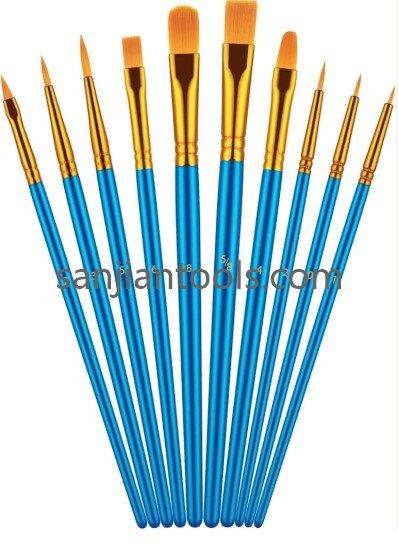
Metal surfaces frequently require mechanical cleaning before welding, coating, repair, assembly, or routine maintenance. In these applications, a Steel Wire Brush provides a practical manual method for removing rust, oxidation, scale, residue, and other unwanted materials. Its performance depends on the interaction between filament material, wire diameter, density, brush-head structure, handle construction, and manufacturing quality, making product design an important consideration for both manufacturers and professional buyers.
Steel wire selection establishes the basic working characteristics of the brush. Different wire dimensions can provide different levels of flexibility and mechanical contact. Fine filaments may conform more easily to irregular surfaces, while thicker wires can provide firmer contact for demanding cleaning tasks. The appropriate specification should be selected according to the surface material, contamination type, and intended brushing method rather than relying on one configuration for every application.
Filament density also influences the working behavior of the finished tool. A consistent distribution of wires across the brush head helps create relatively uniform contact during use. If the wire arrangement is inconsistent, some areas may provide stronger brushing action than others. Controlled insertion, trimming, and fixing processes can help manufacturers maintain consistent brush geometry and reduce variation between production batches.
The brush-head structure needs to withstand repeated manual pressure. During surface preparation, users may move the tool forward, backward, or across curved areas while applying force through the handle. A secure connection between the filament bundle and supporting base helps maintain structural stability. Manufacturing inspection can focus on wire retention, trimming accuracy, head alignment, and the overall condition of the working surface.
Handle construction is another important element for handheld models. A practical grip allows users to control the direction and pressure of the brush during repetitive cleaning work. Molded plastic handles can be produced in consistent shapes and may incorporate textured surfaces for improved handling. The dimensions of the grip should correspond with the intended use, while the connection between the handle and brush head should remain stable during ordinary operation.
Material compatibility should also be considered when designing a wire cleaning tool. Different workpieces can have different sensitivity to mechanical abrasion. A brush intended for heavy rust removal may not be suitable for a surface requiring lighter contact. Manufacturers can address these differences by offering variations in wire diameter, filament stiffness, brush size, and configuration. Clear product specifications help distributors match individual models with suitable applications.
Manufacturing consistency becomes especially important for wholesale supply. Professional buyers often require repeated orders with similar construction and performance. Quality control can include inspection of wire dimensions, filament density, brush-head shape, handle molding, fastening strength, and surface finish. Production records and standardized inspection procedures can further support repeatability across different batches.
Industrial and workshop applications cover a broad range of cleaning requirements. Metal fabrication facilities may use wire brushes to prepare welded areas, while maintenance teams can use them to remove corrosion and deposits from machinery components. Automotive repair, construction, hardware maintenance, and general workshop operations may also require different levels of brushing action. Product development should therefore consider actual working conditions rather than treating all cleaning applications as identical.
Packaging and storage are also relevant to finished-product quality. The brush head should be protected from deformation during transportation, especially when multiple tools are packed together. Packaging materials should help preserve the shape of the bristles and prevent unnecessary damage to handles or exposed components. For international distributors, practical packaging can also support warehouse organization and reduce handling problems throughout the supply chain.
From a sourcing perspective, buyers can evaluate a brush by considering the complete manufacturing process. Wire quality, filament arrangement, brush-head construction, handle design, fastening methods, inspection procedures, and packaging all contribute to the finished tool. When selecting a Steel Wire Brush, understanding these factors can help distributors and professional users identify constructions suitable for surface preparation, maintenance, rust removal, and workshop cleaning. Related hand tools and cleaning products can be explored at https://www.sanjiantools.com/product.

 English
 Arabic
 French
 Spanish
 Portuguese
 Deutsch
 Turkish
 Dutch
Dutch
 Italiano
 Romaian
 Portuguese (Brazil)
 Greek
Greek
