
Portable Kitchen Appliances for Flexible Outdoor Cooking
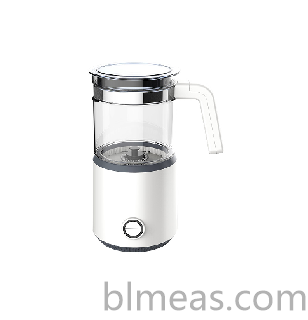
As food preparation becomes more flexible, the Portable Kitchen Appliance for Outdoor Use is increasingly designed around mobility, compact construction, rechargeable power, and practical operation beyond a conventional countertop. Whether used for outdoor gatherings, travel, recreational activities, temporary food preparation areas, or compact living environments, these appliances require a careful balance between portability and functional performance. BLMEAS develops small kitchen appliances including cordless blenders, food choppers, hand mixers, hand blenders, food processors, and milk frothers, reflecting the broader shift toward battery-operated kitchen equipment.
Portability begins with the physical structure of the appliance. A compact housing can reduce storage requirements and make transportation easier, but the design still needs to accommodate the motor, battery, control system, food-contact components, and protective structures. Engineers therefore need to consider the relationship between internal component placement and external dimensions. Lightweight construction can improve handling, while sufficient structural strength helps the appliance withstand regular movement and transportation.
Battery technology is another important consideration for cordless outdoor equipment. A rechargeable power system removes dependence on a fixed electrical outlet and can provide greater flexibility when preparing food away from a traditional kitchen. BLMEAS currently develops a cordless appliance collection based around a shared removable battery platform, allowing compatible appliances to use the same battery system.
The battery architecture needs to be integrated carefully with the motor and electronic control system. Connectors, battery housing, charging interfaces, and protective circuits must be positioned securely inside the appliance. A removable battery also requires a reliable mechanical connection so that the power source remains stable during operation. For manufacturers, these details involve both electrical engineering and mechanical design rather than simply adding a rechargeable battery to an existing appliance.
Motor selection depends heavily on the intended application. Blending, chopping, mixing, and whisking create different mechanical loads, so each appliance requires an appropriate drive system. A compact DC motor can be integrated into a portable housing, but engineers also need to consider heat management, vibration, transmission efficiency, and operating cycles. Consistent motor performance becomes particularly relevant when appliances are expected to function in different environments.
Food-contact materials are equally important. Containers, blades, whisks, processing bowls, and other components should be manufactured from materials suitable for their intended food preparation applications. Stainless steel can be used for certain blades and structural elements, while molded food-contact plastics can support lightweight container and housing designs. The selected materials also need to accommodate repeated cleaning and everyday handling.
Outdoor use places additional emphasis on practical operation. Users may have less counter space, fewer electrical outlets, and limited access to cleaning facilities. Controls should therefore be straightforward, while removable components can make maintenance easier. A compact appliance should also remain stable during operation so that chopping, blending, or mixing does not cause unnecessary movement across the preparation surface.
Safety design should be considered throughout the product-development process. Battery-powered appliances combine electrical components with moving mechanical parts, and some products also work directly with liquids or wet ingredients. Locking structures, protective housings, secure battery connections, and suitable electrical safeguards can help address these conditions. BLMEAS products, for example, incorporate features such as security locks and battery indicators across selected cordless models.
Manufacturing consistency is another important factor for portable equipment. Injection molding can support repeatable production of housings and containers, while metal processing can be used for blades, shafts, and other components. Assembly procedures need to maintain accurate relationships between the motor, drive components, controls, battery interface, and food-contact parts. Functional testing can then verify operation before products are packaged for distribution.
Packaging also matters because portable appliances are frequently transported between locations. Internal packaging should help protect the housing, removable accessories, and mechanical components during handling. Clear instructions for battery installation, attachment assembly, cleaning, and storage can further support convenient use.
For businesses sourcing a Portable Kitchen Appliance for Outdoor Use, evaluating the complete product architecture is more useful than considering portability alone. Battery integration, motor design, material selection, safety features, cleaning access, structural stability, manufacturing consistency, and packaging all influence the finished appliance. Companies exploring cordless kitchen equipment and related manufacturing solutions can find more information at https://www.blmeas.com/product/.

 English
 Arabic
 French
 Spanish
 Portuguese
 Deutsch
 Turkish
 Dutch
Dutch
 Italiano
 Romaian
 Portuguese (Brazil)
 Greek
Greek
