
AI in Drug Discovery Market: Industry Trends, Growth Drivers, and Global Forecast to 2032
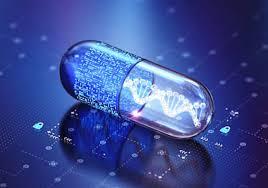
AI in Drug Discovery Market – Industry Structure Evaluation, Demand Drivers Analysis, Regional Growth Analysis, Competitive Positioning Review & Global Forecast to 2032
Market Overview
The global AI in Drug Discovery market is entering a period of rapid transformation as pharmaceutical companies increasingly rely on artificial intelligence to shorten development cycles, reduce research costs, and improve the probability of clinical success. The market was valued at USD 3.5 billion in 2025 and is projected to reach nearly USD 14.8 billion by 2032, expanding at a CAGR of 28% during the forecast period.
Artificial intelligence has become one of the most disruptive technologies in pharmaceutical research. It is now being used to identify drug targets, analyze genomic data, predict molecular interactions, estimate toxicity, optimize drug design, and improve patient selection for clinical trials. By combining machine learning, natural language processing, predictive analytics, and computational chemistry, AI is enabling drug developers to move from traditional laboratory-based experimentation toward virtual simulation and digital screening.
The rising cost and long timelines associated with conventional drug discovery are among the strongest reasons behind this transition. Developing a new drug through traditional methods often requires more than a decade and billions of dollars in investment. AI-driven platforms reduce the number of failed compounds, improve lead optimization, and significantly accelerate the transition from pre-clinical research to commercialization.
♦ Request a Free Sample Copy or View Report Summary:https://www.maximizemarketresearch.com/request-sample/161733/
Industry Structure Evaluation
The AI in Drug Discovery market has a highly collaborative structure that combines pharmaceutical companies, biotechnology firms, cloud computing providers, software developers, and AI-focused startups. The industry is divided into three major categories: software, hardware, and services.
Software represents the largest share of the market because it forms the foundation of all AI-enabled drug discovery processes. These platforms use machine learning algorithms and deep neural networks to analyze biological and chemical datasets, predict molecular behavior, and recommend promising compounds. The increasing use of cloud-based AI platforms is further supporting software dominance because pharmaceutical companies can integrate these tools into existing research pipelines without large upfront infrastructure investments.
Hardware remains important as AI-driven drug discovery depends on powerful computing resources, particularly graphics processing units and accelerated computing systems. Companies specializing in high-performance computing are increasingly partnering with pharmaceutical organizations to provide infrastructure capable of processing large genomic and clinical datasets.
Services form the third component of the industry structure. Many pharmaceutical companies lack internal AI expertise and therefore rely on consulting, implementation, data management, and model development services offered by external vendors. Service providers are becoming more valuable as the market expands and drug developers seek customized AI solutions.
The competitive structure of the market is fragmented but evolving toward consolidation through mergers, partnerships, and strategic investments. Large technology companies are collaborating with major pharmaceutical firms, while smaller AI startups focus on specialized areas such as protein modeling, biomarker identification, and drug repurposing.
Demand Drivers Analysis
Growing Investment from Technology and Pharmaceutical Companies
One of the strongest drivers of the AI in Drug Discovery market is the increasing investment from global technology companies and pharmaceutical corporations. Leading pharmaceutical companies are partnering with AI firms to improve the speed and quality of drug development.
Strategic collaborations have expanded rapidly over the last decade. Partnerships between AI-based drug discovery companies and pharmaceutical firms increased significantly between 2015 and 2025. Companies such as Microsoft, NVIDIA, IBM, Google, AstraZeneca, Pfizer, Novartis, and Eli Lilly are investing heavily in AI-based platforms, accelerated computing, and predictive drug design tools.
These partnerships allow pharmaceutical companies to access advanced algorithms, while technology companies gain access to large biomedical datasets. This shared approach is helping the industry develop personalized medicines, cell and gene therapies, and more effective treatments for chronic diseases.
Need to Reduce Drug Development Time and Cost
Traditional drug discovery is expensive and time-consuming. The average cost of bringing a new drug to market continues to rise due to high failure rates in clinical trials and increasing research complexity. AI reduces these costs by identifying the most promising compounds earlier in the development process.
AI-powered drug screening platforms can examine millions of compounds within days, compared to months or years using traditional laboratory methods. Predictive algorithms can identify toxicity, efficacy, and off-target effects before costly experimental trials begin. This ability to improve research productivity is encouraging more pharmaceutical companies to invest in AI-driven discovery tools.
Rising Focus on Precision Medicine
Demand for personalized and precision medicine is another major growth driver. AI can analyze genetic, molecular, and clinical data to identify therapies that are best suited for specific patient groups. The technology is particularly useful in oncology, immunology, and rare disease treatment, where patients often respond differently to the same medication.
The increasing availability of genomic sequencing, electronic health records, and real-world patient data is creating favorable conditions for AI-based personalized drug development. Pharmaceutical companies are using AI to identify biomarkers and patient subgroups that improve clinical trial success rates.
Expanding Use in Clinical Trials
AI is becoming increasingly important in clinical trial design and management. The technology helps researchers select the right patients, predict trial outcomes, identify safety risks, and reduce participant dropout rates. AI can also support decentralized and virtual clinical trials, which have become more important following the expansion of digital healthcare systems.
♦ Request a Free Sample Copy or View Report Summary:https://www.maximizemarketresearch.com/request-sample/161733/
Therapeutic and Application Insights
Among therapeutic areas, oncology remains the leading segment in the AI in Drug Discovery market. Cancer is highly complex and involves significant genetic variability, making it difficult to develop effective treatments through traditional methods. AI is particularly valuable in oncology because it can analyze large genomic datasets, identify cancer-specific targets, and recommend personalized treatment strategies.
Neurology, cardiovascular disease, metabolic disorders, and immunology are also emerging as important therapeutic areas. AI is increasingly used to discover therapies for neurodegenerative diseases, diabetes, autoimmune disorders, and cardiovascular conditions.
By application, drug screening and drug design currently account for the largest market share. AI systems can identify promising drug candidates, predict their biological activity, and optimize their chemical structure. Drug repurposing is another rapidly growing application, as AI can identify new uses for existing drugs and shorten development timelines.
Clinical studies are expected to become one of the fastest-growing application areas during the forecast period. AI is helping improve patient recruitment, predict treatment responses, and enhance the efficiency of trial monitoring.
Regional Growth Analysis and Identification
North America
North America accounted for the largest share of the global AI in Drug Discovery market in 2025, representing more than 56% of total revenue. The region benefits from a strong presence of pharmaceutical companies, advanced research institutions, and leading AI technology providers.
The United States is the largest contributor within the region. High R&D spending, strong venture capital activity, and widespread adoption of AI technologies have created a favorable market environment. The presence of leading companies such as NVIDIA, IBM, Microsoft, Schrödinger, and Insilico Medicine further strengthens North America's position.
Europe
Europe is the second-largest market and is experiencing strong growth due to increasing pharmaceutical innovation and government support for AI adoption. Countries such as the United Kingdom, Germany, France, and Switzerland are investing heavily in digital healthcare and life sciences research.
The region is also home to several important AI-focused drug discovery companies, including Exscientia, BenevolentAI, and Iktos. Collaborative research initiatives between pharmaceutical companies and academic institutions are expected to support future market growth.
Asia Pacific
Asia Pacific is projected to record the fastest growth rate during the forecast period. Rapid healthcare modernization, increasing investment in biotechnology, and the growing adoption of AI technologies are driving demand across China, India, Japan, and South Korea.
China has emerged as a leading market due to strong government support, expanding pharmaceutical production, and the presence of innovative AI companies. India is also becoming a major growth destination because of its large population, rising pharmaceutical R&D activities, and increasing interest in AI-driven healthcare solutions.
Middle East, Africa, and South America
These regions currently account for a smaller share of the market but are expected to show gradual growth over the coming years. Increased investment in healthcare infrastructure, digital transformation, and pharmaceutical manufacturing is expected to create new opportunities for AI-enabled drug discovery.
♦ Make Smarter Decisions in 2026 — Get Your Research Report Now:https://www.maximizemarketresearch.com/market-report/ai-in-drug-discovery-market/161733/
Competitive Positioning Review
The competitive landscape is shaped by a mix of large technology providers, pharmaceutical companies, and AI-focused biotechnology firms. Key market participants include GNS Healthcare, Atomwise, Insitro, NVIDIA, IBM, Microsoft, Insilico Medicine, Schrödinger, Owkin, BenevolentAI, Exscientia, Iktos, and XtalPi.
Large technology companies are strengthening their position by providing cloud infrastructure, high-performance computing, and AI frameworks. Pharmaceutical companies are focusing on strategic partnerships to integrate these technologies into
◉ Get Market Research Latest Trends
Configuration Management Market https://www.maximizemarketresearch.com/market-report/global-configuration-management-market/62980/
Global Data Masking Market https://www.maximizemarketresearch.com/market-report/data-masking-market/643/
Global Enterprise VSAT Market https://www.maximizemarketresearch.com/market-report/global-enterprise-vsat-market/63208/
About Maximize Market Research:
Maximize Market Research is a multifaceted market research and consulting company with professionals from several industries. Some of the industries we cover include medical devices, pharmaceutical manufacturers, science and engineering, electronic components, industrial equipment, technology and communication, cars and automobiles, chemical products and substances, general merchandise, beverages, personal care, and automated systems. To mention a few, we provide market-verified industry estimations, technical trend analysis, crucial market research, strategic advice, competition analysis, production and demand analysis, and client impact studies.
Contact Maximize Market Research:
3rd Floor, Navale IT Park, Phase 2
Pune Bangalore Highway, Narhe,
Pune, Maharashtra 411041, India
sales@maximizemarketresearch.com
+91 96071 95908, +91 9607365656

 Arabic
 French
 Spanish
 Portuguese
 Deutsch
 Turkish
 Dutch
Dutch
 Italiano
 Russian
 Romaian
 Portuguese (Brazil)
 Greek
Greek