
Automotive Structural Steel Market Research Report | Growth, Trends and Advancements | 2026 - 2033
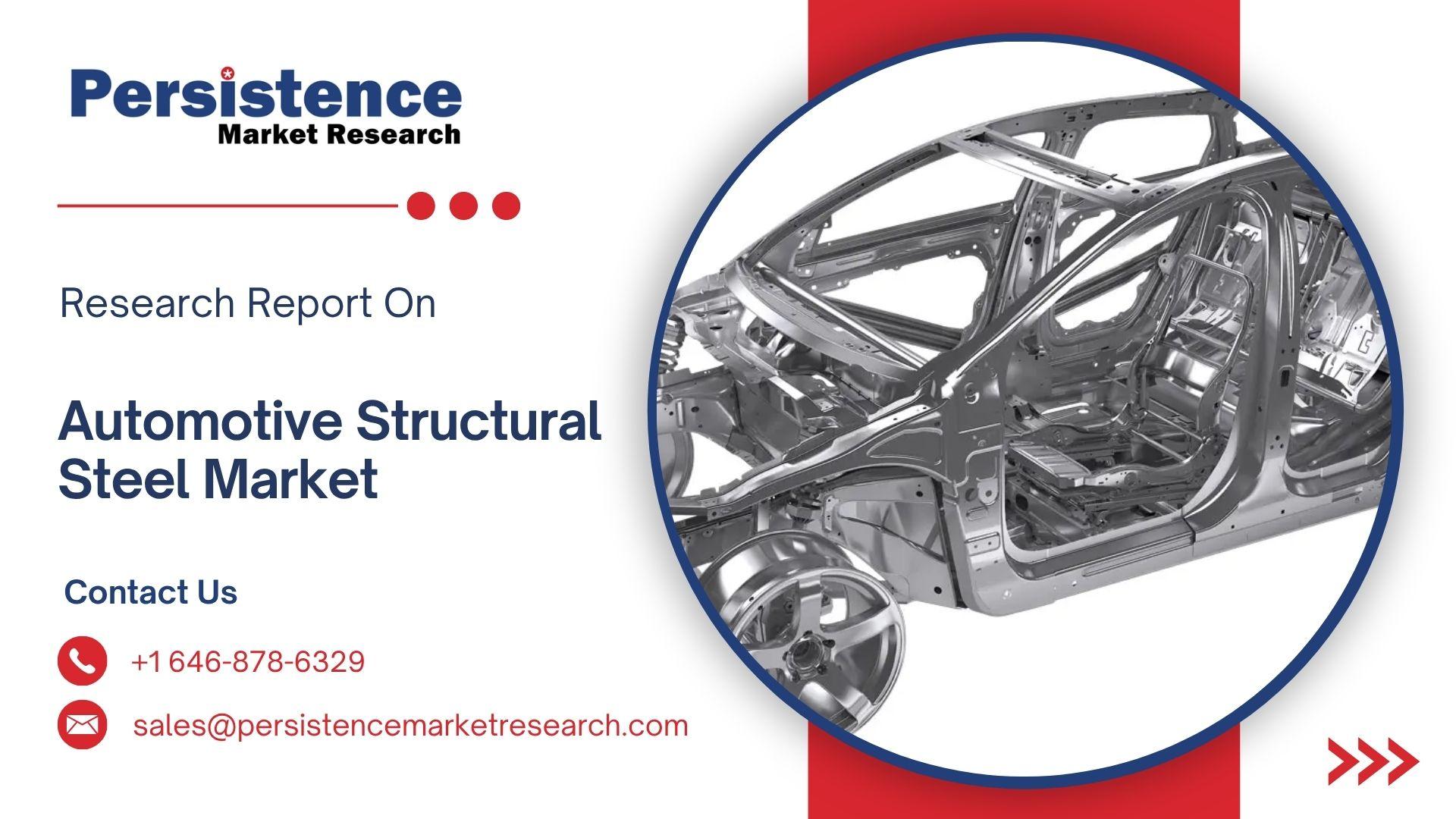
The global automotive structural steel market is set to witness steady and sustained growth, driven by the increasing demand for lightweight yet high-strength materials in vehicle manufacturing. The market is projected to be valued at US$ 144.2 billion in 2026 and is expected to reach US$ 211.2 billion by 2033, registering a compound annual growth rate (CAGR) of 5.6% during the forecast period from 2026 to 2033.
Automotive structural steel plays a vital role in vehicle construction, providing the necessary strength, rigidity, and safety required for modern vehicles. It is widely used in critical components such as chassis, frames, crash structures, and body-in-white assemblies. As automakers focus on improving fuel efficiency and reducing emissions, the adoption of advanced high-strength steels (AHSS) and ultra-high-strength steels (UHSS) is gaining momentum. These materials offer a balance between weight reduction and structural integrity, making them essential for next-generation vehicles.
The market is further driven by the rapid growth of the automotive industry, increasing vehicle production, and the rising adoption of electric vehicles (EVs). EV manufacturers are particularly focused on lightweight materials to enhance battery efficiency and driving range, thereby boosting demand for advanced structural steel solutions. Additionally, stringent safety regulations and crash performance standards are compelling manufacturers to adopt high-quality structural materials.
Key Highlights from the Report
➤ Market Value: The automotive structural steel market is projected to grow from US$ 144.2 billion in 2026 to US$ 211.2 billion by 2033, at a CAGR of 5.6%.
➤ Increasing demand for lightweight and high-strength materials in vehicle manufacturing.
➤ Rising adoption of electric vehicles driving advanced material usage.
➤ Stringent safety regulations boosting demand for durable structural components.
➤ Technological advancements in steel manufacturing and processing.
➤ Expansion of automotive production in emerging economies.
Segmentation Analysis
By Type
The automotive structural steel market is segmented into advanced high-strength steel (AHSS), high-strength steel (HSS), and mild steel. AHSS dominates the market due to its superior strength-to-weight ratio and enhanced crash performance. It is widely used in critical structural components to improve safety and reduce vehicle weight.
Ultra-high-strength steel (UHSS), a subset of AHSS, is emerging as the fastest-growing segment, driven by its ability to provide exceptional strength while minimizing material usage. Mild steel, although still used in certain applications, is gradually being replaced by advanced materials due to its lower strength and higher weight.
By Vehicle/Product/Service Type
Based on vehicle type, the market is categorized into passenger vehicles and commercial vehicles. Passenger vehicles account for the largest share, driven by high production volumes and increasing demand for safety and fuel efficiency. The growing popularity of SUVs and premium vehicles is further supporting this segment.
Commercial vehicles are also witnessing steady growth, particularly in logistics and transportation sectors. The need for durable and reliable structural components in heavy-duty vehicles is driving demand for high-strength steel solutions.
By Propulsion/Technology/Channel
From a propulsion perspective, the market includes internal combustion engine (ICE) vehicles, electric vehicles (EVs), and hybrid vehicles. While ICE vehicles continue to dominate, EVs represent a rapidly growing segment. The need for lightweight materials to improve battery efficiency and driving range is driving the adoption of advanced structural steel in EVs.
Technological advancements in steel manufacturing, including hot stamping, roll forming, and laser welding, are enhancing the performance and efficiency of structural components. Distribution channels primarily include OEMs, which account for the majority of demand due to integration during vehicle manufacturing.
Regional Insights
Asia-Pacific holds a dominant position in the global automotive structural steel market, driven by strong automotive production and increasing demand for vehicles in countries such as China, India, Japan, and South Korea. The region’s expanding middle-class population and rising disposable incomes are contributing to increased vehicle ownership.
Europe represents a significant market, supported by stringent emission and safety regulations and a strong focus on innovation. The region’s automotive manufacturers are leading the adoption of advanced materials to meet regulatory requirements and improve vehicle performance.
North America also holds a substantial share, driven by the presence of major automotive manufacturers and increasing demand for lightweight vehicles. The region is characterized by continuous advancements in material technologies and manufacturing processes.
Asia-Pacific is expected to be the fastest-growing region, fueled by rapid industrialization, urbanization, and increasing investments in automotive manufacturing. Government initiatives to promote electric mobility and infrastructure development are further supporting market growth.
Key Players and Competitive Landscape
The global automotive structural steel market is highly competitive, with several leading players focusing on innovation, product development, and strategic expansion. Key companies include:
✦ ArcelorMittal S.A. – A global leader in steel production, offering advanced high-strength steel solutions for automotive applications.
✦ Nippon Steel Corporation – Known for its innovative steel products and strong presence in the automotive sector.
✦ POSCO Holdings Inc. – Focuses on high-performance steel solutions and sustainable manufacturing practices.
✦ Tata Steel Limited – Provides a wide range of automotive steel products with a focus on quality and innovation.
✦ United States Steel Corporation – Offers advanced steel solutions tailored for automotive applications.
✦ Thyssenkrupp AG – Specializes in high-strength steel and advanced manufacturing technologies.
These companies are investing heavily in research and development to introduce innovative products and maintain a competitive edge. Strategic collaborations with automotive manufacturers and expansion into emerging markets are key strategies being adopted to strengthen market presence.
Future Opportunities and Growth Prospects
The automotive structural steel market presents significant growth opportunities, particularly in emerging economies and the expanding electric vehicle segment. The increasing demand for lightweight and high-strength materials is expected to drive market growth over the forecast period.
Technological advancements in material science, manufacturing processes, and digitalization will continue to shape the future of the market. The integration of AI and IoT technologies will enhance production efficiency, quality control, and sustainability.
In conclusion, the global automotive structural steel market is set for steady growth, driven by technological advancements, regulatory requirements, and increasing demand for efficient and safe vehicles. As the automotive industry continues to evolve, structural steel will remain a critical component in shaping the future of mobility.

 English
 Arabic
 French
 Spanish
 Portuguese
 Deutsch
 Turkish
 Dutch
Dutch
 Italiano
 Russian
 Portuguese (Brazil)
 Greek
Greek