
Global Aircraft Tires Market Growth Opportunities & Trends
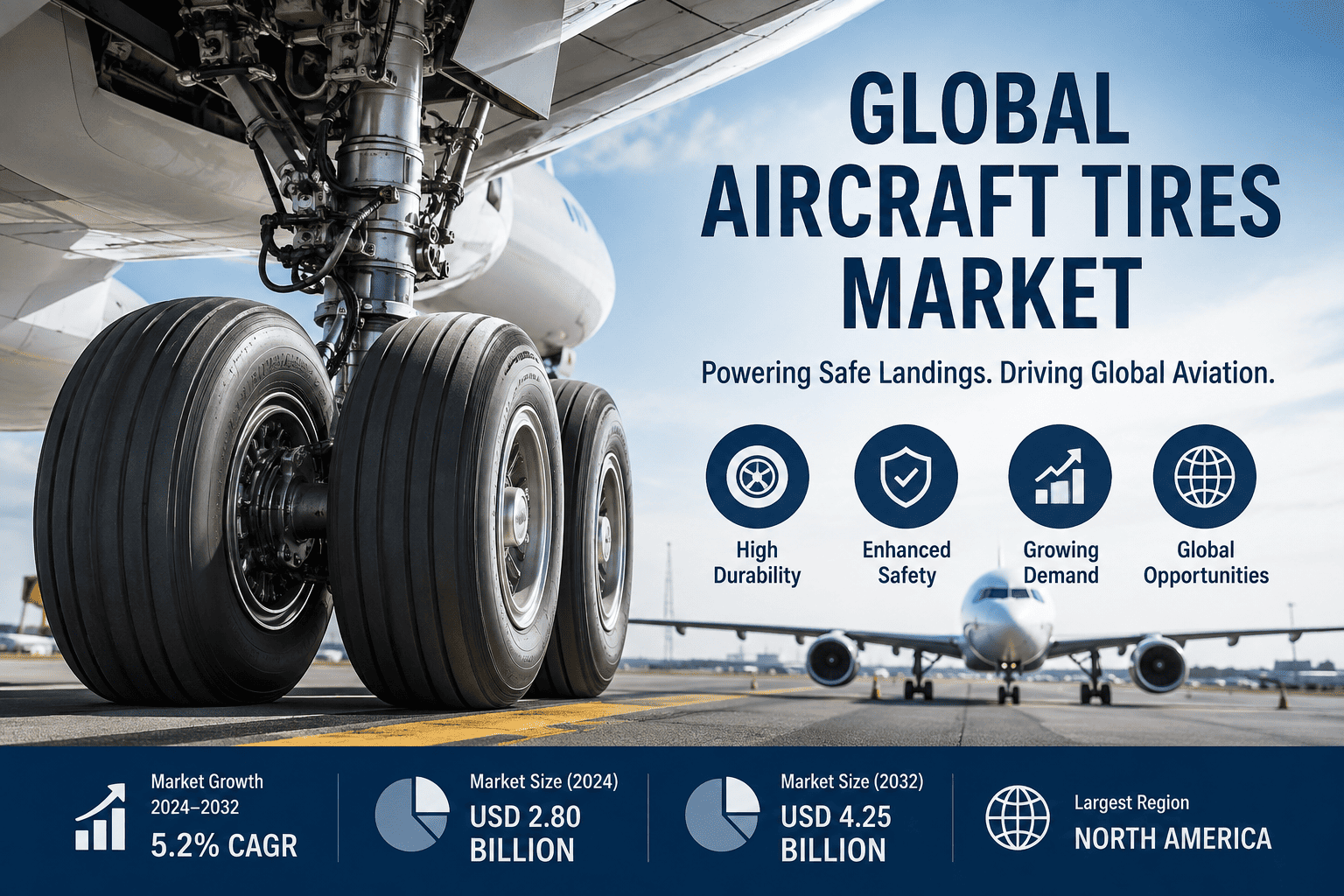
The Global aircraft tires market is entering a period of sustained expansion as commercial aviation, defense operations, fleet modernization, and air passenger traffic continue to develop across major economies. According to 6Wresearch, the market was valued at approximately USD 1.6 billion in 2025 and is projected to reach USD 2.3 billion by 2032, representing a CAGR of 5.10% during 2026–2032. This growth reflects the essential role aircraft tires play in aircraft safety, landing performance, operational reliability, and maintenance efficiency.
Aircraft tires operate under demanding conditions involving high speeds, heavy loads, repeated takeoffs and landings, extreme temperatures, and significant braking forces. As airlines and aircraft operators increasingly focus on safety while controlling maintenance expenses, demand is moving toward technologically advanced and durable tire solutions. The expansion of aircraft fleets, rising investment in maintenance, repair, and overhaul (MRO), and growing aviation infrastructure in emerging markets are therefore creating attractive opportunities across the value chain.
Advantages of Investing in Global Aircraft Tires Market Opportunities
Investment opportunities in the Global aircraft tires market are supported by the continuing expansion of the aviation ecosystem. Airlines require dependable tire replacement cycles throughout an aircraft's operational life, creating recurring demand beyond original equipment manufacturing. The aftermarket segment is particularly promising as aging commercial fleets require more frequent replacement and maintenance services.
The market is also benefiting from increasing demand for high-performance radial and tubeless tires. Radial tires held the leading construction position in 2025, while tubeless tires represented approximately 70% of the market, according to the 6Wresearch assessment. Their performance, weight, durability, and safety advantages make them increasingly attractive to aviation operators seeking operational efficiency.
For investors, this combination of recurring replacement demand, fleet expansion, technological advancement, and aftermarket opportunities provides a diversified growth foundation.
Why People Prefer Global Aircraft Tires Market Solutions for Future Growth
The preference for advanced aircraft tire solutions is closely connected to the aviation industry's long-term emphasis on safety and cost optimization. Airlines cannot compromise on tire performance because tires are critical to aircraft ground operations, braking, steering, and landing.
Modern aircraft operators are therefore increasingly interested in tires capable of delivering longer service life, improved durability, consistent performance, and lower maintenance requirements. Manufacturers are also exploring smart tire technologies and advanced materials that can support real-time monitoring of pressure, wear, and overall tire condition.
Such innovations could transform conventional replacement models into more predictive maintenance systems. As aviation companies seek greater fleet availability and reduced downtime, the Global aircraft tires market is positioned to benefit from the transition toward data-driven maintenance and performance management.
Search Visibility Through Global Aircraft Tires Market Innovation
Innovation is becoming an important factor in shaping the competitive landscape of the Global aircraft tires market. Manufacturers are investing in material science, tire construction, manufacturing efficiency, and digital technologies to differentiate their products.
Smart tire technologies represent one emerging area of opportunity. Sensor-enabled solutions can potentially provide operators with more detailed information about tire pressure, temperature, wear, and operating conditions. Such capabilities can support predictive maintenance and improve the visibility of tire performance throughout an aircraft's service cycle.
At the same time, sustainability is becoming more relevant. Aircraft tire manufacturers are exploring eco-friendly materials, improved recycling approaches, and production methods designed to reduce environmental impact. These developments can improve brand positioning while responding to the aviation industry's broader sustainability objectives.
Demand and Benefits Are Expanding Across Aircraft Segments
Demand within the Global aircraft tires market is not limited to commercial aviation. Aircraft tires are required across commercial aircraft, regional aircraft, business aviation, helicopters, and military platforms. Commercial aircraft represented the largest aircraft segment in 2025, while military applications are expected to experience strong growth during the forecast period.
This diversification creates opportunities for manufacturers and suppliers to serve different performance requirements. Commercial aviation emphasizes durability, operational efficiency, and replacement economics, while military applications can require specialized tires capable of operating under demanding mission conditions.
The platform outlook also demonstrates this diversity. Fixed-wing aircraft currently represent the largest share, while rotary-wing applications are expected to grow rapidly, supported by increasing demand for helicopters across military and commercial operations.
Enhance User Experience with Advanced Aircraft Tire Technologies
Although aircraft tires are primarily industrial components, their performance directly influences the operational experience of airlines, pilots, maintenance teams, and passengers. Reliable tires contribute to safe aircraft movement on runways and taxiways while supporting effective braking and ground handling.
For aviation operators, advanced tire technologies can also simplify maintenance planning. Longer-lasting products and improved condition monitoring can help maintenance teams identify potential issues earlier and plan replacements more efficiently.
The shift toward tubeless designs further demonstrates how product development is responding to operational requirements. Reduced weight and enhanced safety characteristics make tubeless aircraft tires attractive to manufacturers and operators seeking efficiency improvements.
Lifestyle Benefits from a Growing Aviation Ecosystem
The growth of the Global aircraft tires market is closely linked to the expansion of global air travel. Rising passenger mobility, expanding middle-class populations, low-cost carriers, and improving connectivity are encouraging more people to travel by air.
As airlines add aircraft and increase route networks, supporting components such as tires become increasingly important. Stronger aviation networks contribute to faster connectivity between cities, support tourism and business travel, and encourage economic activity around airports and aviation hubs.
In this sense, aircraft tires represent an essential but often overlooked component of the broader air transportation ecosystem. The expansion of passenger aviation indirectly creates recurring demand for tire manufacturing, replacement, maintenance, logistics, and associated services.
Infrastructure Development Is Strengthening Regional Demand
Infrastructure development is another major force shaping the Global aircraft tires market. Airport expansion, runway upgrades, new aviation facilities, MRO centers, and growing aircraft fleets are creating favorable conditions for tire demand.
North America remains the largest regional market, supported by its established aviation infrastructure and extensive commercial and defense aviation activities. At the same time, Asia is identified as the fastest-growing region through 2032, with expanding air travel in countries such as China and India and continued investment in aviation infrastructure supporting long-term demand.
This regional shift creates opportunities for manufacturers to expand production capacity, establish distribution networks, strengthen aftermarket support, and develop partnerships closer to fast-growing aviation markets.
Future Growth Drivers Are Reshaping the Aircraft Tires Industry
Several structural factors are expected to support the Global aircraft tires market through 2032. Fleet expansion is one of the most important drivers because every new aircraft creates demand for original equipment tires as well as future replacement products.
MRO investment is another important contributor. As airlines seek to improve fleet utilization and reduce unexpected maintenance interruptions, efficient tire replacement and inspection systems are becoming increasingly valuable.
Meanwhile, defense modernization is supporting specialized aircraft tire demand. Electric aviation, unmanned aerial vehicles, and emerging urban air mobility concepts may also create new requirements for tire manufacturers as aircraft designs, weights, operating environments, and performance expectations evolve.
The market will nevertheless face challenges, including raw material price volatility, stringent regulatory requirements, supply-chain pressures, and the high technical standards required for aviation components. Companies capable of combining compliance, innovation, durability, and cost efficiency are likely to be better positioned to capture emerging opportunities.
Wrapping Up
The Global aircraft tires market is moving beyond traditional replacement demand toward a broader opportunity shaped by fleet expansion, aviation infrastructure development, MRO investment, advanced materials, smart tire technologies, and sustainability. With the market projected to increase from USD 1.6 billion in 2025 to USD 2.3 billion by 2032, the industry's growth outlook remains attractive.
For manufacturers, suppliers, investors, and aviation stakeholders, the opportunity lies in responding early to changing customer requirements. Products that deliver durability, safety, lower maintenance needs, and improved environmental performance can gain a competitive advantage as airlines and aircraft operators become increasingly focused on lifecycle value.
The combination of rising air travel, expanding fleets, regional aviation investment, and technological innovation makes the Global aircraft tires market an important area for strategic investment. For businesses seeking exposure to the long-term aviation supply chain, understanding these trends and acting on emerging opportunities now can provide a stronger position as the market advances toward 2032.
FAQs
1. What is the Global aircraft tires market size?
The Global aircraft tires market was valued at approximately USD 1.6 billion in 2025 and is projected to reach USD 2.3 billion by 2032. The market is expected to expand at a CAGR of approximately 5.10% during 2026–2032, supported by aviation expansion and replacement demand.
2. What is driving the Global aircraft tires market growth?
Major growth drivers include increasing air passenger traffic, aircraft fleet expansion, fleet modernization, rising MRO investment, and demand for durable and technologically advanced tires. Defense aviation and emerging aircraft applications are also expected to create additional opportunities across the Global aircraft tires market.
3. Which region is leading the Global aircraft tires market?
North America currently represents the largest regional market, supported by established aviation infrastructure and extensive aircraft operations. Asia is expected to be the fastest-growing region through 2032, supported by expanding air travel, fleet development, and infrastructure investment in major aviation markets.
4. Which aircraft tire construction is most prominent?
Radial aircraft tires currently represent the leading construction segment. Their performance and efficiency characteristics make them attractive for modern aviation applications. However, bias tires are also expected to experience strong growth as operators in regional and business aviation seek cost-effective and application-specific solutions.
5. Why are tubeless tires gaining popularity?
Tubeless aircraft tires are gaining attention because they can provide weight and safety advantages compared with conventional tube-based designs. Their growing adoption reflects airlines' focus on operational efficiency and performance. According to 6Wresearch, tubeless tires accounted for roughly 70% of the market in 2025.
6. How does MRO support the Global aircraft tires market?
MRO activities create recurring replacement demand because aircraft tires must be inspected, serviced, and replaced throughout an aircraft's operating lifecycle. Increasing investment in MRO infrastructure and maintenance efficiency is therefore expected to support the aftermarket and strengthen long-term demand for aircraft tire solutions.
7. What opportunities exist in military aircraft tires?
Military aviation represents an important growth opportunity because defense modernization can increase demand for specialized tires designed for demanding operational environments. The Global aircraft tires market is expected to benefit from higher military aviation requirements and continued investment in aircraft capabilities across several regions.
8. How are smart technologies changing aircraft tires?
Smart tire technologies can incorporate sensors and monitoring capabilities to track parameters such as pressure, wear, and operating conditions. These systems can support predictive maintenance, improve tire lifecycle visibility, and potentially reduce unexpected maintenance events, making digitalization an important emerging trend in the Global aircraft tires market.
9. What challenges could affect the aircraft tire industry?
The Global aircraft tires market faces challenges including fluctuating raw material costs, supply-chain disruptions, regulatory compliance requirements, and the technical complexity of aviation-grade manufacturing. Manufacturers must maintain strict safety and performance standards while managing production costs and responding to changing sustainability expectations.
10. What is the future outlook for the Global aircraft tires market?
The future outlook remains positive, with the market projected to reach USD 2.3 billion by 2032. Fleet expansion, rising air travel, MRO demand, defense applications, sustainable materials, and smart tire technologies are expected to create new opportunities and support continued market development.
Read more..

 Arabic
 French
 Spanish
 Portuguese
 Deutsch
 Turkish
 Dutch
Dutch
 Italiano
 Russian
 Romaian
 Portuguese (Brazil)
 Greek
Greek
