
Boat Building Company: Exploring New Technologies in Modern Boatbuilding
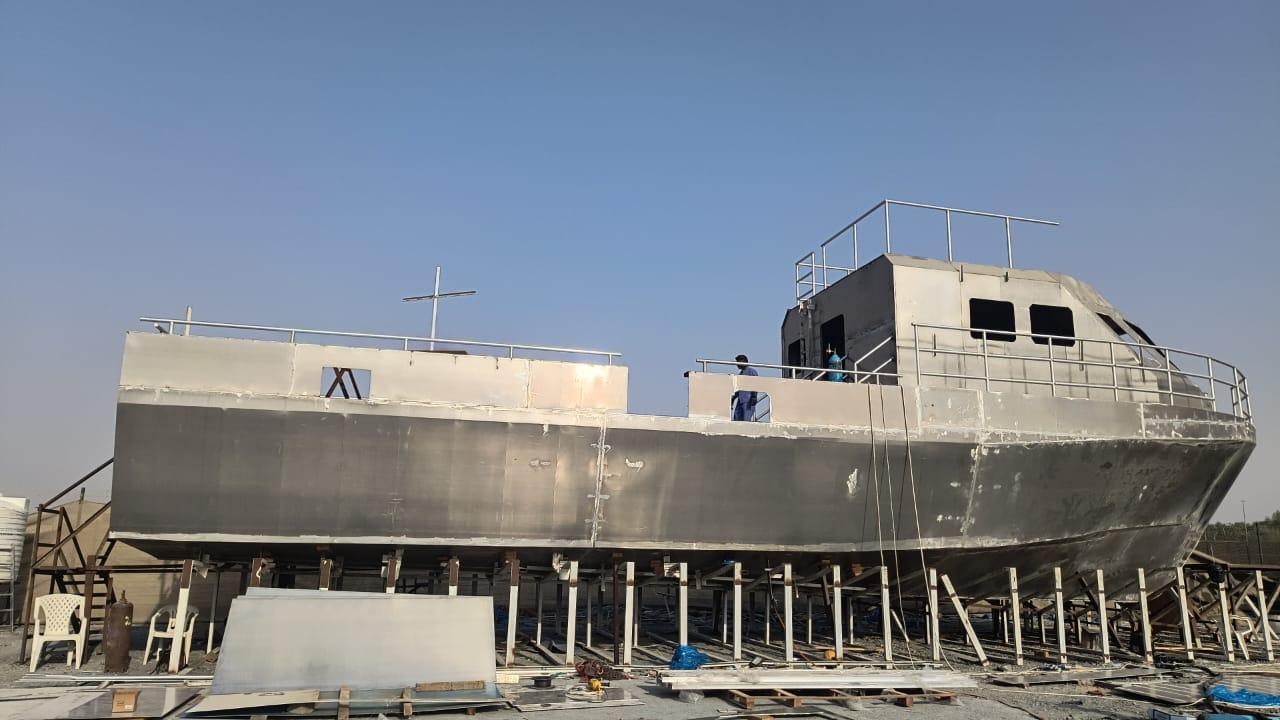
The marine industry is changing rapidly as new technologies continue to influence the way vessels are designed, built, and operated. A modern boat building company is no longer dependent only on traditional craftsmanship. Today, digital design, advanced fabrication, lightweight materials, computer simulation, smart navigation, and alternative propulsion are becoming important parts of the boatbuilding process.
The growing demand for efficient and reliable vessels is encouraging builders to invest in better engineering methods. From commercial workboats and patrol vessels to passenger boats and offshore support craft, modern construction techniques are helping create boats that are stronger, lighter, safer, and more economical to operate.
Digital Design Is Transforming Boatbuilding
One of the most important developments in modern boatbuilding is the use of digital design. Computer-aided design (CAD), 3D modelling, and engineering software allow designers to develop a detailed virtual version of a boat before physical construction begins.
Engineers can examine the hull shape, structural components, machinery arrangements, electrical systems, and interior spaces in a digital environment. This makes it easier to identify design problems at an early stage and make changes before construction starts.
Digital modelling can also improve communication between designers, engineers, fabricators, and customers. Instead of relying entirely on conventional drawings, teams can work from a shared three-dimensional model.
This approach can reduce errors, improve accuracy, and potentially shorten project timelines.
Aluminium Is Becoming More Important
Aluminium is widely used in modern marine construction because of its combination of low weight, strength, corrosion resistance, and flexibility in fabrication. These characteristics make it particularly suitable for vessels that require good speed, fuel efficiency, and manoeuvrability.
Modern aluminium boat builders use advanced cutting, forming, and welding techniques to create lightweight structures while maintaining the required strength and stability.
Weight is especially important for high-speed and working vessels. Reducing unnecessary structural weight can allow more payload, lower fuel consumption, or improved performance depending on the vessel's design.
However, aluminium construction requires proper engineering. Factors such as welding procedures, heat distortion, structural reinforcement, material thickness, stability, and corrosion protection must all be considered during construction.
CNC Technology Improves Accuracy
Computer numerical control (CNC) machinery is another technology that has changed marine fabrication. CNC systems can cut aluminium and other materials according to precise digital designs.
Traditional manual cutting can require significant time and may introduce dimensional variations. CNC cutting provides repeatable accuracy and allows complex shapes to be produced efficiently.
For larger projects, accurate cutting can also make assembly easier because components are manufactured according to predetermined dimensions.
Modern fabrication therefore combines automated machinery with skilled workers. CNC equipment handles repetitive and highly precise tasks, while experienced fabricators and welders remain responsible for assembly, welding, inspection, and finishing.
Advanced Engineering and Simulation
Modern boats can be tested virtually before they ever reach the water. Computational engineering tools allow designers to study how a vessel may perform under different operating conditions.
Computational fluid dynamics (CFD), for example, can be used to analyse water flow around a hull. Engineers can study resistance, turbulence, drag, and other hydrodynamic factors.
Structural simulation can also help engineers understand how hull components may respond to loads, vibration, pressure, and other forces.
These tools do not replace physical testing, but they can help engineers identify potential problems earlier. This can make the development process more efficient and provide valuable information for refining the design.
Growth of Modern Aluminium Vessel Manufacturing
The marine sector is also seeing greater interest in lightweight vessel construction. Modern aluminium boats manufacturers are focusing on improved hull designs, better welding practices, automated fabrication, and efficient production methods.
Aluminium's relatively low density can provide an important advantage for vessels where speed and fuel efficiency are major priorities. It is commonly considered for workboats, patrol craft, crew boats, passenger vessels, rescue boats, and offshore applications.
The material also offers good corrosion resistance when properly designed, fabricated, and maintained. However, marine aluminium construction still requires appropriate surface treatment, welding standards, inspection, and maintenance planning.
The real benefit comes from combining the material with good naval architecture and engineering rather than simply choosing aluminium for its weight advantage.
Smart Navigation and Digital Systems
Technology is also changing what happens inside the wheelhouse. Modern vessels can integrate GPS, radar, electronic charts, automatic identification systems, sonar, communication equipment, cameras, and engine monitoring into connected digital systems.
Integrated displays can provide operators with information about navigation, vessel position, engine performance, alarms, fuel consumption, and surrounding traffic.
Remote monitoring is another growing area. Depending on the vessel and equipment installed, operators can receive information about machinery temperatures, engine conditions, fuel levels, battery status, and other operational parameters.
These systems can help crews make better decisions and identify equipment problems before they become serious.
Alternative Propulsion Is Gaining Attention
Another major development in boatbuilding is the increasing interest in electric and hybrid propulsion.
Traditional diesel engines remain important for many commercial and offshore vessels, particularly where long operating ranges and high power requirements are involved. However, electric motors and battery systems are becoming more practical for certain applications.
Hybrid propulsion systems can combine conventional engines with electric motors and batteries. Depending on the operating profile, a vessel may use electric power during low-speed operations and conventional propulsion when additional range or power is required.
Battery technology is also improving, although challenges remain. Battery weight, charging infrastructure, cost, operating range, thermal management, and safety all need to be considered.
According to UNCTAD's Review of Maritime Transport 2025, alternative-fuel vessels accounted for more than half of new ship tonnage on order, while more than 90% of the existing fleet still operated on conventional fuels. This indicates that the transition toward cleaner propulsion is progressing but remains at an early stage across the overall maritime fleet.
Marine Construction in the UAE
The UAE has developed into an important maritime centre because of its extensive coastline, ports, offshore activities, logistics sector, and commercial marine operations. These activities create demand for vessels capable of operating efficiently in challenging marine environments.
A boats manufacturer in UAE needs to consider factors such as high temperatures, saltwater exposure, demanding operating schedules, payload requirements, and maintenance needs when developing vessels for regional use.
Modern boatbuilding facilities can use digital design, aluminium fabrication, CNC cutting, advanced welding, and modern electrical integration to produce vessels suited to different operational requirements.
VU Marine combines marine engineering knowledge with modern construction practices to support the development and maintenance of vessels for demanding marine applications.
Lightweight Materials and Fuel Efficiency
Fuel efficiency is strongly connected with vessel weight and hull design. A lighter vessel can require less energy to reach and maintain a particular speed, although actual fuel savings depend on the hull design, engine, operating conditions, payload, and other factors.
Modern naval architects therefore focus on optimising the complete vessel rather than simply reducing weight.
The objective is to achieve the right balance between strength, stability, payload, speed, durability, and operating economy.
For commercial boats, even small improvements in efficiency can become meaningful when a vessel operates for hundreds or thousands of hours each year.
3D Printing and Future Manufacturing
3D printing is another emerging technology with potential applications in marine construction. It can be used to create prototypes, tools, brackets, covers, custom components, and certain replacement parts.
One major advantage is speed. A digital component can potentially be converted into a physical prototype without requiring traditional tooling.
Large-scale additive manufacturing may eventually have wider applications in marine construction. However, safety-critical components still require rigorous engineering assessment, testing, certification, and quality control.
For this reason, 3D printing is currently best viewed as a complementary technology rather than a complete replacement for conventional marine fabrication.
Sustainability in Modern Boatbuilding
Sustainability is becoming an increasingly important consideration throughout the vessel lifecycle.
Modern boatbuilders are looking at ways to reduce material waste, improve fuel efficiency, extend vessel service life, and introduce cleaner propulsion technologies.
Sustainable construction can also involve designing boats that are easier to repair and maintain. A vessel with a longer useful life can reduce the need for frequent replacement and minimise the resources required for new construction.
The wider maritime industry is also experiencing strong economic activity. UN Trade and Development reported that international trade in ocean-related goods reached approximately $1 trillion in 2025, representing an increase of about 7.8% compared with the previous year.
This continued growth makes efficiency, reliability, and environmental performance increasingly important considerations for marine operators.
Skilled People Remain Essential
Despite the rapid growth of technology, boatbuilding remains a highly specialised field that requires experienced professionals.
Digital systems can assist with design and production, but engineers still need to understand marine structures, stability, propulsion, welding, electrical systems, safety, and practical operating conditions.
Skilled welders and fabricators are equally important. Advanced machinery can improve precision, but final construction quality depends heavily on proper assembly, welding, inspection, and finishing.
The most successful approach is therefore not technology versus traditional craftsmanship. It is the combination of both.
Conclusion
Modern boatbuilding is moving toward a future that is more digital, efficient, precise, and environmentally conscious. CAD modelling, CNC fabrication, simulation, aluminium construction, integrated electronics, hybrid propulsion, lightweight materials, and 3D printing are all contributing to this transformation.
Statistics from the wider maritime industry show why innovation matters. With the global fleet continuing to expand and alternative-fuel vessel orders increasing, marine operators are looking for vessels that deliver better performance while controlling operating costs and environmental impact.
For VU Marine, the combination of modern engineering, practical marine expertise, and advanced construction methods provides a strong foundation for developing vessels that meet changing industry requirements.
Ultimately, the future of boatbuilding will not depend on a single technology. It will depend on how effectively modern engineering, skilled craftsmanship, innovative materials, digital systems, and sustainable practices are brought together to create safer, stronger, more efficient, and more dependable boats.

 English
 Arabic
 French
 Spanish
 Portuguese
 Deutsch
 Turkish
 Dutch
Dutch
 Russian
 Romaian
 Portuguese (Brazil)
 Greek
Greek
