
How AI Integration Is Reshaping the AR and VR Smart Glasses Market
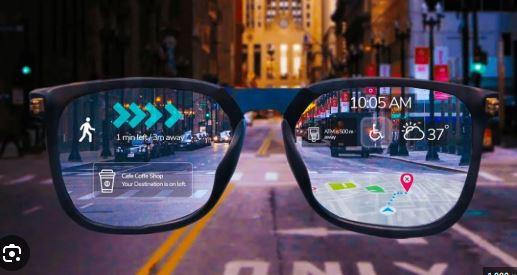
The integration of artificial intelligence with spatial computing hardware is ushering in a transformative era for everyday augmented reality and immersive virtual reality experiences. Modern head-worn displays are evolving from simple secondary screens into context-aware digital assistants capable of understanding user surroundings through computer vision, eye tracking, and natural language processing. As artificial intelligence models become increasingly lightweight and optimized for edge devices, smart glasses can provide contextual overlays, real-time speech translation, and visual navigation assistance without continuous high-latency cloud reliance. Simultaneously, improvements in optical lightguide architectures are enabling sleeker, prescription-friendly frames that blur the visual distinction between traditional eyewear and cutting-edge digital displays. This convergence of generative AI intelligence and compact optical hardware provides an unprecedented foundation for enterprise productivity, remote medical diagnostics, and personal media consumption.
Looking forward, the global market trajectory indicates a dramatic shift from specialized enterprise application toward mainstream consumer integration. Key industry vendors are forming strategic alliances with traditional luxury frame manufacturers and consumer fashion brands to ensure aesthetic appeal aligns with sophisticated technical capabilities. However, sustainable market expansion relies heavily on resolving structural ecosystem bottlenecks, such as developer monetisation frameworks, app store interoperability, and optical light efficiency. Furthermore, public policy regulators and consumer privacy advocates are demanding transparent guidelines around facial recognition and peripheral video capture to prevent unauthorized surveillance. Organizations that successfully address these privacy considerations while continuing to push the limits of battery life, display crispness, and ergonomic design will define the long-term benchmark across the overall AR and VR Smart Glasses Market Forecast.
What role does generative artificial intelligence play in modern smart glasses? Generative AI allows smart glasses to analyze physical environments via visual sensors, offering contextual data overlays, voice-guided problem solving, real-time language translation, and intelligent task automation.
What are the biggest optical design challenges facing display engineers? Engineers struggle to balance high display brightness, wide fields of view, low power consumption, and thermal regulation while attempting to keep optics small enough to fit inside light frames.
➤➤➤Explore MRFR’s Related Ongoing Coverage In Semiconductor Industry:
Interconnects And Passive Components Market
Radio-Frequency Identification Market
Static Random-Access Memory Market

 Arabic
 French
 Spanish
 Portuguese
 Deutsch
 Turkish
 Dutch
Dutch
 Italiano
 Russian
 Romaian
 Portuguese (Brazil)
 Greek
Greek
