
How to Launch a Profitable Multi-Service Business with a Gojek Clone App in 2026
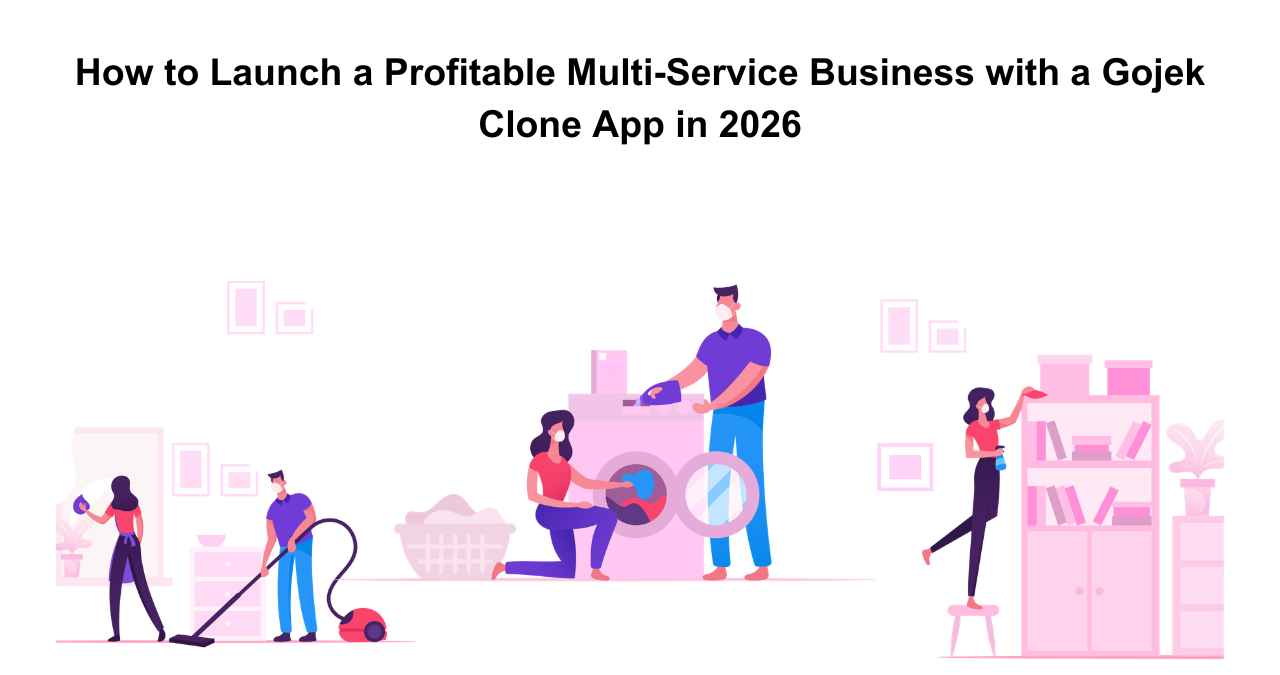
The on-demand economy has moved beyond single-service platforms. Customers now expect to access transportation, food delivery, grocery shopping, home services, parcel delivery, beauty services, and other daily needs from convenient digital platforms. This shift has created a strong opportunity for entrepreneurs who want to launch a multi-service business without building every service model from the ground up.
A multi-service platform brings different categories under one digital ecosystem. Instead of asking customers to use separate apps for different needs, businesses can offer multiple services through one platform. This approach can increase customer engagement, create multiple revenue channels, and improve opportunities for long-term business growth.
A Gojek Clone can provide a practical starting point for entrepreneurs planning this type of business. It allows a business owner to create a platform inspired by the multi-service marketplace model while adapting the services, business rules, branding, and target market to a specific region or customer segment.
In 2026, however, launching a profitable platform requires more than simply copying an existing app concept. Entrepreneurs need to understand their market, select the right services, create a strong customer experience, establish sustainable monetization methods, and prepare the platform for future expansion.
This guide explains how entrepreneurs and startups can plan and launch a profitable multi-service business using a Gojek Clone App while building a platform that can grow with changing customer expectations.
What Is a Multi-Service Business?
A multi-service business is a digital platform that connects customers with different types of services through one application. The platform can combine several on-demand categories instead of focusing on only one service.
For example, a single platform could provide:
- Ride booking
- Food delivery
- Grocery delivery
- Courier and parcel delivery
- Home cleaning
- Plumbing
- Electrician services
- Beauty and salon services
- Laundry
- Moving services
- Car wash
- Medicine delivery
- Personal assistance
- Local shopping
The exact services depend on the target market and business strategy.
This model is often described as a super app because it combines several frequently used services within one ecosystem. For entrepreneurs, the advantage is that the platform does not have to depend on a single source of customer activity.
A customer who initially downloads the platform for food delivery may later use it for transportation, grocery delivery, or home maintenance. This creates opportunities to increase customer lifetime value and encourage repeat usage.
Why Multi-Service Platforms Are Becoming Attractive in 2026
Customer expectations are changing quickly. Convenience is becoming one of the strongest factors influencing digital service adoption.
People prefer platforms that reduce the effort required to find service providers, compare options, make payments, track orders, and communicate with service professionals.
At the same time, businesses are looking for digital models that can support more than one revenue stream.
This is where multi-service platforms become attractive.
One Platform Can Serve Multiple Customer Needs
A single-service app has a defined use case. For example, a taxi platform primarily serves transportation requirements.
A Multi-Service App can serve several requirements from the same customer base.
This gives entrepreneurs an opportunity to build a broader digital ecosystem rather than relying on one category.
Multiple Revenue Opportunities
A multi-service platform can generate revenue through different business activities. Depending on the selected services, possible revenue models include service commissions, delivery charges, convenience fees, subscription programs, advertising opportunities, partner promotions, and other platform-related charges.
Having multiple revenue channels can help reduce dependency on one service category.
Better Customer Retention
When customers can access several services through the same application, there are more reasons for them to return.
For example, someone may use the platform for a ride in the morning, order lunch in the afternoon, and book a home service later in the week.
The goal is not simply to offer as many services as possible. The goal is to offer relevant services that create repeated usage.
How a Gojek Clone App Supports This Business Model
A Gojek Clone App provides a ready-made foundation for entrepreneurs who want to enter the multi-service marketplace.
Instead of starting every business process from zero, entrepreneurs can use an established marketplace concept and customize it around their business requirements.
The platform can be adapted for different service categories, geographic markets, customer segments, and operational models.
This makes the model useful for startups that want to validate a business concept quickly while keeping room for future expansion.
A Gojek Clone App can also help businesses create a unified experience where customers can discover services, place requests, make payments, monitor service progress, communicate with providers, and manage their activities from one platform.
The important point is that a clone solution should not be treated as a simple copy of another company's application. A successful platform needs its own brand identity, market positioning, service structure, operational strategy, and customer experience.
Steps to Launch a Profitable Multi-Service Business
Building a profitable platform requires careful planning before launch. Entrepreneurs should focus on market demand, service selection, customer experience, partner acquisition, marketing, and scalability.
1. Identify a Specific Target Market
The first step is to decide where and for whom the platform will operate.
Global markets have different customer behaviors, regulations, service expectations, payment preferences, and competitive environments.
A platform targeting a large city may have different priorities from one serving smaller cities or suburban areas.
Research should cover:
- Customer demand
- Existing competitors
- Popular service categories
- Local purchasing behavior
- Service provider availability
- Payment preferences
- Delivery expectations
- Local regulations
- Potential market gaps
The objective is to identify a clear opportunity instead of entering the market without a defined strategy.
2. Start With High-Demand Services
One of the common mistakes in multi-service businesses is trying to launch too many services at once.
A better approach is to identify two or three high-demand categories and establish a strong foundation.
For example, an entrepreneur could begin with ride booking, food delivery, and home services. Once the platform gains traction, additional categories can be introduced based on customer demand.
This approach allows businesses to understand customer behavior before expanding.
3. Study Competitors
Competitor analysis can reveal what customers already receive and where improvements are possible.
Study competing platforms based on:
- Service availability
- User experience
- Booking process
- Provider selection
- Delivery experience
- Customer support
- Promotions
- Loyalty programs
- Service coverage
The purpose is not to copy competitors. Instead, entrepreneurs should identify opportunities to provide a better or more focused experience.
4. Define Your Value Proposition
A multi-service platform needs a clear reason for customers to choose it.
Your value proposition could focus on convenience, faster service, trusted providers, better local coverage, specialized services, loyalty benefits, or a combination of these factors.
For example, instead of positioning the platform simply as another service marketplace, a startup could focus on becoming the preferred local platform for everyday services.
A clear value proposition makes marketing easier and helps customers understand why the platform matters.
Select the Right Services for Your Platform
Not every service category is suitable for every market.
The service selection should be based on demand, operational feasibility, provider availability, and potential profitability.
Transportation
Ride booking is one of the most recognizable on-demand categories. It can create frequent customer interaction and provide an entry point for other services.
Food Delivery
Food delivery can increase daily engagement because customers may order meals several times each week.
Grocery Delivery
Grocery services can create recurring purchasing behavior and become an important part of an everyday-use platform.
Home Services
Home services such as cleaning, plumbing, electrical work, appliance repair, and maintenance can introduce higher-value transactions.
Courier and Parcel Delivery
Local courier services can serve both consumers and businesses, making them useful for expanding the platform's market reach.
Beauty and Personal Care
Salon, spa, grooming, and beauty services can add another recurring service category, particularly in markets with strong demand for appointment-based services.
The right combination depends on the market. Entrepreneurs should avoid adding services simply because competitors offer them.
Build a Super App With a Strong User Experience
To Build a super app successfully, entrepreneurs need to think about the complete customer journey.
A customer should be able to open the application and quickly understand what services are available.
The experience should make it easy to:
- Discover services
- Select a category
- Choose a provider
- Schedule a service when required
- Confirm an order
- Make a payment
- Track progress
- Communicate with the provider
- Review completed services
- Request support
The experience should remain simple even when the platform contains many service categories.
Too many options presented at once can create confusion. A well-organized home screen, service categories, search capabilities, personalized recommendations, and clear navigation can help customers find what they need faster.
Read More: Why AI & Automation are the Future of Multi-Service Apps Like Gojek?
Create Separate Experiences for Different Users
A multi-service marketplace generally involves several types of users.
Customers need a simple way to discover and purchase services. Service providers need tools to receive requests, manage availability, communicate with customers, and monitor their activities.
The business also needs centralized management capabilities to monitor operations and marketplace performance.
Each participant has different expectations.
The platform should therefore be designed around the needs of each user group instead of treating everyone as the same type of user.
Focus on Service Provider Onboarding
A multi-service platform cannot succeed without reliable service providers.
Entrepreneurs should create a structured provider acquisition strategy before launch.
This may involve partnerships with:
- Restaurants
- Drivers
- Grocery stores
- Local retailers
- Home service professionals
- Salons
- Delivery professionals
- Independent service providers
Provider onboarding should be simple while maintaining appropriate verification and quality standards.
The objective is to build enough supply before spending heavily on customer acquisition.
If customers open the application and cannot find available providers, they are unlikely to return.
Develop a Strong Marketplace Strategy
A multi-service business is essentially a marketplace connecting demand with supply.
This creates a common challenge known as the marketplace liquidity problem.
Customers want enough providers to choose from, while providers want enough customers to make participation worthwhile.
Entrepreneurs can solve this by launching in a focused geographic area instead of attempting to cover an entire country immediately.
For example, a startup can establish strong service availability in one city or selected neighborhoods before expanding.
Once demand and supply become balanced, the business can gradually enter new markets.
Use Data to Decide Which Services to Expand
Data should guide service expansion.
Entrepreneurs can monitor metrics such as:
- Number of bookings
- Repeat customers
- Average order value
- Service completion rate
- Customer acquisition
- Provider activity
- Cancellation rate
- Customer ratings
- Order frequency
- Revenue contribution by category
If one category consistently performs better than others, the business can invest more resources into that category.
If another category has low demand, the business can improve it, reposition it, or remove it.
This approach is more effective than expanding based on assumptions.
Monetization Strategies for a Multi-Service Platform
Profitability depends on choosing revenue models that fit the marketplace.
Commission-Based Revenue
The platform can charge service providers a percentage of each completed transaction.
This model works well for marketplaces where the platform directly generates customer demand for providers.
Delivery or Convenience Fees
For delivery-related services, the platform can apply delivery or convenience charges based on business rules and market conditions.
Subscription Programs
A subscription model can provide customers with benefits such as reduced delivery charges, special offers, priority access, or other membership benefits.
Subscriptions can create recurring revenue while encouraging customer retention.
Promotional Partnerships
Businesses can promote restaurants, stores, service providers, and other partners through sponsored placements or promotional campaigns.
The exact model should be designed carefully so that advertising does not negatively affect the customer experience.
How to Market Your Multi-Service Platform
Launching the platform is only the beginning. Customer acquisition determines whether the marketplace can gain traction.
Local SEO
Local SEO can help customers discover services through search engines.
Businesses can create optimized landing pages for specific services and locations. For example, separate pages can target food delivery, home services, taxi booking, grocery delivery, and other categories in specific cities.
Social Media Marketing
Social media can help introduce the platform to local customers and service providers.
Content can focus on:
- New services
- Partner announcements
- Customer benefits
- Local promotions
- Service education
- User-generated content
- Business success stories
Referral Programs
Referral marketing can encourage existing customers to introduce new users to the platform.
A properly structured referral system can support customer acquisition while rewarding existing users.
Partnerships
Local businesses can become important growth partners.
Restaurants, retailers, service professionals, corporate offices, residential communities, and local organizations may help introduce the platform to new audiences.
Why Businesses Choose a Gojek Clone Script
A Gojek Clone Script can provide entrepreneurs with a structured starting point for a multi-service marketplace.
For startups, this can reduce the need to build every marketplace workflow from the beginning.
However, the script should be treated as a foundation rather than the complete business strategy.
The business owner still needs to define:
- Target market
- Service categories
- Brand positioning
- Revenue model
- Customer acquisition strategy
- Provider strategy
- Geographic expansion
- Operational policies
The technology supports the business model, but the business model determines whether the platform can become profitable.
Customization Is Important for Long-Term Growth
An app like Gojek can provide inspiration for a multi-service platform, but entrepreneurs should adapt the concept to their own market.
Customization can include service categories, workflows, branding, business rules, customer communication, payment options, promotions, and other marketplace requirements.
A platform designed specifically around customer behavior is more likely to perform well than a generic application launched without market research.
This is especially important for B2B startups and entrepreneurs entering competitive markets.
Build a Super App Like Gojek Without Losing Focus
Many entrepreneurs assume that building a super app means adding every possible service.
That is not the right strategy.
A successful super app should solve several related customer problems efficiently.
The better approach is to start with a strong core service and gradually create an ecosystem around it.
For example, a business could start with transportation and later introduce food delivery, courier services, grocery delivery, and home services.
Each new service should have a clear purpose and should contribute to customer retention or business growth.
Technology Should Support Business Expansion
Entrepreneurs should select a platform that can support future business requirements.
The objective is not to launch every possible feature on day one. Instead, the platform should provide room for future service categories, user growth, new geographic markets, additional business models, and evolving customer expectations.
This is one reason businesses work with a professional Super app development company rather than selecting an inflexible solution.
A capable development partner can help businesses understand which capabilities are essential at launch and which can be introduced during later growth stages.
Launch in One Market Before Going Global
Global targeting does not mean launching in every country immediately.
A smarter approach is to validate the business model in one focused market.
Once the business achieves stable operations, entrepreneurs can expand to additional locations.
Expansion should consider local:
- Customer behavior
- Payment methods
- Service categories
- Provider expectations
- Competition
- Regulations
- Language requirements
- Marketing channels
A model that succeeds in one country may require significant adaptation in another.
Common Mistakes to Avoid
Launching Too Many Services
Offering dozens of categories from the first day can create operational complexity and make it difficult to maintain quality.
Start with services that have clear demand.
Ignoring Provider Quality
Customers judge the platform based on the service they receive. Poor provider performance can damage the reputation of the entire marketplace.
Focusing Only on Downloads
App downloads are not the same as business success.
Active users, repeat bookings, transaction volume, customer retention, and revenue are more meaningful indicators.
Copying Competitors Without Differentiation
A clone-based business model should not result in an identical market offering.
The platform needs a clear competitive advantage.
Expanding Before Validating
Entering multiple cities before establishing reliable operations can increase costs and reduce service quality.
Validate first, then expand.
How to Choose a Gojek Clone App Development Partner
Choosing the right development partner can directly affect the success of the platform.
Entrepreneurs should evaluate a provider based on experience with marketplace applications, customization capabilities, scalability, security practices, ongoing support, deployment experience, and understanding of on-demand business models.
A reliable development company should also understand that every business has different requirements.
The development process should begin with understanding the business model rather than simply presenting a pre-built application.
Businesses should also ensure that the solution can evolve as their service portfolio and customer base grow.
Why 2026 Is a Strong Time to Enter the Multi-Service Market
The on-demand economy continues to evolve as customers become more comfortable purchasing services digitally.
At the same time, businesses across transportation, food, retail, logistics, and home services are looking for new digital channels to reach customers.
This creates opportunities for startups that can identify underserved markets and provide a convenient marketplace experience.
The opportunity is especially attractive for entrepreneurs who can combine technology with strong local execution.
The technology itself is no longer the only competitive advantage. Customer experience, service quality, provider relationships, operational efficiency, and marketing execution are equally important.
Final Thoughts
Launching a profitable multi-service business in 2026 requires a clear market strategy, carefully selected services, reliable service providers, strong customer experience, and a platform that can grow with the business. A Gojek app clone can provide the foundation for entrepreneurs who want to enter this market without starting every marketplace process from scratch.
The most successful approach is to begin with a focused service offering, validate demand, build marketplace liquidity, monitor customer behavior, and expand gradually. Entrepreneurs should also customize the platform according to their target market instead of simply reproducing another company's model.
For startups and established businesses, working with an experienced clone app development company can make it easier to turn a multi-service business concept into a scalable digital marketplace. With the right strategy and execution, a multi-service platform can create several revenue opportunities while becoming a convenient destination for customers' everyday needs.
FAQs
1. What is a Gojek Clone App?
A Gojek Clone App is a multi-service application solution inspired by the business model of Gojek. It can be customized to help entrepreneurs offer services such as transportation, food delivery, grocery delivery, courier services, home services, and other on-demand categories through one platform.
2. Can a startup launch a multi-service platform with a clone solution?
Yes. A startup can use a clone solution as a foundation and customize it according to its target market, selected services, branding, operational requirements, and revenue model. Starting with a focused service portfolio can also make market validation easier.
3. Which services can be included in a multi-service app?
A multi-service platform can include transportation, food delivery, grocery delivery, courier services, home maintenance, cleaning, beauty services, laundry, local shopping, and other categories. The best services depend on customer demand and provider availability in the target market.
4. How can a multi-service app generate revenue?
A platform can use several monetization models, including commissions from service providers, delivery or convenience fees, subscriptions, promotional partnerships, and other marketplace-related revenue models. Businesses can combine different models depending on their service categories and market conditions.
5. What should entrepreneurs consider before launching a super app?
Entrepreneurs should research market demand, select relevant services, analyze competitors, build a reliable provider network, define a clear value proposition, plan customer acquisition, and choose a scalable platform. Starting in a focused market and expanding after validation can also reduce operational challenges.

 English
 Arabic
 French
 Spanish
 Deutsch
 Turkish
 Dutch
Dutch
 Italiano
 Russian
 Romaian
 Portuguese (Brazil)
 Greek
Greek
